

FR500C TIE ROD END's & Steeda X11 Ball Joints

2013DIBGT

I Hate Wheelhop
Joined
Jun 3, 2013
Posts
333
Reaction score
1
Location
The Ungreat North East
Hello,

I was wondering if anyone knows if the FR500C Tie Rod would fit on a 2013 GT? It seems like a cleaner and more reliable way to go verses the bump steer kits that are out there (No stacked washers ..etc).

How many folks have had to mess with bump steer and things of that nature after lowering your car? It looks like this part or a bump steer kit used in combination with the Steeda X11 Ball Joint is the hot setup but not sure if its needed or not?

I will be dropping my car with Steeda Sports springs in the next few weeks and am just trying to get my ducks in a row with all the parts.

Thanks for any info you can provide

MUSTANG FR500C TIE ROD END: Part # M-3130-R2
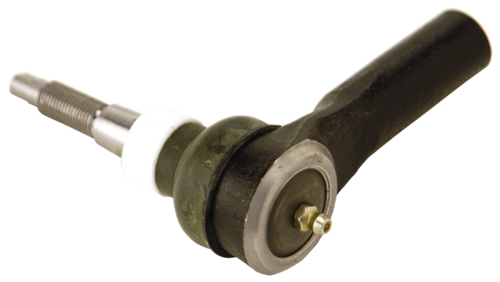
M-3130-R2.jpg
 

SoundGuyDave

This Space For Rent
Joined
Apr 9, 2007
Posts
1,978
Reaction score
29
The "stacked washer" thing is nothing to be afraid of, it's just how you tune the bump-steer curve. IF the X11 balljoints and R2 tie rods have the same exact amount of relocation, then you should be fine. If they don't though, then there's no way to tune them to work together...
 

DevGittinJr

Throbbing Member
Joined
Jul 14, 2012
Posts
107
Reaction score
1
Location
Longview, TX
I looked at the FR500C tie rod ends, but they're only good as a service replacement for the FR500C. So, I went with the ones from the Boss 302S instead. They're adjustable and work really well with the Steeda balljoints. Part no. m-3130-r4. They're made by Maximum Motorsports with an FRPP decal on top of the MM decal, on the box.
 

neema

Member
Joined
Aug 30, 2010
Posts
748
Reaction score
0
Location
Fresno, CA
Bump steer tie rod ends are good to have when you're car is adequately lowered, but it's no fun setting them up. Even my alignment guy (who loves dialing in a track alignments) was turned off by all the work required. I can't say I disagree with him.
 

2013DIBGT

I Hate Wheelhop
Joined
Jun 3, 2013
Posts
333
Reaction score
1
Location
The Ungreat North East
Bump steer tie rod ends are good to have when you're car is adequately lowered, but it's no fun setting them up. Even my alignment guy (who loves dialing in a track alignments) was turned off by all the work required. I can't say I disagree with him.

Hello, I see what you mean by it not being any fun to setup and dial in. I just read thru the whole Maximum Motorsports instruction sheet on doing the setup and I feel like::puke:

Definitely not a procedure for the nannies. :gay:

It is somewhat promising that, by the looks of it, just by using the kit alone with no adjustments you should end up with a significantly better bump steer curve then without the kit based on the example measurements shown from their 2012 GT test vehicle. Granted, installing the kit and choosing to not make additional adjustments is kind of silly but it sure looks a lot easier :crazy:
 

SoundGuyDave

This Space For Rent
Joined
Apr 9, 2007
Posts
1,978
Reaction score
29
Nailing the bump-steer curve is one of those things that just adds to the vehicle's overall stability and predictability, which reduces the driver's workload that little bit. Is it a night and day mod on an essentially stock car? No. Is it critical if you've played with the front roll center? Yes.
 

2013DIBGT

I Hate Wheelhop
Joined
Jun 3, 2013
Posts
333
Reaction score
1
Location
The Ungreat North East
Hello,

So it sounds like if someone where to use the Steeda X11 Ball joints on their car they are automatically committing themselves to needing to toy with the bump steer because the Ball joints change the roll center.

Lowering the car alone also changes the roll center but I think the big question is at what point of ride height reduction does this all come into play enough to make the effort involved in tuning bump steer worthwhile in terms of cost and complexity?

This graph was taken from a Mustang Rag who installed the 302S bump steer kit on their lowered 04 Mustang (Not exactly a 2013, but).

They had this blurb to say about the end results which is similar to some of the things mentioned in this thread here.

"For reference, we plotted the front rightside bumpsteer curve with the OEM tie-rod end. It's surprisingly close to the best we could muster. We concluded that on this particular car (and perhaps most '96-'04 Mustangs) a front bumpsteer kit wasn't required when modestly lowering the suspension!"

mmfp-1207-18+Bumpsteer-Kit-Install+.jpg


If I take FRPP's Handling package as an example which lowers the car about 1-1.5" depending on spring choice I see no mention or recommendation on the site about also purchasing a bump steer kit. This would imply that Ford is content or OK with the amount of bump steer change that kit has as compared to a stock ride height vehicle.

My own vehicle will be lowered with Steeda Sport springs and Koni Yellow shocks which offer the same ride height reduction as the FRPP package. I am trying to determine if the 302S and X11 Balljoint package that I purchased is overkill and if installing those parts is only opening a can of worms that doesn't really need to be opened considering a 1" drop give or take.

Thanks for all the info and opinions on this topic
 
Last edited:

SoundGuyDave

This Space For Rent
Joined
Apr 9, 2007
Posts
1,978
Reaction score
29
Here's my take on it, from personal experience. When the front end is lowered, yes, the roll center takes a proportionally higher dive, however that doesn't really alter the geometric relationship between the front control arm pivot points and the steering arm pivots. On the S197 chassis, it's been my experience that with virtually any sane amount of lowering, the steering arm and the control arm remain essentially parallel, which will result in minimal bump-steer. HOWEVER, if you change the angle of the control arm to "reset" the roll center, either by raising the inboard mounting point or by extending the ball joint stud, you no longer have a roughly parallel arrangement. At that point, you will have excessive bump-steer, as the steering arm and control arm are now describing different arcs, which will push/pull the knuckle as the suspension cycles. Here is where you would use the bump-steer kit (or tie rod) to get the bump steer curve back under control.

The magazine is correct, in that bump-steer correction is not necessarily required when only lowering the car with springs. That graph would have looked a LOT different if they had installed any form of roll-center correction, though!
 

2013DIBGT

I Hate Wheelhop
Joined
Jun 3, 2013
Posts
333
Reaction score
1
Location
The Ungreat North East
Here's my take on it, from personal experience. When the front end is lowered, yes, the roll center takes a proportionally higher dive, however that doesn't really alter the geometric relationship between the front control arm pivot points and the steering arm pivots. On the S197 chassis, it's been my experience that with virtually any sane amount of lowering, the steering arm and the control arm remain essentially parallel, which will result in minimal bump-steer. HOWEVER, if you change the angle of the control arm to "reset" the roll center, either by raising the inboard mounting point or by extending the ball joint stud, you no longer have a roughly parallel arrangement. At that point, you will have excessive bump-steer, as the steering arm and control arm are now describing different arcs, which will push/pull the knuckle as the suspension cycles. Here is where you would use the bump-steer kit (or tie rod) to get the bump steer curve back under control.

The magazine is correct, in that bump-steer correction is not necessarily required when only lowering the car with springs. That graph would have looked a LOT different if they had installed any form of roll-center correction, though!

Thanks for the clarification. I think what I am going to do is shelf the bumpsteer and ball joint kits initially and see how things work without them first. If things seem unstable in the front end of the car I will revisit the need to install the parts.
 

SoundGuyDave

This Space For Rent
Joined
Apr 9, 2007
Posts
1,978
Reaction score
29
Honestly, given your mod list, and your apparent interests (based on this and other threads), I would focus on the "driver mod" at this point. You've got a Brembo car, so pick up a set of HT10 pads, and go hit your local road-race track for a day or two, with an instructor in the car... Between NASA (nasaproracing.com) and HOD (hookedondriving.com) you're bound to be able to find a track day or two in your area that interests you. As Don't Lift mentioned in another thread, the simple truth is that the car in stock form is considerably more capable than ANY novice driver, and throwing parts at it is not the way to "fix" poor technique. If you treat the throttle like a light-switch, there is NO way to properly judge understeer/oversteer balance, or even assess if you HAVE an issue out back. If your steering inputs are hyper-aggressive and ragged, you WILL experience "instability" in the front end. In the end, somebody like Randy Pobst could take a stock S197 and put a hurting on virtually ALL of us here on this forum, myself included, and it's all because he can extract 99.995% from what the chassis is capable of, which is about double what most novices can do. Mod the driver first, and on your journey you'll discover what the "real" weaknesses of the chassis are.
 

SoundGuyDave

This Space For Rent
Joined
Apr 9, 2007
Posts
1,978
Reaction score
29
Those are functionally no different than the FRPP parts mentioned at the beginning of the thread... IF the amount of stud extension HAPPENS to correspond PERFECTLY to the ball-joint or control arm chassis-side relocation, then it'll work just fine. That's a lot of "if" for my taste. The typical rod-end style bumpsteer kit is arguably harder to set up (properly), but the fact that it's adjustable means you can actually hit the target curve.
 

Latest posts

Support us!

Support Us - Become A Supporting Member Today!

Click Here For Details

Back
Top