Stalling, jerking and beeping

Patricio Ugarte

Junior Member
Joined
May 28, 2025
Posts
13
Reaction score
4
Location
Mexico City
Hey everyone,

I´m posting this looking to get advise, guidance and thoughts on what you think its the problem.

I've been chasing an ongoing issue with my 2006 Mustang GT (4.6L 3V, automatic, Mexico-spec). I'm not the original owner, and it's clear the car didn't get the care it needed. I've done a long list of repairs—some things improved, but the main issue keeps coming back in different forms.

Symptoms before repairs:
-Engine would completely shut off randomly after the pats light flashed and beeped
-B2103 (PATS transceiver) was active randomly
-High CO emissions – 6 ppm (should be ≤ 1 ppm)
-Rough idle, jerks, excessive fuel consumption, misfires (this happened 1 time), power loss (also 1 time)

DTCs seen:
-B2103 – PATS Transceiver circuit fault
-P2196 / P2197 – O2 sensors stuck rich/lean (Bank 1 and 2)
-P0193 – High input from fuel rail pressure sensor
-P1000 – Readiness monitors not complete (this one always disappears after a few driving cycles).

Repairs done
-PCM (not original) reprogramed by Ford dealership. Its important to say that it currently has an XB model, although this car originally requires an FB PCM. At some point the original PCM was replaced for unknown reasons.
-Alternator rebuilt. Voltage was below 13v when running hot; I even noticed tilting lights
-Battery replaced with correct size and properly secured
-Positive cable reinforced, This finally stopped the random full engine shutdowns
-O2 sensors (pre-cat) replaced – from generic AutoZone to Motorcraft
-All 8 spark plugs replaced – they were very likely factory originals and never changed
-Throttle body cleansing

Symptoms after repairs
-Fuel consumption improved after O2 sensor replacement
-Emissions are now under control (CO < 1 ppm)
-But the jerking and hesitation and PATS beeping still happens randomly...even a "check fuel cap" appears sometimes when it jerks.

I have been using a BlueDriver scanner and most recently a OBDLink MX+ with Forscan Lite...But I'm leaning towards the PCM itself being the core issue. The symptoms seem to shift between systems – sensors, fuel pressure, PATS – even after replacing the affected parts. This makes me wonder if the PCM is unstable, incompatible (wrong model code), or simply damaged despite being reprogrammed by Ford.
 
Last edited:

DieHarder

Senior Member
Joined
Nov 9, 2019
Posts
1,851
Reaction score
1,071
Hey everyone,

I´m posting this looking to get advise, guidance and thoughts on what you think its the problem.

I've been chasing an ongoing issue with my 2006 Mustang GT (4.6L 3V, automatic, Mexico-spec). I'm not the original owner, and it's clear the car didn't get the care it needed. I've done a long list of repairs—some things improved, but the main issue keeps coming back in different forms.

Symptoms before repairs:
-Engine would completely shut off randomly after the pats light flashed and beeped
-B2103 (PATS transceiver) was active randomly
-High CO emissions – 6 ppm (should be ≤ 1 ppm)
-Rough idle, jerks, excessive fuel consumption, misfires (this happened 1 time), power loss (also 1 time)

DTCs seen:
-B2103 – PATS Transceiver circuit fault
-P2196 / P2197 – O2 sensors stuck rich/lean (Bank 1 and 2)
-P0193 – High input from fuel rail pressure sensor
-P1000 – Readiness monitors not complete (this one always disappears after a few driving cycles).

Repairs done
-PCM (not original) reprogramed by Ford dealership. Its important to say that it currently has an XB model, although this car originally requires an FB PCM. At some point the original PCM was replaced for unknown reasons.
-Alternator rebuilt. Voltage was below 13v when running hot; I even noticed tilting lights
-Battery replaced with correct size and properly secured
-Positive cable reinforced, This finally stopped the random full engine shutdowns
-O2 sensors (pre-cat) replaced – from generic AutoZone to Motorcraft
-All 8 spark plugs replaced – they were very likely factory originals and never changed
-Throttle body cleansing

Symptoms after repairs
-Fuel consumption improved after O2 sensor replacement
-Emissions are now under control (CO < 1 ppm)
-But the jerking and hesitation and PATS beeping still happens randomly...even a "check fuel cap" appears sometimes when it jerks.

I have been using a BlueDriver scanner and most recently a OBDLink MX+ with Forscan Lite...But I'm leaning towards the PCM itself being the core issue. The symptoms seem to shift between systems – sensors, fuel pressure, PATS – even after replacing the affected parts. This makes me wonder if the PCM is unstable, incompatible (wrong model code), or simply damaged despite being reprogrammed by Ford.

Need to fix that.. Low voltage causes all kinds of mayhem with these cars. You should have 14.5 - 14.7 vdc across the battery terminals. I'd start by cleaning major grounds (battery negative; engine block; whatever you can see). If no improvement add a ground (4 awg) from a mounting bolt for the alternator to the passenger strut tower. If that doesn't do it I'd source a new battery cable harness (Be sure it's Motorcraft; ~$100 - 150). Get yourself a VOM (Volt/Ohm Meter) if you don't have one.

Finally found the cause of my low voltage - Beware the all important grounds.
 

Patricio Ugarte

Junior Member
Joined
May 28, 2025
Posts
13
Reaction score
4
Location
Mexico City
Thanks for your help and the detailed reply.


I've already done quite a bit: the alternator was rebuilt, a brand new (correct size) battery was installed, and the positive cable was reinforced with an upgraded terminal. That helped — the full engine shutdowns stopped — but I'm still getting random jerks and codes (PATS, O2 sensors, fuel pressure).


I hadn't cleaned the major grounds yet, and I hadn't tried adding the extra ground from the alternator to the strut tower, so I'll give that a shot. I'll also test voltage with a VOM to confirm the numbers across the battery terminals.


Thanks again for the link to the thread — incredibly helpful. I'll update once I've tried the ground improvement.
 

DieHarder

Senior Member
Joined
Nov 9, 2019
Posts
1,851
Reaction score
1,071
Thanks for your help and the detailed reply.


I've already done quite a bit: the alternator was rebuilt, a brand new (correct size) battery was installed, and the positive cable was reinforced with an upgraded terminal. That helped — the full engine shutdowns stopped — but I'm still getting random jerks and codes (PATS, O2 sensors, fuel pressure).


I hadn't cleaned the major grounds yet, and I hadn't tried adding the extra ground from the alternator to the strut tower, so I'll give that a shot. I'll also test voltage with a VOM to confirm the numbers across the battery terminals.


Thanks again for the link to the thread — incredibly helpful. I'll update once I've tried the ground improvement.

One of the best things you can do is get a new battery harness. That should take care of the voltage issue. Check running voltage after replacing it.

About $160 on feebay: https://www.ebay.com/sch/i.html?_nkw=WC-95954&_sacat=0&_from=R40&_trksid=p2332490.m570.l1313
 

Patricio Ugarte

Junior Member
Joined
May 28, 2025
Posts
13
Reaction score
4
Location
Mexico City
Just a quick update. I took the car back to the Ford dealership to have them re-check the PCM and BCM, since both were reprogrammed by them and are still under warranty.

After a more detailed inspection, here's what they found:

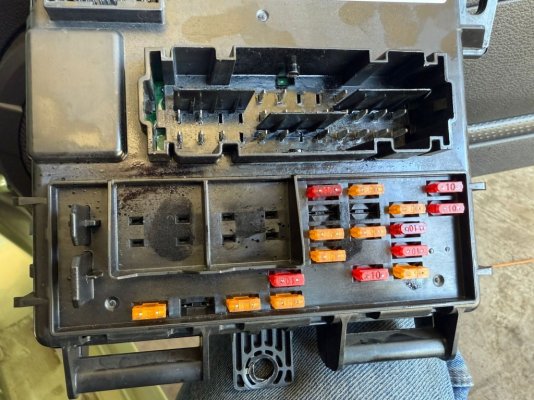
The Smart Junction Box (SJB) has visible corrosion and sulfated pins.
The technician described it as "tartar-like buildup" on multiple terminals.
(Photo taken from the copilot side access panel.)


*i´m still waiting for additional details/findings*

Could this be the true cause behind the random stalls, jerks, PATS warnings,check fuel cap, etc. especially during highway drives?

WhatsApp Image 2025-06-09 at 10.20.56 (1).jpeg

WhatsApp Image 2025-06-09 at 10.20.56.jpeg

WhatsApp Image 2025-06-09 at 18.29.21 (1).jpeg

WhatsApp Image 2025-06-09 at 18.29.21 (2).jpeg

WhatsApp Image 2025-06-09 at 18.29.21 (3).jpeg

WhatsApp Image 2025-06-09 at 18.29.21 (4).jpeg

WhatsApp Image 2025-06-09 at 18.29.21.jpeg
 
Last edited:

DieHarder

Senior Member
Joined
Nov 9, 2019
Posts
1,851
Reaction score
1,071
Yep, definitely can contribute to if not the source of your problems. Need to check the rest of the connectors down there and the SJB for the same thing. Depending on how bad it is you might have to replace the SJB. You can try to clean pins & connectors with electrical contact cleaner and some small brushes. Hopefully that will resolve your symptoms.

That's a lesson learned for the rest of us. The SJB corrosion problem is a common theme and should be on a short list of items to check when strange things start happening with our cars. Especially if the car is kept outside or exposed to challenging environments.
 

Patricio Ugarte

Junior Member
Joined
May 28, 2025
Posts
13
Reaction score
4
Location
Mexico City
I´ll give a try to the SJB and tell you the outcomes...just another doubt...could you please specify which grounds are the ones you suggest checking and reviewing as well?
 

DieHarder

Senior Member
Joined
Nov 9, 2019
Posts
1,851
Reaction score
1,071
I'd concentrate on cleaning up what you found and then retest. Recommend tooth brushes and electrical contact cleaner (use the type that evaporates). Then retest. If symptoms change you're on the right track.

As far as major grounds go there are 3 and a bunch of smaller ones all over the car. Battery negative is connected to the passenger strut tower; and another one that runs down underneath and is bolted to the underside of the passenger motor mount; and a third on the firewall at the back of the engine (woven mesh) that runs down to the back of the engine/trans. The first is easy to get to; the other's not so much. I'd check them to see if they're sulfated.

Then, get yourself a VOM and check running DC voltage across the battery terminals. Should be 14.5 - 14.75 vdc. If not, consider buying a new battery harness. Get OEM Motorcraft. WC-95954

WC-95954 - https://www.ebay.com/itm/2974001768...IzO7NywSZOKMDS3YSHoscmTg==|tkp:Bk9SR7bphPLrZQ
 

Patricio Ugarte

Junior Member
Joined
May 28, 2025
Posts
13
Reaction score
4
Location
Mexico City
I'd concentrate on cleaning up what you found and then retest. Recommend tooth brushes and electrical contact cleaner (use the type that evaporates). Then retest. If symptoms change you're on the right track.

As far as major grounds go there are 3 and a bunch of smaller ones all over the car. Battery negative is connected to the passenger strut tower; and another one that runs down underneath and is bolted to the underside of the passenger motor mount; and a third on the firewall at the back of the engine (woven mesh) that runs down to the back of the engine/trans. The first is easy to get to; the other's not so much. I'd check them to see if they're sulfated.

Then, get yourself a VOM and check running DC voltage across the battery terminals. Should be 14.5 - 14.75 vdc. If not, consider buying a new battery harness. Get OEM Motorcraft. WC-95954

WC-95954 - https://www.ebay.com/itm/297400176855?_skw=WC-95954&epid=235955879&itmmeta=01JXFJ16JKCZ1NE524JCYPN6B1&hash=item453e6e90d7:g:5ysAAeSwbHNoSMNG&itmprp=enc:AQAKAAAA8FkggFvd1GGDu0w3yXCmi1fBnZeTJxPougV80tQ6zR1qFMUZQMftbkEvKmhneQ44GZubBVTJfWBbve1J2fH0DkQF5tS2+fDVjqMJjHytaX54IjL1iVZKumHUSLud3zjkBqWChD3KtmDM3AWOsYdPg0wNPxFN9rxEcM9xuqiHO/BR+ls69X1hDwtAlIDB5cQ7+AHPrMTEOjXLMuivcSLXRuva1YlzD8wtXhqnZ5xS0JODIAz9lQiWO1xa1NVwhYJzbqcneeimuA4CF4q2TC8VhgrAaIGDgB3ag8DRHnBXrwIzO7NywSZOKMDS3YSHoscmTg==|tkp:Bk9SR7bphPLrZQ
Hi!
SJB has clean pins...but I also want to install the positive harness per your suggestion.

However, the option you kindly sent does not ship to Mexico.

Do you think the following one is the right one to get?


DieHarder

Senior Member
Joined
Nov 9, 2019
Posts
1,851
Reaction score
1,071
Hi!
SJB has clean pins...but I also want to install the positive harness per your suggestion.

However, the option you kindly sent does not ship to Mexico.

Do you think the following one is the right one to get?

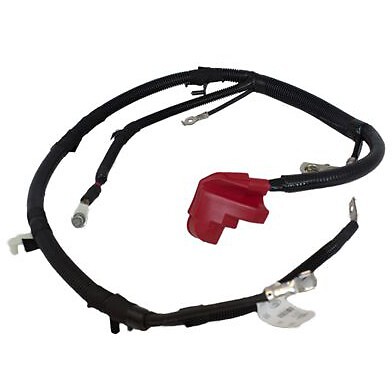
Yes, WC-95954 is the correct one for a 2006 GT. Note the harness will replace both pos & neg lines. Simply match up the connections and install.
 

Patricio Ugarte

Junior Member
Joined
May 28, 2025
Posts
13
Reaction score
4
Location
Mexico City
Yes, WC-95954 is the correct one for a 2006 GT. Note the harness will replace both pos & neg lines. Simply match up the connections and install.
I've ordered the replacement cable, but it looks like it will take about 2-3 weeks to arrive. I'll post updates once it's installed.

In the meantime—and I assume the answer is most likely yes—if I continue driving the car with a faulty positive battery terminal (which gets considerably hot after long drives), am I risking irreversible damage to the PCM, alternator, SJB, etc?

Thanks in advance for the guidance.
 

Patricio Ugarte

Junior Member
Joined
May 28, 2025
Posts
13
Reaction score
4
Location
Mexico City
Dear all,

I hope you are well.

I´d like to share my latest experiences over the past couple months. Sorry in advance for the long post, but I want to be detailed and hopefully this will guide some others experiencing this problems.

a)RECENT REPAIRS (July - August 2025)

  1. Battery-to-starter cable installed: Motorcraft WC-95954
  2. Alternator-to-battery cable replaced: Custom heavy-gauge positive cable
  3. Fuel rail pressure sensor replaced: Old sensor replaced with OEM Motorcraft CM5229
  4. Thermostat replaced: New OEM Motorcraft RT1254-1X + Motorcraft yellow (50/50) coolant
  5. Keep-Alive Memory (KAM) Reset performed through FORScan lite: September 6, 2025
  6. Grounding points checked: Verified and seem to be in good condition

Since these updates, voltage stability and general drivability have improved. However, under certain thermal and electrical load conditions, symptoms may reappear.

b)ABOUT THE DATA (What was monitored?)

All data was collected using FORScan Lite with an OBDLink MX+ scanner, which allows monitoring of internal PCM and alternator behavior via dozens of PIDs (Parameter IDs).

Some key monitored PIDs:
  • VPWR – Voltage supplied by the alternator to the PCM and critical sensors
  • GENMON – Generator Monitor Load: percentage of total alternator capacity currently being used. Normally ranges between 10–40% (according to ChatGPT...unsure about sources) during cruising. Spikes over 60% suggest high electrical demand.
  • RPM – Engine revolutions per minute
  • Battery Voltage – Voltage at the battery terminals

    *Report compiled from real-time OBDII data logs (FORScan + OBDLink MX+), with >30 PIDs monitored and cross-referenced across multiple trip types.
These values are crucial to identify how the vehicle responds to heat, load, and real-time driving conditions.

c)TRIPS

ROUND TRIP 1
  • Distance: Approx. 55 miles (88 km) each way
  • Trip 1 Conditions: Dry weather, light traffic, stable highway speeds
  • Observations: No symptoms at all. Smooth alternator response and stable VPWR.
-ROUND TRIP 2
  • Distance: Approx. 55 miles (88 km) each way
  • Trip 2 Conditions: Heavy rain, moderate traffic but fluent
  • Observations: Despite the rain and accessories in use (wipers and lights..no radio nor AC), no hesitation or electrical symptoms occurred. GENMON stayed within expected ranges.

-TRIP 3 (MEXICO CITY TO QUERETARO) APPROX. 137 MILES

*THE NIGH BEFORE TRIP 3, I DID A KAM RESET*

All voltage values were measured starting at 60 seconds post-ignition, to exclude startup fluctuations and <12v measurements consistent with start up.

Conditions:
  • Dense city traffic (heavy stop-and-go for over an hour)
  • Heavy rainfall with wipers and headlights (No radio nor AC)

Symptoms Observed:
  • When starting the car early morning, voltage seems within normal threshold of 14.2 to 14.4V
  • While crawling in traffic with accessories running (whipers and lights but no radio nor AC), VPWR dropped to 12.9V at ~625 RPM after being stuck for around an hour
  • After exiting traffic and transitioning to highway speeds, GENMON dropped to 7%, triggering intermittent jerking/hesitation, although the car didn´t stall
  • Pulled over for ~40 minutes to cool down
  • Post-cooldown, and driving at low speed and RPMs ,the remaining segment of trip was completely stable although i noted that PCM voltage was strangely flat at 13.5v (no more, no less)

-TRIP 4: (RETURN: QUERÉTARO → MEXICO CITY )(~137 MILES / 220 KM)

  • Conditions: clear weather, high speed, consistent driving (75–90 mph)
  • No symptoms whatsoever during return
  • GENMON: mostly at 10–35%, VPWR: stable at 13.5–13.9V

d)OBSERVATIONS & HYPOTHESIS

Based on multiple data logs, including voltage (VPWR), alternator load (GENMON), and RPM correlations:
  • Stable under highway and light traffic
  • Symptoms only appear under dense traffic + rain + high accessory use
  • System recovers fully after cooldown or RPM stabilization.

    Symptoms appear to strongly correlate with heavy traffic:
  • Low RPM (traffic)
  • High electrical accessory use
  • High thermal buildup (rain, heat, engine bay)
  • Once the alternator has cooled and the vehicle returns to highway RPM/load, and constant ventilation/cooling from speed, symptoms resolve entirely
  • GENMON spikes (up to 94%) and sustained over 60% for long periods suggest high regulator workload

    While the alternator and PCM are functional and responsive, the following points must be noted:
    • GENMON and VPWR behavior confirm voltage regulation is working, but operating close to the lower acceptable threshold under certain conditions
    • Electrical system may be near capacity when accessories + low RPM + thermal load coincide
    • Possible long-term degradation of alternator output, regulator sensitivity, or wiring resistance despite repairs.
However, a previous comment from @DieHarder notes that healthy voltage should ideally range from 14.5–14.7V under normal conditions. In this vehicle, it has not exceeded 14.4V when cold...post-repairs although it has improved.

Additionally, it's worth noting that after the KAM reset performed on September 6, followed by the return trip from Querétaro with stable highway operation, no new DTCs or error codes have appeared in FORScan. This suggests that the system is currently operating cleanly and without internal error flags.

Initially, I though that the PCM was the problem given is not the original one...but my latest hypothesis after my latest trips is that an aging alternator, even after a recent maintenance, may be underperforming under sustained thermal stress. Although the system shows stable regulation in light traffic and highway conditions, prolonged exposure to urban congestion with high accessory use (and even without it) could overwhelm its real-time output capacity.

e)MY QUESTIONS TO YOU

Given these findings, what would you consider the most likely root cause?
  • Is the alternator operating at marginal capacity despite recent wiring upgrades?
  • Is the engine bay heat soaking being a constrain to alternator, PCM, cables?
  • Could the voltage regulator be heat-sensitive or degraded over time?
  • Is the PCM regulating voltage more conservatively than expected?

Any insights or similar experiences would be appreciated.

Thank you in advance.
 
Last edited:

DieHarder

Senior Member
Joined
Nov 9, 2019
Posts
1,851
Reaction score
1,071
MY QUESTIONS TO YOU

Given these findings, what would you consider the most likely root cause?
  • Is the alternator operating at marginal capacity despite recent wiring upgrades? Ans: If your RPM is 625 at warm idle that's likely affecting alternator output. Though I would surmise you have a couple of issues that are contributing to the lower output.
  • Is the engine bay heat soaking being a constrain to alternator, PCM, cables? Ans: Likely, sitting in traffic spikes engine temps though if the fan is working nominally it should not act up like you're experiencing. Q: How old is the engine fan? As fans age the components are affected by the elements due to corrosion which increases resistance and can draw more current than when new. If original you might consider replacing it with a 7 - blade GT500 fan. It's an exact replacement.
  • Could the voltage regulator be heat-sensitive or degraded over time? Ans: You said you just rebuilt the alternator right? The alternator is controlled by the ECU so not likely. Excess heat however affects everything.
  • Is the PCM regulating voltage more conservatively than expected (max 13.9V)? Ans: If the voltage is reading 14.2 vdc or higher at start up I wouldn't worry about the charging system. I'd verify grounds and if needed add a (4 ga) ground from a mounting bolt for the alternator and run it over to the ground on the passenger strut tower. That will ensure the ground reference is the same (alternator ground to body ground). Otherwise, one of the grounds can float compared to the other (due to dissimilar metals/aging cables/corrosion/etc). With both grounds at the same reference the alternator can reach max output.
  • For everyone: If you ever want to test whether your grounds are good do a voltage drop test with a VOM (Volt/Ohm Meter). Select Volts DC and touch one lead on the body of the alternator (engine running) and the other lead to the ground at the passenger strut tower. If you're reading voltage (especially anything over a few tenths) your grounds need work. Fact is, many/most of our cars are coming up on ~20 years and battery/ground cables aren't getting any younger. New battery harnesses (Motorcraft) are still available for V8's and not that bad of a job to replace them. When I replaced mine I saw a jump of around a volt in output from the alternator. In Truth the alternator didn't output more any more voltage; rather, the ground reference changed closer to a common ground reference (0v) when I added the extra ground wire.
 
Last edited:

StockishS197

Member
Joined
Dec 24, 2024
Posts
434
Reaction score
379
Location
Houston
I will just add that voltage should never drop below 13 with a healthy alternator, but it is normal for voltage to drop below 14, often in the low 13s. The factory tune does command lower voltage as inferred battery temp increases. As voltage drops, the tune will also compensate by changing injector pulse width. As you get below normal running volts, the car could run more rough with that alone.

On top of that, the alternators in these cars often fail and cause AC ripple which further impacts the PCM and will throw codes and make the car run worse.

Having gone through multiple alternators, mine often failed from excessive AC ripple but were still producing enough voltage to "pass" the charging component of the test.
 

rawdawg

Junior Member
Joined
Aug 18, 2012
Posts
12
Reaction score
3
Location
Bremerton, WA
The 6G alternators are awful and had to replace mine every year. I talked to the guys at Mechmen, which is a high-end aftermarket alternator manufacturer about why they don't sell a 6G alternator. They told me it's a bad design and couldn't rebuild one to NOT FAIL. Mitsubishi started making the alternators for the Mustang in 2010 so that's what I switched to and it's still giving me 14.7V after 6 years.
 

Patricio Ugarte

Junior Member
Joined
May 28, 2025
Posts
13
Reaction score
4
Location
Mexico City
Hi all!

Thank you for being so responsive.

My car is running a little bit better after a few corrective maintenance services (in addition to some of the tips you have given me here...THANKS FOR THOSE!). Particularly, this time was done to the SJB and gearbox (also I have not being stuck on traffic for too long to allow symptoms to appear again as in my previous message)...see below:

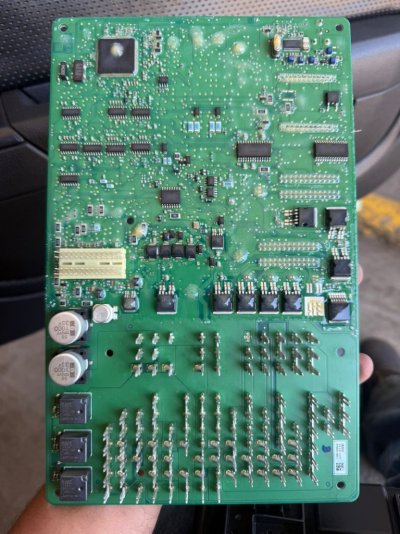
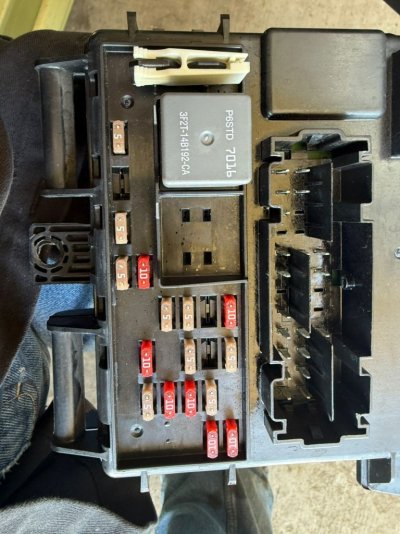
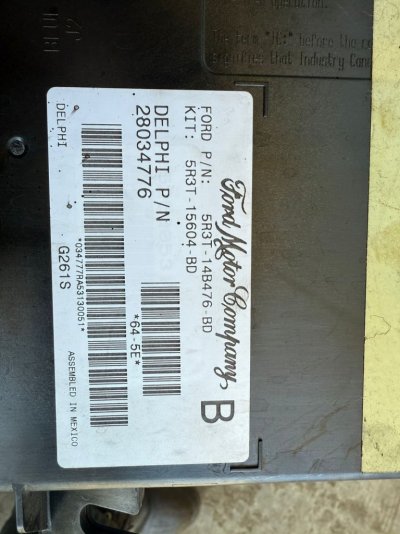
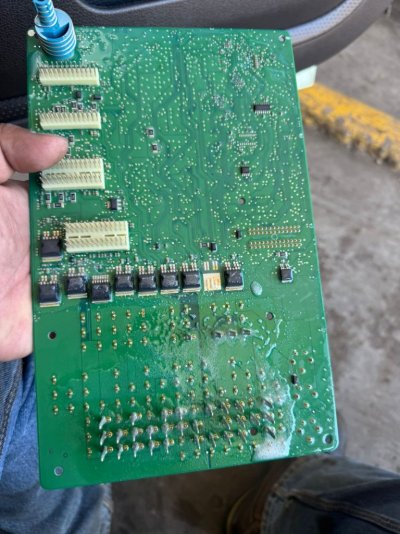
SJB

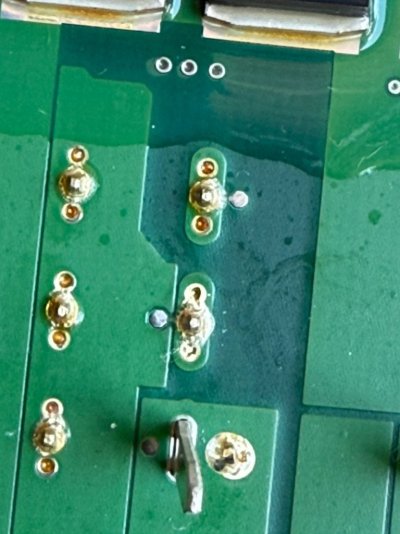
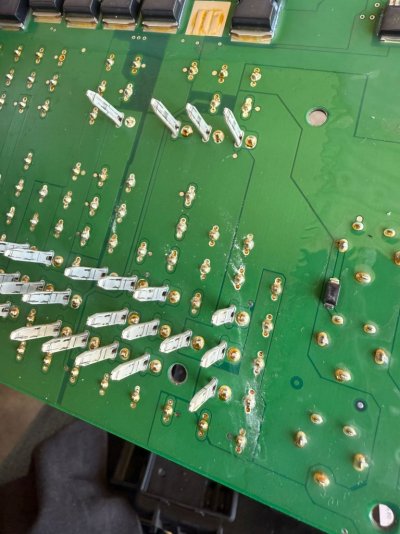
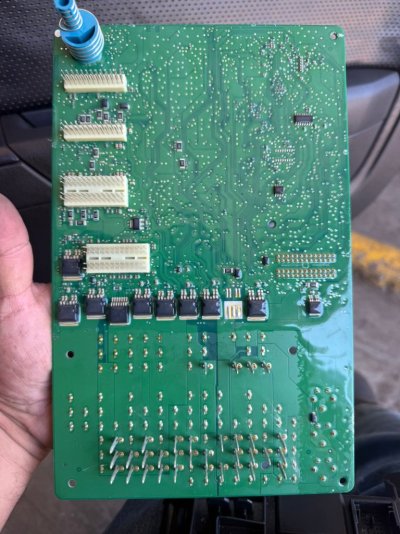
Apparently, years of humidity have taken their toll -which I have found is extremely common in s197´s and even more in the earlier years- on the SJB interior as well as the exterior as you can see a few messages above in this same conversation.
WhatsApp Image 2025-10-22 at 11.53.39 (1).jpeg
WhatsApp Image 2025-10-22 at 11.53.39 (2).jpeg
WhatsApp Image 2025-10-22 at 11.53.39 (3).jpeg
WhatsApp Image 2025-10-22 at 11.53.39 (4).jpeg
WhatsApp Image 2025-10-22 at 11.53.39 (5).jpeg
WhatsApp Image 2025-10-22 at 11.53.39 (6).jpeg
WhatsApp Image 2025-10-22 at 11.53.39.jpeg
WhatsApp Image 2025-10-22 at 11.59.40.jpeg

Components do not seem to be too messed up, but they undeniably have mild damage.

So, a bit of dielectric grease was applied to stop future progressive damage but idk if this will require a replacement eventually (I really hope not $$$).

Also, all pins were replaced as some were burnt and creating resistance.


Gearbox

I never shared this as I focused this conversation on the electrical symptoms and jerkings, but everytime the car was cold-started I always heard like an air discharge (psssshhhhttttt) that lasted 2s -3s...nothing alarming.

So, I had the transmission serviced and apparently someone had done it before. No abnormal wear was found...it was just short of 0.5 gallons of Mercon V. This particular service REALLY made a difference.

Finally- and going back to the SJB- has anyone experienced this? If so...what did you do (fix/replace)? And...do you think this is the real reason i´m getting low voltage when stuck in traffica and w/accesories/engine fan?
 
Last edited:

asdrew

Member
Joined
Feb 19, 2023
Posts
81
Reaction score
49
Location
Central Florida
I had various intermittant electrical gremlins on my '07 and after the SJB was pulled and the corroded pins and connectors were cleaned up, everything was fine again.
The SJB has to rely on input/output to many components to do its job, and a poor contact will sometimes pass the voltage, other times not, and other times arc. That's why cleaning it all up is so helpful, and sometimes that also goes for other connections in our older cars.
 

Patricio Ugarte

Junior Member
Joined
May 28, 2025
Posts
13
Reaction score
4
Location
Mexico City
I had various intermittant electrical gremlins on my '07 and after the SJB was pulled and the corroded pins and connectors were cleaned up, everything was fine again.
The SJB has to rely on input/output to many components to do its job, and a poor contact will sometimes pass the voltage, other times not, and other times arc. That's why cleaning it all up is so helpful, and sometimes that also goes for other connections in our older cars.
An electrical mechanic replaced the burnt pins, removed the boards, and applied dielectric grease, but he told me that any PCB traces already damaged by moisture cannot really be repaired and that the issues may return eventually.
Given this, what would you recommend? Should I try to find a new SJB, or is there any reliable place in the U.S. that can properly rebuild or refurbish these units?
 

asdrew

Member
Joined
Feb 19, 2023
Posts
81
Reaction score
49
Location
Central Florida
Good move having the bad pins redone. Did he say that some of the traces were visibly damaged? If not, try out the repaired SJB and if issues persist, then look into replacement or refurbishment. There are a variety of sources you can search for.
 
Back
Top