Understanding Return Style Fuel Systems

Flapjack

Lunatic engine swapper
Joined
Apr 29, 2008
Posts
3,120
Reaction score
39
Location
Colorado Springs, Colorado
With a proper tune, PCM will have nothing to do with the pump itself (even that you can still use your inertia switch for protection and FPDM to control power on priming) but will still have control of PW correction upon deltaP changes, that can save you an engine in case of an small mishap.
Off the top of your head, do you know if the Lethal kits are setup this way? That has been one of my biggest concerns; the fuel pump running with the key on and engine not running.

I've tried both ways with different rail and different FI configs and ended with a pre-rail regulator configuration and using a single line to feed bank2 and a crossover to bank1 where the FRPS sits so the PCM will closest to the end of the line where I capped with a plug.
Wouldn't this affect peak flow at WOT? As long as the source for a line going to each rail is adequately sized, I would imagine you'd have better flow from a parallel setup vs a serial setup.

Response is quite similar as post regulated system, you have a lot of pressure and volume ready to fill with a triple pump, all my test where done with just two pumps and gasoline and it works great that way even with a PD blower that will sweep MAP from -10inHg to +18psi almost instantly and there are no ill consequences in deltaP, having a turbo even better.
Definitely good news. I'm beginning to wonder if any of these setups will be an issue at my current planned power level (500-550 RWHP on the stock engine). It may definitely be a concern when I do get around to putting a built block and a boost controller in, though. My end goal is 1000 RWHP on E85. Of course, this won't be used on the street. I would probably keep it below 700 for street use.

Word of advise, one of the problems of a return system is fuel heating, I personally would not recommend it for a street car, still dealing with this myself as how to cool fuel down, have parts to test but have not found time (or will power to keep messing with the car) to do it. There is also a temp sensor in the FRPTS (as it is really named)
My car is a street car first. I've never heard this concern before, so now of course I'm worried. How hot are we talking, returnless vs return? Obviously, a full tank of gas will help, but other than running some inline tranny coolers on the return line, I don't see how this can be mitigated.

The deltaP correction works out as long as proper tables are used by the tuner within the calibration.
Eric Brooks will be doing my tuning. I'm hoping he can handle this.
 

Flapjack

Lunatic engine swapper
Joined
Apr 29, 2008
Posts
3,120
Reaction score
39
Location
Colorado Springs, Colorado
http://s197forum.com/forum/showthread.php?t=60412&highlight=fuel

Pretty damn hot fuel temps he's dealing with.

Just get Lito to tune it for you! He did my car and againstallodds1's.
@Lito
Have you considered that the way you have your lines run in serial is actually running the fuel through two potentially hot pieces of engine (with the intake and rails acting as a heatsink)?

I could see that as one potential benefit to running the lines as the Lethal instructions tell you too.... assuming the engine is the source of heat and not the pumps.
 

lito

Senior Member
Joined
Nov 8, 2008
Posts
3,900
Reaction score
28
Location
Caracas, Venezuela
Off the top of your head, do you know if the Lethal kits are setup this way? That has been one of my biggest concerns; the fuel pump running with the key on and engine not running.

IIRMC they do, but really can't say as I always went my way with the installs. There are several ways to do the electric install also, direct key on, thru inertia, from FPDM and directly from the PCM with a tune change feed to the relay(s).

Wouldn't this affect peak flow at WOT? As long as the source for a line going to each rail is adequately sized, I would imagine you'd have better flow from a parallel setup vs a serial setup.

For best flowing I would go with a post rail setup, first fill the rails then the return line but with test, the pre-rail stuff works great. If this was an all out race car I would do post rail. Pre-rail works, this is also the way Ford recommends on hot rod PCM swaps (3V and 4V) with the stock rails. And if I checked correctly at PRI '09 this is the way the CJ is set (but do not quote me on that as I could not see all what I wanted as the stand people were looking weird at me messing with the hoses all over it.

Definitely good news. I'm beginning to wonder if any of these setups will be an issue at my current planned power level (500-550 RWHP on the stock engine). It may definitely be a concern when I do get around to putting a built block and a boost controller in, though. My end goal is 1000 RWHP on E85. Of course, this won't be used on the street. I would probably keep it below 700 for street use.

You will have much more fuel than you would need but that would no save you on probably grenading an engine at 550rwhp, lol.

My car is a street car first. I've never heard this concern before, so now of course I'm worried. How hot are we talking, returnless vs return? Obviously, a full tank of gas will help, but other than running some inline tranny coolers on the return line, I don't see how this can be mitigated.

The concern starts when you get too picky and measure stuff, is like the first time you stick a oil temp gauge into a car and take it for a 10 lap race, you crap your pants. Most of the people I think have not measured it yet.

I have an inline tranny cooler to install in the return line first. There is a temp sensor in the rail that you could monitor with a scanner.

Having more gas helps but at the long run it still gets hot. I've read 170F in mine. I knew this was happening and even knew it was hot when the mechanic removed the hat on a return car to check a pump and we got to actually feel it but nothing like measuring to start considering it an issue.

Eric Brooks will be doing my tuning. I'm hoping he can handle this.

Yes he can (no obama pun intended)
 

lito

Senior Member
Joined
Nov 8, 2008
Posts
3,900
Reaction score
28
Location
Caracas, Venezuela
@Lito
Have you considered that the way you have your lines run in serial is actually running the fuel through two potentially hot pieces of engine (with the intake and rails acting as a heatsink)?

I could see that as one potential benefit to running the lines as the Lethal instructions tell you too.... assuming the engine is the source of heat and not the pumps.

Yes, absolutely, and the single rail would help but wanted to have the FRPS monitor the pressure as a single line (an average of the whole system, in a way).

The fuel going thru or being held in the rails is what heats it the most, so one or two rails to go thru even that it would help would not totally solve the issue, if you drive the car in the street after an hour or so it will be as hot as it is right now because you keep heating and heating the gas that is in the tank and there is no cooling device in the system.

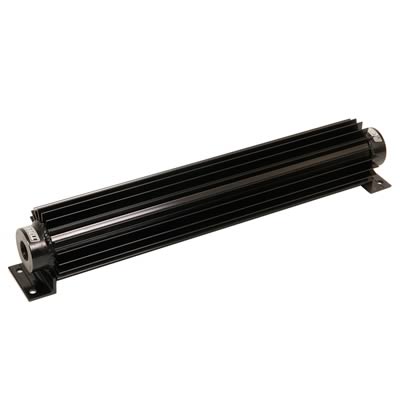
I'll install this:

rus-651480_w.jpg
 

Flapjack

Lunatic engine swapper
Joined
Apr 29, 2008
Posts
3,120
Reaction score
39
Location
Colorado Springs, Colorado
IIRMC they do, but really can't say as I always went my way with the installs. There are several ways to do the electric install also, direct key on, thru inertia, from FPDM and directly from the PCM with a tune change feed to the relay(s).
I'll try and give them a call today to find out how it's setup when following the instructions. I know there is a bank of three relays for the pumps that comes with the harness Lethal provides...

For best flowing I would go with a post rail setup, first fill the rails then the return line but with test, the pre-rail stuff works great. If this was an all out race car I would do post rail. Pre-rail works, this is also the way Ford recommends on hot rod PCM swaps (3V and 4V) with the stock rails. And if I checked correctly at PRI '09 this is the way the CJ is set (but do not quote me on that as I could not see all what I wanted as the stand people were looking weird at me messing with the hoses all over it.
You kinda lost me here... best flow is a post-rail. Got that. To do that, I may not even need any new fittings. I currently have the single line to the engine in a 1 to 2 y-block which then goes to the back of the rails. I could use that to connect the supply line, then use the supplied fittings to connect to the front of the rails. I'm 99% sure the regulator has the additional ports, as the instructions say two are not used. I will check when I get home.

I guess my main question is where does all this heat come from? If it comes from the engine, more flow makes sense. If it's coming from the pumps, then serial makes more sense, as it'll take longer for the fuel to get back to the pumps.

My next question on this setup would be why aren't you doing that?

You will have much more fuel than you would need but that would no save you on probably grenading an engine at 550rwhp, lol.
No, fuel alone won't save an engine. I'll just have to be careful, won't I? :beerdrink:

The concern starts when you get too picky and measure stuff, is like the first time you stick a oil temp gauge into a car and take it for a 10 lap race, you crap your pants. Most of the people I think have not measured it yet.
So, reading your thread on temps, it would seem that we really don't have a baseline for fuel temp. What does a stock GT read, say.... driving in stop and go traffic? I think that would be a good baseline.

We also don't know what is common for a high performance car. I have to go one step further and wonder if those temps affect E85 differently than pump gas....

I have an inline tranny cooler to install in the return line first. There is a temp sensor in the rail that you could monitor with a scanner.
I guess it wasn't that crazy an idea after all. Where do you plan on mounting it? Why worry about a sensor? Wouldn't you be happy knowing what your net temp drop (at the FRPTS) is?

Having more gas helps but at the long run it still gets hot. I've read 170F in mine. I knew this was happening and even knew it was hot when the mechanic removed the hat on a return car to check a pump and we got to actually feel it but nothing like measuring to start considering it an issue.
Have you monitored your knock sensors at those fuel temps? Do you see the car pulling timing anywhere? Can fuel temp affect timing like IATs and ECTs do? I've not seen anything like that in the SCT tables... but I'm not a pro tuner.

Yes he can (no obama pun intended)
I figured he can. His reputation preceeds him. I wouldn't have been able to convert to E85 without his sound advice.
 

Flapjack

Lunatic engine swapper
Joined
Apr 29, 2008
Posts
3,120
Reaction score
39
Location
Colorado Springs, Colorado
Yes, absolutely, and the single rail would help but wanted to have the FRPS monitor the pressure as a single line (an average of the whole system, in a way).
I've had this discussion several times before. Every time, the concensus seems to be the pressure will be very, very close... if not the same, regardless of where you measure. Pascal's Law states pressure in a container is applied equally in all directions. Whether your container is an "S" (deadheading at the 2nd rail) or a "Y", your pressure should be the same at any point in the "container".

Granted, that container is not sealed, but as pressure drops across the diaphragm of the fuel regulator, the regulator opens wider, allowing more pressure to fill the "container". Having worked with a large number of fuel control valves, I can tell you that a spring-loaded diaphragm is many times more responsive than a variable voltage setup in a stock car.

The fuel going thru or being held in the rails is what heats it the most, so one or two rails to go thru even that it would help would not totally solve the issue, if you drive the car in the street after an hour or so it will be as hot as it is right now because you keep heating and heating the gas that is in the tank and there is no cooling device in the system.
I'm pretty sure your net temps will be lower with the post-rail setup. The added flow will help a lot. In my computer water-cooling adventures, I've played a lot with different pumps with different flow rates to see what cools the waterblock quicker. Too much flow and the medium (water, in this case) didn't have enough time to absorb the heat from the passageways in the waterblock. Not enough flow, and you'd have heat soaked water that a single radiator (again, talking computers here) couldn't cool effectively.

In the case of an engine, the fuel's job is not to cool the block, so we want the heat to stay there. More flow effectively should do that. Less flow will remove more heat. Without a form of cooling in-the-loop, you may eventually get to the same temp, but I doubt it. Unless you live in Washington DC. :)

I'll install this:
Looks badass. How much does it cost? Does it have AN threads?

 

SherrodMustang

Senior Member
Joined
Aug 22, 2010
Posts
5,229
Reaction score
4
Location
Montgomery, Alabama
Very informative thread. Plan on ordering a lethal performance triple fore return hat tomorrow and y block. Going with the e85 coating and going to ask them about their relays and how they run, with the key or off the module power or what.
 

Flapjack

Lunatic engine swapper
Joined
Apr 29, 2008
Posts
3,120
Reaction score
39
Location
Colorado Springs, Colorado
Very informative thread. Plan on ordering a lethal performance triple fore return hat tomorrow and y block. Going with the e85 coating and going to ask them about their relays and how they run, with the key or off the module power or what.
I figured it would spur some good discussion.

I may be able to answer those questions in a few minutes, as I have the same system (right down to the coating) and plan on calling them now.
 

Flapjack

Lunatic engine swapper
Joined
Apr 29, 2008
Posts
3,120
Reaction score
39
Location
Colorado Springs, Colorado
Cool, let me know what they say?
Just got off the phone with Jared.

Basically, he says after tons of testing on tons of different cars, deadheading the fuel at the rails and capping the other end off is the way to go. Obviously, there is the cost savings and ease of installation, but he assured me there is little to know difference running that way vs a flow-through setup. It still has to go back out through the regulator.

As for the relays, the pumps will always run when the key is one. He said unless you wanted to run a kill switch (which is something I've considered for protection against theft anyways) to the wire that powers the relays, there isn't an easy way to prevent it. You're basically taking the wire that powers the FPDM and tapping into it to power the relays. Once they close, the pumps kick on.

**EDIT**
Forgot to ask about the heat.... oh well.
 

Flapjack

Lunatic engine swapper
Joined
Apr 29, 2008
Posts
3,120
Reaction score
39
Location
Colorado Springs, Colorado
So the white wire off the FPDM becomes the relay wire or the loop wire.
I guess that wire is a keyed 12?
It's basically used as a signaling wire to tell the pumps to come on. That wire will power the three relays, which when close, put power to the pumps. The FPDM is always on, so it's a reliable source of control. We just wouldn't need it's output, since the voltage is variable.
 

SherrodMustang

Senior Member
Joined
Aug 22, 2010
Posts
5,229
Reaction score
4
Location
Montgomery, Alabama
My understang is that the relays are powered right off the battery by a large gauge wire that is fused and the white module wire just closes the circuit and flips the pumps on.
 

Flapjack

Lunatic engine swapper
Joined
Apr 29, 2008
Posts
3,120
Reaction score
39
Location
Colorado Springs, Colorado
Like I said, the white wire is basically a control wire. The way I've seen relays work is they need control voltage to open/close. Once they do, a circuit is completed and the relay carries the voltage doing the business (from the battery, in this case), to where it's going (to the pumps).

I'll look at it again, but the white wire is not going to "complete a circuit" with the voltage from the battery. It's going to open/close the relays. For all I know, the voltage coming off the white wire is 5v compared to the 12v coming off the battery. Maybe this is all semantics and we're just saying the same thing. :p

Sent from my Vibrant using Tapatalk
 

lito

Senior Member
Joined
Nov 8, 2008
Posts
3,900
Reaction score
28
Location
Caracas, Venezuela
You kinda lost me here... best flow is a post-rail. Got that. To do that, I may not even need any new fittings. I currently have the single line to the engine in a 1 to 2 y-block which then goes to the back of the rails. I could use that to connect the supply line, then use the supplied fittings to connect to the front of the rails. I'm 99% sure the regulator has the additional ports, as the instructions say two are not used. I will check when I get home.

No need for additional ports as you only need two to do that.

I guess my main question is where does all this heat come from? If it comes from the engine, more flow makes sense. If it's coming from the pumps, then serial makes more sense, as it'll take longer for the fuel to get back to the pumps.

My next question on this setup would be why aren't you doing that?

No matter how you route it, at then end it will get as hot because it is a closed system with no cooling device, a part of all the heat absorbed will be kept and stored in the fuel tank. Actually a pre-rail config delays this quite some.

For example, once I reach 160F I can go WOT or close for quite some so all the fuel already heatsoaked will be "consumed" and "replaced" and it won't lower more than 130-135F.

So, reading your thread on temps, it would seem that we really don't have a baseline for fuel temp. What does a stock GT read, say.... driving in stop and go traffic? I think that would be a good baseline..

I do not have a baseline and have quite opportunities to get some with customer cars but had not cared, as it will be quite better and I will still have a problem. Heat is one the reasons, maybe the the most important issues of return systems, the less heat, less vaporization, less evap control and fuel consumption they can achieve, the better. That is why OEMs are using different solutions (electronic or mechanic in-tank returnless, etc.)

Have you monitored your knock sensors at those fuel temps? Do you see the car pulling timing anywhere? Can fuel temp affect timing like IATs and ECTs do? I've not seen anything like that in the SCT tables... but I'm not a pro tuner.

Not only knock, vapor locking. No relation with the tables known, maybe is there and not mapped, also there is a couple of tables that look to be not properly referenced once you have this on the returnless section.

Looks badass. How much does it cost? Does it have AN threads?

It cost 8x$ and yes is -8.

As for the relays, the pumps will always run when the key is one. He said unless you wanted to run a kill switch (which is something I've considered for protection against theft anyways) to the wire that powers the relays, there isn't an easy way to prevent it. You're basically taking the wire that powers the FPDM and tapping into it to power the relays. Once they close, the pumps kick on.

Not necessarily, there are options but you have to be tuned for that.

It's basically used as a signaling wire to tell the pumps to come on. That wire will power the three relays, which when close, put power to the pumps. The FPDM is always on, so it's a reliable source of control. We just wouldn't need it's output, since the voltage is variable.

You can make it output what you want in the tune.

Like I said, the white wire is basically a control wire. The way I've seen relays work is they need control voltage to open/close. Once they do, a circuit is completed and the relay carries the voltage doing the business (from the battery, in this case), to where it's going (to the pumps).

I'll look at it again, but the white wire is not going to "complete a circuit" with the voltage from the battery. It's going to open/close the relays. For all I know, the voltage coming off the white wire is 5v compared to the 12v coming off the battery. Maybe this is all semantics and we're just saying the same thing. :p

The white wire has 12V on key on, PCM activates relay pump, power comes thru inertia and powers the FPDM.
 
Last edited:

Flapjack

Lunatic engine swapper
Joined
Apr 29, 2008
Posts
3,120
Reaction score
39
Location
Colorado Springs, Colorado
Thanks for all the replies.

One more question. With the turbo headers and down pipe on the driver's side, I probably won't have room for the evap canister. I never did figure out how to turn it off in the tune. If I remove it, what else needs to be done (at the tank side of the line)?
 

Latest posts

Support us!

Support Us - Become A Supporting Member Today!

Click Here For Details

Back
Top