


NSLB ENGINEERING
Junior Member
Hey everyone,
I wanted to share a DIY project I made for my 2014 Mustang GT. This is my second version of this fog light intake funnel. The first version was more of a proof of concept, but for V2 I wanted to improve the fitment, clean up the design, make the airflow path more direct, and make the part easier to install.
I'm currently an engineering student, so part of the reason I wanted to make this was to apply what I've been learning in school to my own car. I wanted to take concepts like airflow, design iteration, testing, and data collection, and use them to make a functional improvement instead of just guessing.
The funnel mounts in the fog light opening and directs air toward the factory/stock intake ducting. On these cars, that stock ducting is normally partially covered or blocked by the bumper area, so my goal was to give it a more direct source of outside air from the front of the car.
Another big goal for this version was making it a direct bolt-on part. I wanted the installation to be simple and not require a bunch of custom work. Ideally, it should be something that can be installed easily, removed if needed, and still keep the car serviceable. I also wanted to keep the setup reversible in case I ever want to go back to the factory fog light setup.
I'm not claiming this is a huge horsepower mod or true ram air, but I wanted to see if I could improve how much air actually gets directed to the stock duct location, especially for track use or higher-speed driving.
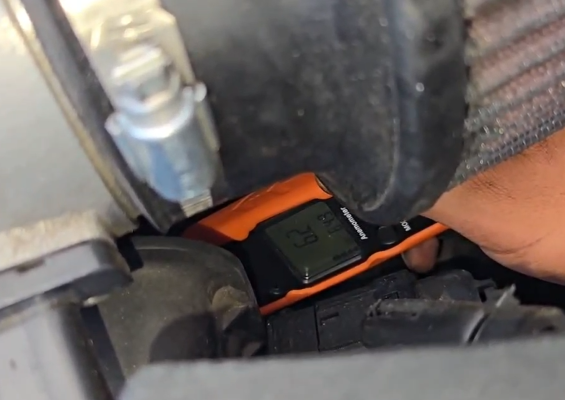
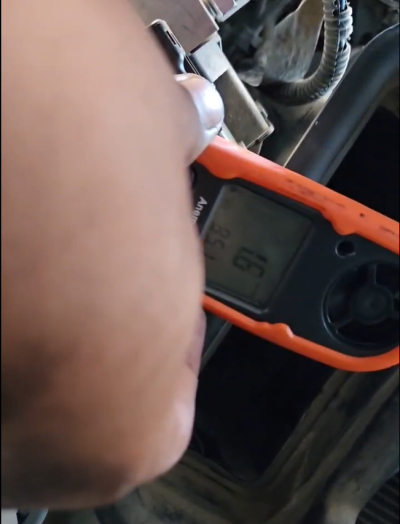
For testing, I used a leaf blower and a handheld anemometer to record airspeed. The leaf blower was pushing around 25 m/s, and I held it about 8 inches away from the upper grille to keep the test as consistent as I could.
I compared my car to my cousin's car, which is very similar to mine, but his has a GT500 grille, so that is worth noting. With the anemometer, the highest reading I saw on his car was about 1.6 m/s. On my car with the V2 fog light intake funnel, the highest reading I saw was 6.1 m/s.
That comes out to roughly:
Cousin's car with GT500 grille: 1.6 m/s, about 3.6 mph air speed
My car with V2 fog light funnel: 6.1 m/s, about 13.6 mph air speed
So with the same basic test method, my setup showed a little over 4x higher measured air speed at the duct area.
Obviously, this was not a perfect lab test, and I know an anemometer reading does not automatically mean horsepower gains. I have not dyno tested it. But as a real-world comparison, it does seem like the funnel is doing what I designed it to do: direct more outside air into the factory ducting area that is normally hidden behind the bumper.
A few things I focused on with this second version:
The main things I want to look at are intake air temps, airflow-related data, and how the car behaves during actual driving instead of just stationary testing. The leaf blower and anemometer test was a good first comparison, but I think data logging during autocross will give me a better idea of what the part is doing in a real driving environment.
After that, I also want to run CFD testing on the design and use that data to make improvements. I want to see where the air is separating, where the restriction points are, and whether the shape can be improved to flow better into the factory duct.
I'll attach photos of the part, the install, and the airflow testing. I'm open to feedback, especially from anyone who has done fog light ducting, brake ducting, intake ducting, autocross data logging, or CFD work on an S197.
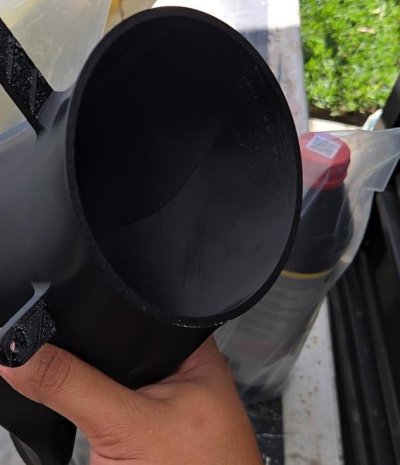
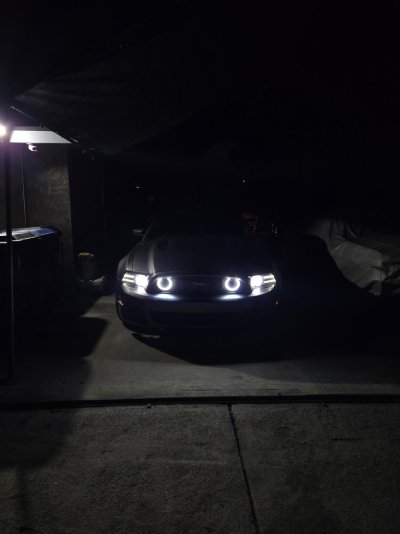
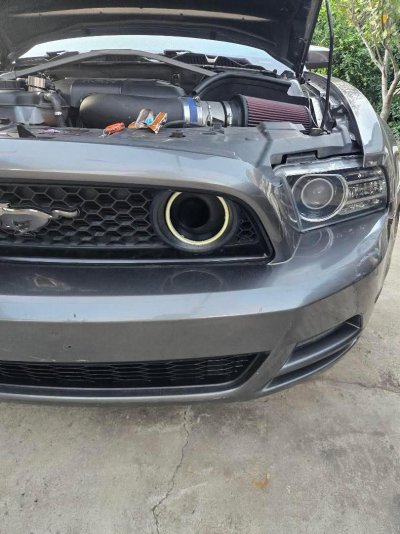
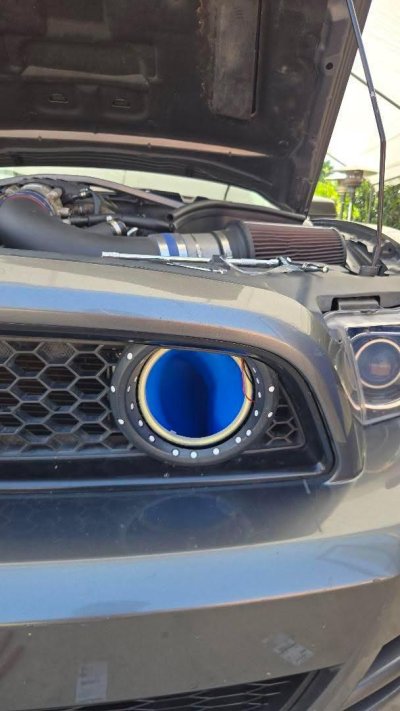
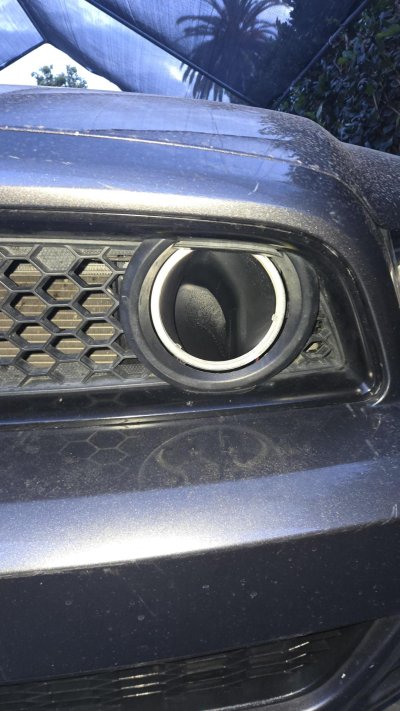
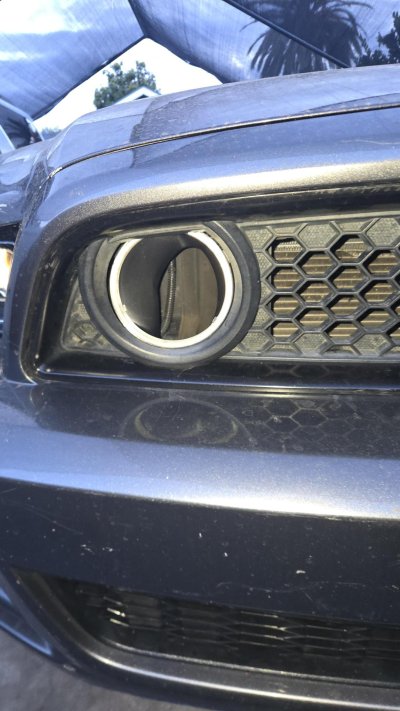
I wanted to share a DIY project I made for my 2014 Mustang GT. This is my second version of this fog light intake funnel. The first version was more of a proof of concept, but for V2 I wanted to improve the fitment, clean up the design, make the airflow path more direct, and make the part easier to install.
I'm currently an engineering student, so part of the reason I wanted to make this was to apply what I've been learning in school to my own car. I wanted to take concepts like airflow, design iteration, testing, and data collection, and use them to make a functional improvement instead of just guessing.
The funnel mounts in the fog light opening and directs air toward the factory/stock intake ducting. On these cars, that stock ducting is normally partially covered or blocked by the bumper area, so my goal was to give it a more direct source of outside air from the front of the car.
Another big goal for this version was making it a direct bolt-on part. I wanted the installation to be simple and not require a bunch of custom work. Ideally, it should be something that can be installed easily, removed if needed, and still keep the car serviceable. I also wanted to keep the setup reversible in case I ever want to go back to the factory fog light setup.
I'm not claiming this is a huge horsepower mod or true ram air, but I wanted to see if I could improve how much air actually gets directed to the stock duct location, especially for track use or higher-speed driving.
For testing, I used a leaf blower and a handheld anemometer to record airspeed. The leaf blower was pushing around 25 m/s, and I held it about 8 inches away from the upper grille to keep the test as consistent as I could.
I compared my car to my cousin's car, which is very similar to mine, but his has a GT500 grille, so that is worth noting. With the anemometer, the highest reading I saw on his car was about 1.6 m/s. On my car with the V2 fog light intake funnel, the highest reading I saw was 6.1 m/s.
That comes out to roughly:
Cousin's car with GT500 grille: 1.6 m/s, about 3.6 mph air speed
My car with V2 fog light funnel: 6.1 m/s, about 13.6 mph air speed
So with the same basic test method, my setup showed a little over 4x higher measured air speed at the duct area.
Obviously, this was not a perfect lab test, and I know an anemometer reading does not automatically mean horsepower gains. I have not dyno tested it. But as a real-world comparison, it does seem like the funnel is doing what I designed it to do: direct more outside air into the factory ducting area that is normally hidden behind the bumper.
A few things I focused on with this second version:
- Direct bolt-on installation
- Better fitment in the fog light opening
- Cleaner look from the front bumper
- More direct airflow path to the stock intake ducting
- Keeping it clear of wiring, the bumper, and anything that moves
- Making sure it is secure enough for higher-speed use
- Keeping the setup reversible if I want to go back to the factory fog light
The main things I want to look at are intake air temps, airflow-related data, and how the car behaves during actual driving instead of just stationary testing. The leaf blower and anemometer test was a good first comparison, but I think data logging during autocross will give me a better idea of what the part is doing in a real driving environment.
After that, I also want to run CFD testing on the design and use that data to make improvements. I want to see where the air is separating, where the restriction points are, and whether the shape can be improved to flow better into the factory duct.
I'll attach photos of the part, the install, and the airflow testing. I'm open to feedback, especially from anyone who has done fog light ducting, brake ducting, intake ducting, autocross data logging, or CFD work on an S197.


