How much does the stock diff cover weigh? If you're including the weight of the Whiteline differential cover, you should include the weight of the OEM one with the Fays2 unit.
Good point. Here is the weight of the stock S197 steel diff cover, 2.9 pounds, which is made from fairly insubstantial stamped steel. The stock cover, panhard bar and PHB brace (13.3 pounds total) come off when you install the Watts link, of course. The cast aluminum covers that come on the Boss 302 LS and track pack and GT500 might weigh a tick more, but probably not a whole lot. The OEM diff covers that have come on the S197 aren't meant to take all of the lateral loads of the cars in cornering, unlike a unit designed to mount a Watts Link propeller...
Left: Whiteline diff cover is 8.5 lbs. Right: The Whiteline diff cover, propeller and two lateral arms weighs 20.4 lbs (then subtract half the arm weight)
As you can see the Whiteline diff cover weighs 8.5 pounds. It is quite substantial so this was lower than I had guessed. Being aluminum it will be stiffer than steel in bending per unit of weight. The entire Whiteline S197 Watts Link kit is 28.3 pounds, with all hardware and parts, as shown below. The amount of that that is unsprung is (20.4 lbs - 3.1 lbs for half the weight of the two lateral arms) 17.6 lbs. The difference to the stock PHB set-up, which itself has an unsprung mass of (2.9 for the cover + 3.6 for half the PHB weight = 6.5 lbs) is 11.1 lbs. That's the magic number for the Whiteline unit's unsprung weight difference, from our scales and calculations. But to keep this in perspective, let's add the weight of the axle housing (150+ lbs, aka:
massive), rear brake rotors and calipers, rear wheels and tires, and half the weight of the rear control arms. That is the total unsprung weight on the rear suspension, which is literally HUNDREDS of pounds. So does an 11.1 lb unsprung weight difference really matter? And remember, the diff cover alone is 8.5 lbs of that (and has its own benefits, and according to the SCCA, these could involve "magic", hehe). On a car that weighs upwards of 3600 pounds with driver? Then
look at the benefits that a proper Watts Link can provide, and ask yourself... am I chasing rainbows?
Left: The entire Whiteline Watts Link kit weighs 28.3 lbs. Right: The WL lateral arms weigh 3.12 lbs each
Personally, I think it is a bit extreme to be chasing the unsprung weight differences between the Fays2/Steeda "ladder" style vs the Whiteline/Cortex/Griggs/everyone else's Watts link design. When we take the axle housing out of our car I'll get the
total unsprung weight from the entire rear suspension, just to show how little 11.1 lbs is in the grand scheme of things. This is just one
small thing to consider of many differences between these two popular Watts Link units. There are other, more substantial goals to chase on the S197 chassis, in my opinion. The clamped mounts that attach the lateral load arms to the axle housing are something to ponder about the Fays2, to me. We have seen the pressed-in axle tubes slip out of the 8.8" axle center section in road racing; we've been paint marking the axle tubes to make sure it isn't happening on our car and we're going to weld the tubes into the center section when we tear the unit down for a differential upgrade. Since this is a known area of potential weakness, I sure wouldn't want to be "clamping" and supporting all of the lateral loads of the car from the Watts Links to the pressed-in axle tubes, especially at road race speeds on big R-compound tires or slicks, with aero loading. We have heard of axle clamps slipping under heavy lateral loads, and propellers breaking, and noise from the rods ends. But that's only what we've heard, and that's just a few of the differences.

 The lateral loading seen in just one corner, the 270° "carousel" at MSR-H, lasts for more than 13 seconds in the same loaded direction (see video from 3:23 to 3:36)
Someone asked "Whats the difference between a 1.4 g lateral load on a road course vs an autocross?" Well, there are several differences, really. The
consequences of a suspension part failure go up exponentially with speed, and the
length of time that higher loads are placed on suspension parts goes up as well. You don't see sustained lateral loading for more than a second or two on almost any autocross course, but you can and do see long sections of lateral loading in big sweepers on road courses, like in the video linked above from our last track event.
Thirteen seconds at max lateral loading
in one corner? You'd never see that in a parking lot. I've seen suspension parts fail at autocrosses and not much bad usually happens, other than some broken parts. When parts fail on a road course it usually isn't pretty. Off course, into dirt, dig in, flip, anything can happen. That's why tech for a track event is usually performed at a certified shop before the event, with the car on a lift, so we can check
everything. And then there are additional aero loads, which are very low at 30-60 mph (autocross) but which can add significantly to suspension loading at 100-150+ mph (road course speeds).
The difference in the quality of components, the ease of installation, the
manner in which the lateral loads of the car are placed into the axle housing, and the lack of all-metal rod ends make the Whiteline one of the few Watts Link kits suitable for real, sustained street use, in my opinion. There are many ways to build a Watts Link, and all of the offerings out there have their pros and cons - as everything you can build is always a compromise. Some or all of these points are not as important to dedicated autocross-only S197 race cars, of which there are might be fewer than a dozen in the country, but the clanking and banging of worn rod ends will be noticeable to most people on the street.


And there is a cost difference as well. Apparently the Fays2 is $650 whereas the Whiteline unit is $900. If you see the kits side by side you will likely understand see why - the Whiteline kit's cast differential cover is a beautiful, substantial piece - so good the SCCA banned it (for a year). This part does allow for optional differential cooling, if you get to the point where that might help (sustained road course use). We're burning up axle seals and differentials on long, hot track days and an external cooler is in our car's future. It will be easy to do with the beefy WL supplied diff cover already in place, which has ports for diff fluid feed and return lines.
2012 Solo Nats - 1st and 2nd were running AST coilovers, therefore those are the best?
As for "proof in racing", well, the WL unit just hasn't been out too terribly long, so take that with a gain of salt. We installed an early Whiteline Watts production unit on our car
in August 2012 and ran it in ESP class at the September 2012 Solo Nationals a couple of weeks later, with a total of 4 months of testing in ESP class, and
one practice event before Nationals with the Whiteline Watts installed. And as dearest Sam
loves to point out, over and over
and over again, the top 3 cars in ESP last year at this event (which were each dedicated, race-only builds with a lot of testing and exceptional drivers) had Fays2 Watts Link kits that he sold to the owners. Kudos to you, Sam. We placed 4th in ESP with the only WL Watts unit in the entire class, in a real daily-driven street car, that outweighed the winner by 400+ pounds. Using the same logic we had AST coilovers on the 1st and 2nd place cars and Motons in 4th, that we had sold and/or built for the owners. Is that a definitive endorsement of these parts?
One autocross event? Of course not.
That was our
first autocross on the Whiteline Watts unit, but we've run a lot of track and autocross events since then. So don't read too much into who won on what Watts Link in this parking lot or that, as the WL unit is very new and in the hands of relatively few... but we keep selling more and more kits to more and more street cars, autocrossers and circuit racers. Give it a little time to start showing what it is capable of. We will try to keep winning more races and setting new track records with it on our own car, and we will continue to help our customers do the same.
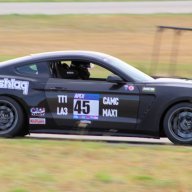
Whiteline equipped 2011 GT winning TT3 both days and setting track record, NASA at MSR-Houston, Jan 19-20
Just my two cents.