Cortex Torque Arm Racechrono Track Review

barbaro

Member
Joined
Jan 23, 2011
Posts
281
Reaction score
0
Really? Whiskey11, who just installed a torque arm on a "lightly-modded street car," apparently would beg to differ:

Whiskey 11 has Coilovers and Watts link I believe. What do you consider lightly modified? And i don't know if Whiskey has a definitive opinion as he is still experimenting. But if the choice is aftermarket upper control arm or a torque arm. . . well I have not heard of a Torque arm breaking under load (See Whiteline) Neither have I heard of a UCA curing nosedive or chassis vertical movement.

An aftermarket UCA along with various suspension mods may get you an equivalent track time. But the Cortex torque arm / rear grip package gives you a sense of comfort and control in part by quieting down extraneous chassis movement both horizontal and vertical and keeping both rear wheel planted at all times.

I started as a skeptic and avoided the torque arm for more than a few years even though everyone around me who had one was telling me it was the bomb. They were right. Bruce Griggs was right, Filip Trojanek is right. Revan Racing is right. Etc . . . . It was the equivalent of putting a supercharger on my suspension. With the Cortex rear grip package I am driving a completely different car from everybody else. My car does not drive like a Mustang. It drives like something much, much better. Subjectively, it has brought the handling to a whole new level. The only thing that will convince the naysayers is to drive one. So no matter how much you snipe, Sky Render, it does not change the fun I am having.
 

barbaro

Member
Joined
Jan 23, 2011
Posts
281
Reaction score
0
So far, what I'm getting is that the 3 link setup is capable of being at least as good as the torque arm setup when the 3 link setup makes use of Heim joints or some other equivalent mechanism to eliminate bind.

But my question is this: if you're constrained to use at least some type of bushing to eliminate NVH, and thus are forced to introduce bind into the system, does the torque arm suddenly have a notable advantage? If so, what, where, and by how much?

Like barbaro, I'm also interested in running with a relatively compliant suspension, because my car will be primarily a daily driver. But within that constraint, I want it to be as competent a car as I can possibly make it. I want it to feel as responsive and be as controllable as possible as long as doing so doesn't require that I significantly compromise the ride quality relative to stock. I'm willing to go with coilovers if doing so doesn't compromise suspension travel any more than springs which would lower the front by 1" and the rear by 1.5" would. I'm willing to use lower and upper control arm relocation brackets to retain the proper suspension geometry. I'm willing to use heim joints if doing so won't actually increase NVH by much, provided that doing so doesn't wind up being a maintenance headache.


Part of the problem is that I have yet to take delivery of my car (2014 GT with track package and Recaros), so I don't yet have a lot of experience with the stock suspension. I fully intend to gain that experience before making any suspension-related decisions. But the answer to the above hopefully won't require a lot of detail about the specifics of the setup. I suppose you could presume, for the purpose of answering the question, that I want the ride quality to be about the same as that of a stock Boss 302.


Hopefully my question won't be too distracting, because I'm finding the discussion thus far to be quite informative and interesting! :thumb:

Then get Boss Springs like I did and a Cortex rear grip package consisting of Watts link/Torque Arm/ Adjustable rear LCA's. Your ride quality will be much superior to the oem ride except you will hear some chatter from the heim jointed street cortex control arms. You won't care I promise you. The gobbleygook on this thread is for techies and is designed to confuse you. The Boss Springs are compliant and the Torque Arm reduces your body roll, nose dive and squat. You will think you are driving an IRS car only better. I challenge you to find one person that is not happy with that package.
 

kcbrown

Member
Joined
Jul 24, 2013
Posts
656
Reaction score
5
Then get Boss Springs like I did and a Cortex rear grip package consisting of Watts link/Torque Arm/ Adjustable rear LCA's. Your ride quality will be much superior to the oem ride except you will hear some chatter from the heim jointed street cortex control arms. You won't care I promise you.

Yeah, I might go that route.

The problem is that doing so requires committing money to what amounts to an unknown quantity (and so does everything else, sans committing to a setup that I've actually gotten a chance to drive for myself).

What swaybar setup are you running? Are you running any non-stock components (aside from springs and shocks) in the front? If so, what are they?


The gobbleygook on this thread is for techies and is designed to confuse you.
I'm not so quick to dismiss the discussion here, and am a bit of a "techie" myself. I'm not the sort to shy away from engineering discussions (I rather enjoy them, actually). None of this stuff is magic. The car itself is the result of a lot of engineering effort, and the same is true of the best aftermarket stuff. It all ultimately conforms to and derives from the laws of physics. A solid understanding of the principles that underlie the suspension components being used and of how they interact with each other makes it possible to predict with good accuracy the results of changes to them. That's not a substitute for actual experience with them, but it makes it possible to be judicious in the choice of what changes to make. It makes it possible to greatly narrow the possibilities without committing a bunch of resources needlessly.


The Boss Springs are compliant and the Torque Arm reduces your body roll, nose dive and squat.
The torque arm can't reduce body roll to an appreciable degree. The forces involved are far too great. The torque arm doesn't provide any significant resistance around the longitudinal axis of the car, nor would I want it to. That's a job for springs and sway bars.

Nose dive and squat, on the other hand, are things that it looks like it should control fairly nicely, as long as the rest of the geometry cooperates. That's where the engineering understanding comes into play. If sufficiently deep, it should make it possible to determine under what circumstances one would encounter brake hop and, thus, make it possible to arrange the rear suspension to avoid it. Needless to say, the possibility of brake hop is something I am deeply concerned about, because as much as I want responsiveness and controllability, I'm not willing to sacrifice reliability to get it.


You will think you are driving an IRS car only better. I challenge you to find one person that is not happy with that package.
Ultimately, being happy with the package is what it's all about, of course. I'm not going onto the track to compete or anything (except, perhaps, against myself!), I'm going out there to have fun. To that end, what I'm after is something that feels responsive and visceral while being eminently controllable and comfortable. The torque arm could easily be a way to accomplish that.

But note, too, that I'm not willing to give up any reliability, especially of the drivetrain, in the process. The track package comes with a rear differential cover that is designed to dissipate heat and, if I'm not mistaken, is the same as the one that Whiskey11 is using. And the only reason Whiskey11 is able to get away with using that is due to the "modest" power his engine makes. I won't be in that position, as I'll be running a 5.0 that makes significantly better power.

Worse, modification of the diff cover will almost certainly result in my differential no longer being covered by the powertrain warranty. :(

As such, the torque arm isn't necessarily the clear winner for my uses. It could be, but it's not clear yet.


It's going to be an interesting experiment. I'll be going where everyone here has gone before. :naughty1:
 

SoundGuyDave

This Space For Rent
Joined
Apr 9, 2007
Posts
1,978
Reaction score
29
I feel like I'm in an episode of "Ground Hog Day" combined with a bad dream...

Oh Great and Wise Barbaro, if you are right and the Cortex package you outlined is indeed the "supercharger for suspension," how many laps at a 2-mile track will I get before it heat-soaks? Can I buy a larger intercooler for it? If it's "the bomb." is there a way to defuse it before it blows, or at least a way to delay the fuse so that I can get through tech at the end of the race? Is it hard to get a drive-belt down to the rear suspension?

Without even touching your main assertion, so many of the things you say are just flat wrong, and that doesn't help your position at all. Torque arms do NOT "reduce body roll." Springs and swaybars do that. Nobody denies that a torque arm reduces rear squat under acceleration (and does so by increasing the anti-squat percentage), but there are a variety of ways to make that happen, and the torque-arm isn't the only one. In fact, the rear grip kit includes relocation brackets for the control arms, which is the prime way of increasing anti-squat, and does quite well with a 3rd link yielding essentially the same effect. From Norm's numbers, the TA by itself does increase anti-squat by a few percentage points, but the big gain is from the brackets. I'll let him run the numbers if he wants, and if he hasn't been utterly disgusted by this thread. Anti-dive (and the corresponding increase in rear brake efficiency) can better be handled at the front end, even though the TA does contribute an analogous component.

The "experts" that you cite (and yes, I do consider Filip and Bruce Griggs to be experts) consist of two manufacturers and a sales outlet. I notice that NONE of them have gotten involved with this thread. Too busy? Very possibly, but with your completely fan-boi approach as cheerleader, I wouldn't blame them from distancing themselves.

As to your assertion that "the gobbleygook on this thread is for techies and is designed to confuse you," that strongly implies that we "techies" are deliberately obfuscating the information, when it's pretty plain we're doing the exact opposite. The reason that we're trying (again and again) to QUANTIFY the actions of the suspension package you're recommending is to understand (and let everybody else in the world understand) exactly how the system works, and thus reveal what the benefits truly are. We want to break it down to terms of wheel rate, anti-squat, anti-dive, instant center, roll center, etc., not "the bomb," "supercharger for your suspension," or other nebulous, unsupportable claims. We leave that for "mods" like vortex generators in the air filter, exhaust whistles, and other marketing-driven nonsense like that.

You persist in portraying yourself as a persecuted messiah, spreading the one true word, and you just ain't all that... Remember that the definition of insanity is doing the exact same thing, the exact same way, and expecting a different result. If you would just spend a bit of time NOT posting, but instead studying suspension systems, or at least googling the terms, you would be in a LOT better shape trying to support your position. I don't think any of us are arguing that the Cortex rear grip package is flat-out superior to a stock rear suspension. The two most effective changes you can make to the stock S197 suspension are dampers and springs. I don't think you'll argue against that either. Those two items alone provide ALL of the benefits you list in your latest missive: Reduce body roll. Check. The increased spring rate means that with a given load transfer, the suspension will not compress as much. Reduce nose dive. Check. Same exact reason. Reduce squat. Check. Again, the same exact reason. In addition, those two items will address your "ride quality" as well. Better dampers will tighten up the chassis response to high- and low-speed suspension jounce and rebound conditions. The main difference between a "Cadillac ride" and a "BMW ride" is in the damper rebound curves. A decent set of adjustable dampers on an S197 will go a long way towards being able to hit your target "ride quality" characteristics.

So, let's take a hard look at the Cortex rear package. It includes:

Coil-over dampers. Increased spring rates, better dampers, adjustability for ride quality. Works equally well with TA or 3-link.
Rod-end lower control arms. Eliminates bushing deflection. Works equally well with TA or 3-link.
LCA relocation brackets. Allows a major increase in AS%. Works equally well with a TA or 3-link.
Watts link setup. Arguably better lateral axle location over a Panhard bar. Works equally well with a TA or 3-link.
Torque arm setup. Offers minor increase in AS%; arm length provides better control of axle rotation than a stock upper control arm and rubber bushings. Not necessarily true of an aftermarket UCA and Heim joints.

As a package, I'm sure this works well. VERY similar to the Griggs package, which I'm also sure works well. The torque arm, however, is NOT the major contributing factor here, it's all the other stuff surrounding it that create the effects you describe. THIS is why we're constantly beating up on your posts. They're mis-informed, you're mis-informed, and worse, you won't admit that, instead taking pot-shots, dropping non-sequitur arguments, and acting as if you're being persecuted for being leading-edge and non-comformist. In the end, the TA is still 1970's technology. When applied to the abortion that was the FOX/SN95 quadra-link suspension, it was a night-and-day improvement. Just because a couple of manufacturers re-tooled to transplant their SN95 kits onto an S197 doesn't make it leading-edge. Think about subframe connectors. the S197 has a torsional rigidity that's higher than a Gallardo AWD, but that didn't stop people from suggesting we "need" subframe connectors to reduce chassis flex. I'll pose a question for all thinking readers: Given the information we have about suspension operation, is it possible that a torque-arm is a solution to a problem that doesn't exist? Not you, Barbaro, you've already made up your mind, and no amount of information or "truth" will change it, or even incite thought.

 

55R2014

Junior Member
Joined
Apr 4, 2013
Posts
36
Reaction score
0
Location
CA
So far, what I'm getting is that the 3 link setup is capable of being at least as good as the torque arm setup when the 3 link setup makes use of Heim joints or some other equivalent mechanism to eliminate bind.

But my question is this: if you're constrained to use at least some type of bushing to eliminate NVH, and thus are forced to introduce bind into the system, does the torque arm suddenly have a notable advantage? If so, what, where, and by how much?

Like barbaro, I'm also interested in running with a relatively compliant suspension, because my car will be primarily a daily driver. But within that constraint, I want it to be as competent a car as I can possibly make it. I want it to feel as responsive and be as controllable as possible as long as doing so doesn't require that I significantly compromise the ride quality relative to stock. I'm willing to go with coilovers if doing so doesn't compromise suspension travel any more than springs which would lower the front by 1" and the rear by 1.5" would. I'm willing to use lower and upper control arm relocation brackets to retain the proper suspension geometry. I'm willing to use heim joints if doing so won't actually increase NVH by much, provided that doing so doesn't wind up being a maintenance headache.


Part of the problem is that I have yet to take delivery of my car (2014 GT with track package and Recaros), so I don't yet have a lot of experience with the stock suspension. I fully intend to gain that experience before making any suspension-related decisions. But the answer to the above hopefully won't require a lot of detail about the specifics of the setup. I suppose you could presume, for the purpose of answering the question, that I want the ride quality to be about the same as that of a stock Boss 302.


Hopefully my question won't be too distracting, because I'm finding the discussion thus far to be quite informative and interesting! :thumb:

I will try to answer your questions based on my non-technical seat of the pants experience.

I have a 2014 Track Package with Brembos as you have ordered. My car is a daily driver(10,000+ miles in the past three and a half months). I have the full CorteX Xtreme Grip suspension package tuned for the street(poly bushings on the chassis ends, softer springs). I did it in two stages. The watts link, lower control arms, and coil-overs were done at 3,000 miles after I took delivery. I am still using the factory track pack swaybars front and rear. 2,000 miles later I added the torque arm. Even before adding the torque arm, there is a big difference between the harsh factory track pack suspension and a smoother riding aftermarket setup with spring and shocks/dampers that are matched to work together. The torque arm lessens the squat on acceleration and nosedive pitch on braking. To me there is a noticeable different in how the car drives with the torque arm but it is more subtle difference that the watts/coilovers/control arms/ were from the stock suspension.

The coils and dampers dropped the car two inches(8 inch tall spring) as that was where Filip set the ride heights before installing. It was a perfect drop for me with the factory 19" Track Pack wheels. The ride height is fully adjustable so you can set it to where you want it. I went with 225 lbs springs for the "street". The ride is still firm, very controlled, no bottoming and only a small increase in NVH from the watts link connections. NVH is a little more gear hum from the third member. It is muted but you can hear it if you listen for it. With the radio on its not noticeable to me.

The car I have to compare it to is my girlfriends 2008 BMW 328i six speed. A wonderful driving car. I have not driven a smoother and nicer handling street car until I changed the suspension on my car to the CorteX setup. There are other suspension companies and combinations out there. I chose CorteX because I had the fortunate opportunity to drive a street car version of the racing suspension and decided that was what I wanted for my car.

Hopefully I will get the car on the track next month.

I have already posted a series of pictures for the torque arm install. I have even more of the suspension install but did not post them here as this is a torque arm thread. If you would like to see the suspension pictures let me know.

I hope this helps some.
 

kcbrown

Member
Joined
Jul 24, 2013
Posts
656
Reaction score
5
I will try to answer your questions based on my non-technical seat of the pants experience.

I have a 2014 Track Package with Brembos as you have ordered. My car is a daily driver(10,000+ miles in the past three and a half months). I have the full CorteX Xtreme Grip suspension package tuned for the street(poly bushings on the chassis ends, softer springs). I did it in two stages. The watts link, lower control arms, and coil-overs were done at 3,000 miles after I took delivery. I am still using the factory track pack swaybars front and rear. 2,000 miles later I added the torque arm. Even before adding the torque arm, there is a big difference between the harsh factory track pack suspension and a smoother riding aftermarket setup with spring and shocks/dampers that are matched to work together. The torque arm lessens the squat on acceleration and nosedive pitch on braking. To me there is a noticeable different in how the car drives with the torque arm but it is more subtle difference that the watts/coilovers/control arms/ were from the stock suspension.

Can you give us an idea of how much of a difference in pitch you found between what you had before the torque arm and what you had after?

Also, do you have LCA relocation brackets (looks like you would have if you got the CorteX setup)? And finally, did you install a UCA relocation bracket initially?

I'm trying to get a sense of whether or not you had the rear geometry set up as best as possible prior to going with the torque arm.


The coils and dampers dropped the car two inches(8 inch tall spring) as that was where Filip set the ride heights before installing. It was a perfect drop for me with the factory 19" Track Pack wheels. The ride height is fully adjustable so you can set it to where you want it.
Can you give me an idea of what the minimum drop with your setup is?


I went with 225 lbs springs for the "street".
Is that the front rate or the rear rate? Do you have that rate on all four corners? If not, what rate front and what rate rear?

I'm looking at the CorteX site and don't see spring rate information for their street coilover setup...


The ride is still firm, very controlled, no bottoming and only a small increase in NVH from the watts link connections. NVH is a little more gear hum from the third member. It is muted but you can hear it if you listen for it. With the radio on its not noticeable to me.
I'd guess that'd be coming through the torque arm, right?


There are other suspension companies and combinations out there. I chose CorteX because I had the fortunate opportunity to drive a street car version of the racing suspension and decided that was what I wanted for my car.
I'm hoping to get a chance to feel a coilover setup for myself as well...


Hopefully I will get the car on the track next month.

I have already posted a series of pictures for the torque arm install. I have even more of the suspension install but did not post them here as this is a torque arm thread. If you would like to see the suspension pictures let me know.
Thanks! I'd like to see them, but it might be more appropriate to start a separate thread for that.
 

kcbrown

Member
Joined
Jul 24, 2013
Posts
656
Reaction score
5
Then get Boss Springs like I did and a Cortex rear grip package consisting of Watts link/Torque Arm/ Adjustable rear LCA's. Your ride quality will be much superior to the oem ride except you will hear some chatter from the heim jointed street cortex control arms. You won't care I promise you. The gobbleygook on this thread is for techies and is designed to confuse you. The Boss Springs are compliant and the Torque Arm reduces your body roll, nose dive and squat. You will think you are driving an IRS car only better. I challenge you to find one person that is not happy with that package.

My prior reply to you seems to have been dumped in the bit bucket somehow.

I've actually found this thread to be quite informative. I'm not at all averse to engineering discussions. I actually welcome and enjoy them, because such understanding is the means I generally use to make decisions about what to do or, at least, what not to do. And in any case, I have an engineering mindset myself.


The torque arm can't reduce body roll because it doesn't (or shouldn't!) provide any meaningful resistance around the roll axis of the car. Nor would I want it to, actually -- that's a job for the springs and sway bars. But it certainly should have an effect on the other characteristics you mention.


The problem with the torque arm setup is that it would require me to compromise my powertrain warranty, since it requires modifying the differential cover. More likely, based on Whiskey11's description, I'd have to replace the differential cover altogether since the only reason he was able to use the Boss 302 cover (the same cover that is included in the GT track package) is apparently due to the relatively low power his engine is producing. I may wind up deciding to go that route anyway, but it is a consideration for me nonetheless.

I don't have a problem with compromising the warranty for the suspension, since replacement parts for that are relatively inexpensive (when compared to powertrain items).


Anyway, I'm probably going to try to get some seat time in the car in stock configuration, with perhaps only different (wider :naughty1: ) wheels and tires, before I really make any decisions about what suspension modifications to make. I suspect it'll do me a world of good to have a solid baseline. And that approach will make the wife happy. :)


EDIT: Also, Barbaro, do you have a shot of your car from the side? I'm curious what the car's stance looks like with the springs you have.
 
Last edited:

Whiskey11

SCCA Autoscrosser #23 STU
Joined
Feb 24, 2012
Posts
1,644
Reaction score
4
The problem with the torque arm setup is that it would require me to compromise my powertrain warranty, since it requires modifying the differential cover. More likely, based on Whiskey11's description, I'd have to replace the differential cover altogether since the only reason he was able to use the Boss 302 cover (the same cover that is included in the GT track package) is apparently due to the relatively low power his engine is producing. I may wind up deciding to go that route anyway, but it is a consideration for me nonetheless.

I don't have a problem with compromising the warranty for the suspension, since replacement parts for that are relatively inexpensive (when compared to powertrain items).


Anyway, I'm probably going to try to get some seat time in the car in stock configuration, with perhaps only different (wider :naughty1: ) wheels and tires, before I really make any decisions about what suspension modifications to make. I suspect it'll do me a world of good to have a solid baseline. And that approach will make the wife happy. :)


EDIT: Also, Barbaro, do you have a shot of your car from the side? I'm curious what the car's stance looks like with the springs you have.

I doubt the diff cover issue would void your power train warranty as the dealership is required by law to prove that the modification caused the failure of whatever it is the customer is trying to get fixed under the warranty. I would be very picky about your choice of dealership and find one that has some common sense if your current one has none.

As for the finned cover, Filip is actually working on a way to use the stock finned diff cover and guess who is the alpha for that? That's right, I am. I have to get the specs back to Filip about the spacers I had to install between the diff bracket and the diff cover to safely drill into the differential housing. It's entirely possible Filip may be comfortable allowing higher HP cars to run the finned diff cover but you would have to ask him directly about that. I honestly have a hard time seeing the "huge loads" placed on the diff cover from the setup and not through the 1/8th" thick ears on the differential housing that are hold the torque arm in place by 3/8" grade 8 bolts.

Also, Filip's primary reason for running the TA setup over the 3 link was the higher %AS without messing too much with roll steer in the relocation brackets. I think the rest of that is a "bonus".


On an unrelated note to the above. We had a test'n'tune today and I can't say I know how many runs I got, 12 or more, and I had to make a setup change with the front swaybar. The Strano front bar went from the middle position to full stiff. Not only did it reduce body roll but it allowed for earlier and more aggressive throttle application without the rear end stepping out.

I can also launch a hell of a lot higher in the RPM range. With the OEM 3 link, anything beyond 2000 RPM would result in wheel spin. Today I tried 3500 RPM and it just bit and went off the line! No complaints there as there is time to be lost at the start of every autocross too.

I also got the opportunity to drive Neal Tovsen's E36 BMW and he got to drive my 09 GT. I really like the way he had his BMW setup, basically it was setup to be throttle loose (which explains why they spray tires after every run but the first!) but transitionally neutral. Aside from a slow steering rack and a soft (very) brake pedal the car was an absolute blast and I ran about a second off his fastest time. I was really impressed with how effortless it was to hold a drift with his car.

His opinion of my 09 was that the car had amazing grip given it's weight and that the power down was addicting and the car was surprisingly neutral and easy to drive. He felt that if he had to make any changes it would be a touch more spring rate and more low end power/torque. He said he was shocked how early you could get on the throttle and how the power would build but he said a little more low end torque would help push the car out of the slower corners on course. Most importantly: He ran .6 seconds slower in my car than his own car with only two runs in my car. He is an incredible driver and it makes me feel good that in good hands it is that close. He did feel his car had about .4 of a second that he just couldn't find in the 15+ runs he took but still, in two runs to be less than a full second off pace speaks pretty highly of the car, all things considered. His opinion was that he does think the new Mustangs could give an Evo a run for the money, but I'm still not 100% sure I agree with that! :)
 

barbaro

Member
Joined
Jan 23, 2011
Posts
281
Reaction score
0
I feel like I'm in an episode of "Ground Hog Day" combined with a bad dream...

Oh Great and Wise Barbaro, if you are right and the Cortex package you outlined is indeed the "supercharger for suspension," how many laps at a 2-mile track will I get before it heat-soaks? Can I buy a larger intercooler for it? If it's "the bomb." is there a way to defuse it before it blows, or at least a way to delay the fuse so that I can get through tech at the end of the race? Is it hard to get a drive-belt down to the rear suspension?

Without even touching your main assertion, so many of the things you say are just flat wrong, and that doesn't help your position at all. Torque arms do NOT "reduce body roll." Springs and swaybars do that. Nobody denies that a torque arm reduces rear squat under acceleration (and does so by increasing the anti-squat percentage), but there are a variety of ways to make that happen, and the torque-arm isn't the only one. In fact, the rear grip kit includes relocation brackets for the control arms, which is the prime way of increasing anti-squat, and does quite well with a 3rd link yielding essentially the same effect. From Norm's numbers, the TA by itself does increase anti-squat by a few percentage points, but the big gain is from the brackets. I'll let him run the numbers if he wants, and if he hasn't been utterly disgusted by this thread. Anti-dive (and the corresponding increase in rear brake efficiency) can better be handled at the front end, even though the TA does contribute an analogous component.

The "experts" that you cite (and yes, I do consider Filip and Bruce Griggs to be experts) consist of two manufacturers and a sales outlet. I notice that NONE of them have gotten involved with this thread. Too busy? Very possibly, but with your completely fan-boi approach as cheerleader, I wouldn't blame them from distancing themselves.

As to your assertion that "the gobbleygook on this thread is for techies and is designed to confuse you," that strongly implies that we "techies" are deliberately obfuscating the information, when it's pretty plain we're doing the exact opposite. The reason that we're trying (again and again) to QUANTIFY the actions of the suspension package you're recommending is to understand (and let everybody else in the world understand) exactly how the system works, and thus reveal what the benefits truly are. We want to break it down to terms of wheel rate, anti-squat, anti-dive, instant center, roll center, etc., not "the bomb," "supercharger for your suspension," or other nebulous, unsupportable claims. We leave that for "mods" like vortex generators in the air filter, exhaust whistles, and other marketing-driven nonsense like that.

You persist in portraying yourself as a persecuted messiah, spreading the one true word, and you just ain't all that... Remember that the definition of insanity is doing the exact same thing, the exact same way, and expecting a different result. If you would just spend a bit of time NOT posting, but instead studying suspension systems, or at least googling the terms, you would be in a LOT better shape trying to support your position. I don't think any of us are arguing that the Cortex rear grip package is flat-out superior to a stock rear suspension. The two most effective changes you can make to the stock S197 suspension are dampers and springs. I don't think you'll argue against that either. Those two items alone provide ALL of the benefits you list in your latest missive: Reduce body roll. Check. The increased spring rate means that with a given load transfer, the suspension will not compress as much. Reduce nose dive. Check. Same exact reason. Reduce squat. Check. Again, the same exact reason. In addition, those two items will address your "ride quality" as well. Better dampers will tighten up the chassis response to high- and low-speed suspension jounce and rebound conditions. The main difference between a "Cadillac ride" and a "BMW ride" is in the damper rebound curves. A decent set of adjustable dampers on an S197 will go a long way towards being able to hit your target "ride quality" characteristics.

So, let's take a hard look at the Cortex rear package. It includes:

Coil-over dampers. Increased spring rates, better dampers, adjustability for ride quality. Works equally well with TA or 3-link.
Rod-end lower control arms. Eliminates bushing deflection. Works equally well with TA or 3-link.
LCA relocation brackets. Allows a major increase in AS%. Works equally well with a TA or 3-link.
Watts link setup. Arguably better lateral axle location over a Panhard bar. Works equally well with a TA or 3-link.
Torque arm setup. Offers minor increase in AS%; arm length provides better control of axle rotation than a stock upper control arm and rubber bushings. Not necessarily true of an aftermarket UCA and Heim joints.

As a package, I'm sure this works well. VERY similar to the Griggs package, which I'm also sure works well. The torque arm, however, is NOT the major contributing factor here, it's all the other stuff surrounding it that create the effects you describe. THIS is why we're constantly beating up on your posts. They're mis-informed, you're mis-informed, and worse, you won't admit that, instead taking pot-shots, dropping non-sequitur arguments, and acting as if you're being persecuted for being leading-edge and non-comformist. In the end, the TA is still 1970's technology. When applied to the abortion that was the FOX/SN95 quadra-link suspension, it was a night-and-day improvement. Just because a couple of manufacturers re-tooled to transplant their SN95 kits onto an S197 doesn't make it leading-edge. Think about subframe connectors. the S197 has a torsional rigidity that's higher than a Gallardo AWD, but that didn't stop people from suggesting we "need" subframe connectors to reduce chassis flex. I'll pose a question for all thinking readers: Given the information we have about suspension operation, is it possible that a torque-arm is a solution to a problem that doesn't exist? Not you, Barbaro, you've already made up your mind, and no amount of information or "truth" will change it, or even incite thought.


First find your center. Second, breath. Third, you are wrong. As hard as you try you cannot substitute your judgment from afar for my personal experience. you attack me and my personal experience in the hopes of denigrating me so people will believe you.

The S197 Mustang's most glaring handling problem is the vertical movement of the chassis in response to bumps and undulations in the road. Many commentators who have reviewed the S197 have noted it. You would have to be dead to not notice it. The addition of the torque arm by itself cured that problem in my car. That is fairly extraordinary. You are not going to move me off the dime.

The Torque Arm benefits the stock S197 greatly. How much it benefits an already modified more rigid autocross suspension may be subject to debate. i don't necessarily opine on that.

As for body roll. Technically you are correct. But as Van says here "The torque arm provides for greater lateral grip in addition to greater forward bite. The simple addition of the torque arm also creates better "anti-squat" geometry and the the car is more level and planar under load and at WOT."


Given the above when I am trail braking and accelerating through a corner, the feeling from inside the cockpit is that there is in fact less body roll. And that would stand to reason given that the torque arm makes the car more "level and planar under load". the car corners better with the torque arm on my car. A lot better. The car feels more level through corners because it is, See above.

Example:Turn One at Willow Springs My car decelerates from 135 to 75-80. No trail braking on this corner though. However, before the torque arm, aggressive braking in that corner resulted in nose dive, rear end lift and my rear end getting squirrely just as I am entering the apex. Torque arm eliminated that problem completely.

Before, if I trail braked into a corner my car nose planted and I plowed through the corner. Hard to power oversteer your way out of a corner when your ass end is pointing skyward. Now what effect do you think that had on my subjective impression of body roll? With the torque arm, no nose plant, no rear end lift, no squat on acceleration and all in all a flatter feeling through the corner. I am not the only one who thinks this. It is not like I am making this stuff up. We out here accept this as fact although it might be heresy to you.

The torque arm's effects may not be as dramatic on cars with quality coilovers and or stiff spring and shock setup. But on a soft and comfortable set of Boss springs and Koni yellows, it's the bomb. If my certitude bothers you that is unfortunate.

P.S. I noticed Whiskey can now launch at 3500 rpm when before he could only launch at 2000. Torque Arm.
 
Last edited:

kcbrown

Member
Joined
Jul 24, 2013
Posts
656
Reaction score
5
Given the above when I am trail braking and accelerating through a corner, the feeling from inside the cockpit is that there is in fact less body roll. And that would stand to reason given that the torque arm makes the car more "level and planar under load". the car corners better with the torque arm on my car. A lot better. The car feels more level through corners because it is, See above.

Okay, from this I believe I can see where that's coming from.

The torque arm has the effect of reducing squat and dive. Prior to the torque arm, you had greater squat and dive. In a turn in which braking or acceleration is occuring, which provides both a side load and squat or dive, it means that, prior to the torque arm, one corner of the car (e.g., right rear) is raised whilst the opposite corner (e.g., left front) is lowered. This gives the impression of roll around a diagonal axis.

With the torque arm, the front to rear roll component that you get with braking or acceleration is reduced, possibly by quite a lot (depending on how your suspension was set up prior to the torque arm). This has the effect of reducing the apparent magnitude of the roll characteristic of the car under braking and acceleration and straightening the total roll axis to be more aligned with the longitudinal axis of the car under those conditions.


P.S. I noticed Whiskey can now launch at 3500 rpm when before he could only launch at 2000. Torque Arm.
Yes, but remember that SCCA rules forbid Whiskey from relocating his lower control arms. For him, the torque arm is most certainly a benefit, but that is because he is artificially constrained from properly setting up his rear suspension absent the torque arm.

The real question is, in the face of a properly set up rear 3-link suspension, how much value will the torque arm add? Complicating that question is the one of NVH. It could easily be that a torque arm provides a better overall setup when the NVH requirements are fixed at a point near stock, while providing no real benefit when the NVH requirements are nonexistent. But the only way to really know that is to do a before and after test with the NVH requirement fixed at a reasonably near-stock value, where "before" means the rear suspension is set up as well as possible without the torque arm, and "after" means it's set up as well as possible with the torque arm, with both adhering to the NVH requirements.

Needless to say, that would be a very interesting test indeed.
 

barbaro

Member
Joined
Jan 23, 2011
Posts
281
Reaction score
0
Soundguy Dave, I ran the Watts link and the lower control arm relocation bracket PRIOR to the installation of the torque arm. I replaced billet BMR lower control arms with Cortex's street adjustable control arm and installed the Torque arm at the same time. Also I did not run Cortex coilovers. I run Boss Rear Springs( 181lb rate) and Koni yellows.

I have had heim jointed lower control arms on an S197 chassis before. The effect was not this dramatic. So by process of elimination, it is the Torque Arm that was largely responsible. Also, the precise improvements I note are the ones touted by both manufacturers and numerous end users besides myself. I have written this before. Read the whole thread.

Also you bring up subframe connectors? When did I advocate subframe connectors. I actually share your opinion of them. But you raise the issue to infer that torque Arm's are like subframe connectors . . . superfluous. This is called a straw man argument. You have provided no nexus between subfame connectors and torque arms. You are simply trying to bolster a weak argument with an imaginary connection to a stronger one.

Most importantly, how can you offer an opinion when you have not driven or tested the equipment in question. It is like opining about the taste of filet Mignon when all you ever had was chicken. You do not speak from any relevant experience. If you had experience with my before and after set-up on another car then maybe you could speak as authoritatively as you pretend to.

The tone of your posts are disrespectful. The principle effect is that it gives encouragement to those similarly inclined to be disrespectful. It also encourages me to be disrespectful in return.
By ganging up on me you aim to shut me down on my own thread. Kinda like high school where you are the popular kids and I am the red headed new guy. Obviously, that is not going to happens. I did not post bullshit. I posted the truth. So while I am not "all wise" as you infer, I am not going to let you dominate the debate when you have never even used the parts that I am posting about.
 

barbaro

Member
Joined
Jan 23, 2011
Posts
281
Reaction score
0
Okay, from this I believe I can see where that's coming from.

The torque arm has the effect of reducing squat and dive. Prior to the torque arm, you had greater squat and dive. In a turn in which braking or acceleration is occuring, which provides both a side load and squat or dive, it means that, prior to the torque arm, one corner of the car (e.g., right rear) is raised whilst the opposite corner (e.g., left front) is lowered. This gives the impression of roll around a diagonal axis.

With the torque arm, the front to rear roll component that you get with braking or acceleration is reduced, possibly by quite a lot (depending on how your suspension was set up prior to the torque arm). This has the effect of reducing the apparent magnitude of the roll characteristic of the car under braking and acceleration and straightening the total roll axis to be more aligned with the longitudinal axis of the car under those conditions.


Yes, but remember that SCCA rules forbid Whiskey from relocating his lower control arms. For him, the torque arm is most certainly a benefit, but that is because he is artificially constrained from properly setting up his rear suspension absent the torque arm.

The real question is, in the face of a properly set up rear 3-link suspension, how much value will the torque arm add? Complicating that question is the one of NVH. It could easily be that a torque arm provides a better overall setup when the NVH requirements are fixed at a point near stock, while providing no real benefit when the NVH requirements are nonexistent. But the only way to really know that is to do a before and after test with the NVH requirement fixed at a reasonably near-stock value, where "before" means the rear suspension is set up as well as possible without the torque arm, and "after" means it's set up as well as possible with the torque arm, with both adhering to the NVH requirements.

Needless to say, that would be a very interesting test indeed.

I had a fairly "properly set up" three link suspension prior to the torque arm:

BMR Billet lower Control Arms with relocation brackets
Cortex Watts Link
Boss Springs and Koni Shocks

I added the Cortex torque Arm and the adjustable "street" lower control arms simultaneously.

I did not notice any change in NVH due to the torque arm. Nor do I know how you would fix the NVH at a point nears stock. I have read about the issue about more noticeable gear whine. I do not refute it. I have not experienced it. But I have the Cortex package 'differential cover which may make a difference in that regard. I am sensitive to NVH more than most. What chatter I get from the lower control arms is more than tolerable given the handling benefits of the package as a whole.

My sense is that a torque arm will help handling regardless of your setup but that it will be most noticeable in cars with softer spring rates. When I first bought the torque arm from Filip I asked him if I needed to get coilovers since Sn95's required coil overs as part of a torque arm setup. He stated: No not at all, "the torque arm is designed for softer spring rates". I now know what he meant. That does not mean it won't work with stiffer spring rate cars. I know that Filip was in Virginia testing the Torque Arm with the racing team mentioned earlier in this thread. they must have liked the results because they are now running the Cortex Torque Arm. It appears they have also been winning.
 

55R2014

Junior Member
Joined
Apr 4, 2013
Posts
36
Reaction score
0
Location
CA
Can you give us an idea of how much of a difference in pitch you found between what you had before the torque arm and what you had after?

Also, do you have LCA relocation brackets (looks like you would have if you got the CorteX setup)? And finally, did you install a UCA relocation bracket initially?

I'm trying to get a sense of whether or not you had the rear geometry set up as best as possible prior to going with the torque arm.

Can you give me an idea of what the minimum drop with your setup is?


Is that the front rate or the rear rate? Do you have that rate on all four corners? If not, what rate front and what rate rear?

I'm looking at the CorteX site and don't see spring rate information for their street coilover setup...


I'd guess that'd be coming through the torque arm, right?


I'm hoping to get a chance to feel a coilover setup for myself as well...


Thanks! I'd like to see them, but it might be more appropriate to start a separate thread for that.

I did not measure the physical distance of pitch, but it is noticeable. Before the torque arm, when applying the brakes the front springs would compress hard and at the same time the rear end felt like it was being pushed up. After the torque arm, when applying the brakes the front compresses less and the rear does not rise up as before. It kinda feels like the car is being held down to the ground from the center.

I do have the LCA relocation brackets. I did not install a UCA relocation bracket initially. I only had the factory UCA.

The rear geometry was set up by Filip for the street and I did not question his setup. Since I was not planning on dong any track time initially I did think ask him details of how it was setup.

I do not know the minimum drop for the CorteX setup. There is about 3 inched of spring pad adjustment on the front struts and about 6 inches of spring pad adjustment for the rear.

The front strut spring rate on my car is 450 lbs and the rear coil overs are 225 lbs. The street spring rates are not listed on the website because he uses what ever spring rate the customer wants. I think the Spec racing suspension is 475-500 lbs on the front and 250 lbs in the rear. Boosted cars get higher spring rates on the from because of the extra weight added by forced induction.

The NVH was present after the watts link was installed before the torque arm was added.

If you are in Northern CA, I would let you check out my car.

Yes, I can start a new thread for the watts link and coil over install.
 

SoundGuyDave

This Space For Rent
Joined
Apr 9, 2007
Posts
1,978
Reaction score
29
Barbaro, we’re going to have to agree to disagree. We’re obviously not speaking the same language, and all we’re doing is going around in circles here. You say that because I don’t own a Cortex rear grip package, I am simply unqualified to comment on the root causes of the effects you noticed. This couldn’t be further from the truth. I’ve campaigned an S197 through NASA Time Trials, won, and set track records. I’ve campaigned an S197 through NASA sprint and endurance races, won, and set track records. I’m a NASA Certified Instructor, and also instruct for Hooked On Driving (Advanced Group leader, as well), MVP Tracktime, LAPS, Inc., SCCA, and a variety of other organizations. I’ve not only ridden in more supercars than you could probably name off the top of your head, but I’ve also driven them. Hard. Ferrari, Porsche, BMW, Lotus,C5Z, C6Z, AMG Blacks, hell, even an Arial Atom. Trying to call me out by refuting my qualifications is a losing battle.

The main thrust of my argument is, and always has been, your presentation and lack of technical content. This is a technical forum, and “because I said so” simply doesn’t cut the mustard here. In particular, when you make unsupported (and unsupportable) claims about a piece of hardware that was old news 30 years ago, you should expect to get called out. We all think it’s great that you’re enjoying the mods on your car, and that you’re happy with the end result. We all think it sucks that you try to ram misinformation down our throats, and get snippy when you get called on it. Man up, admit you’re wrong about the technical stuff, and move on with your life. Yes, the effects you noted are real. The reason behind them, though, has escaped you. It almost seems like you don’t want to know or understand.

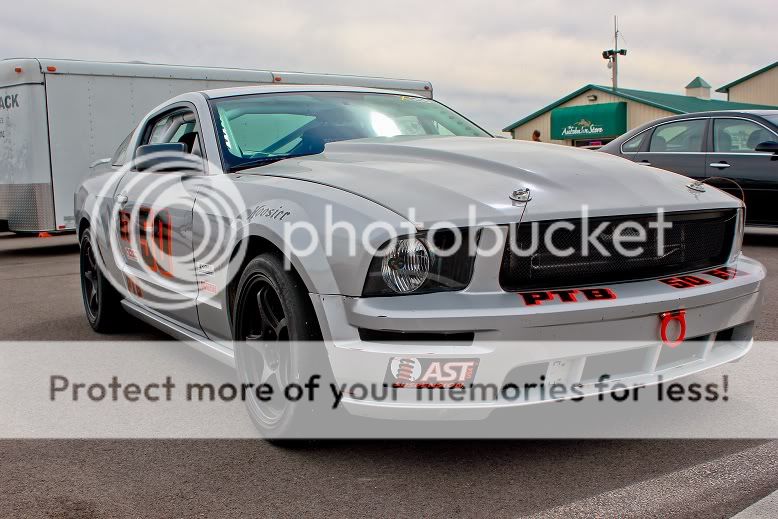
My rear suspension is simple: Un-relocated UCA, un-relocated LCAs, Panhard bar, all aftermarket, and all Heim joints. I run AST 4100 dampers in the stock location, no rear coil-over conversion, and I run 300lb/in springs, with a VERY conservative amount of drop over stock. ALL of the effects you list, specifically the anti-squat and anti-lift characteristics in the rear can be—and have been—achieved with the hardware on my car now. Here’s an example:


The only changes were springs, dampers, and bars. The car went from face-planting and tail-wagging to “planar and level,” all without the benefit of a torque arm. I’ve stated and restated my position, tried to provide information, and it obviously has not helped you to a better understanding of the car that you own and drive. I think we’re done here; at least I am.
 

kcbrown

Member
Joined
Jul 24, 2013
Posts
656
Reaction score
5
My rear suspension is simple: Un-relocated UCA, un-relocated LCAs, Panhard bar, all aftermarket, and all Heim joints. I run AST 4100 dampers in the stock location, no rear coil-over conversion, and I run 300lb/in springs, with a VERY conservative amount of drop over stock. ALL of the effects you list, specifically the anti-squat and anti-lift characteristics in the rear can be—and have been—achieved with the hardware on my car now.

The only changes were springs, dampers, and bars.

How's the NVH for street driving? I imagine an all-heim-joints setup gets rather noisy.

Also, are you running 300lb/in all the way around? If so, that sounds like a fascinating combination. What specific springs? What size tires do you run? Square setup? How's the balance?

For me, the simpler and closer to stock I can maintain things in terms of the configuration, the better, but I don't really want to sacrifice much in the way of NVH.
 

sheizasosay

Alive
Joined
Jun 28, 2011
Posts
1,024
Reaction score
4
Also, the precise improvements I note are the ones touted by both manufacturers and numerous end users besides myself. I have written this before. Read the whole thread.

This is not true. I have specifically pointed this out several posts back. Reference post #304 of this thread on pg 16. You did not address it because either A-you don't want to admit it or B-you do not choose to respond to me. "B" as being an excuse for "A". That does not change the fact that the manufacturer does NOT claim anything about a torque arm having ANYTHING to do with the improvements in cornering flatter. That is a fact. Another fact is, Revan Racing sells the product. Revan Racing that you quoted from the GT500 thread is also in disagreement with Mr. Griggs which is pointed out in that SAME thread by a guy who talked to him personally in regards to bumps and irregularities and the watts being "the cure". Revan Racing claims the watts is the fix; Griggs shrugs his shoulders and says it's the properly tuned coilovers. Griggs makes it, Revan sells it. Revan posted it. You referenced it You lined up behind them. Reference: http://www.fordgt500.com/forums/showthread.php?t=16569&page=2

I know that you don't want to address me because I personally attacked you in relation to political issues. I have apologized in a PM on personally attacking you in a tech thread over political dissagreements. It doesn't matter if the air is clear between us, but what I am going to address is the "bullshit" that I see. And there IS bullshit. So feel free to respond or not.

So having personal experience has now been removed from the top tier of you reasoning, seeing as how the manufacturers do NOT agree with "all" your claims. That leaves you with a personal experience story that is at odds with the manufacturer.

This thread has a LOT of views. It would not make sense for a thread with such "repetitive" discussion on suspension and claims to be ignored by Filip with this high of views. This thread is too "hot". He will not come in here. You are also wrong and he will not back you up because you're saying stuff a TA can't do yet are a customer of his and have gone out of your way to give him a lot of props across multiple forums and under multiple names. So Whiskey asks Filip. No mention of flat cornering.

That leaves you with a subjective story that is not completely adding up. Some stuff does and that's what is valuable. The other "bullshit" is being filtered. So groundhog day is over. You're subjective and "personal experience" are now invalid on 1 claim. And that is that the TA will not make you corner flatter.

It is epic of you're resistance to the matter of anything else being a possibility about you're subjective experience. I think it is likely because of how fast the thread deteriorated due to personal attacks and other side-tracking. Shit happens.

I'm curious if you have done any studying of suspension that Norm, Whiskey or Dave....or whoever else mentioned or if you just decided to dig in and look for supporting cliaims for how deep you are entrenched with you statements.
 
Last edited:

SoundGuyDave

This Space For Rent
Joined
Apr 9, 2007
Posts
1,978
Reaction score
29
How's the NVH for street driving? I imagine an all-heim-joints setup gets rather noisy.

Also, are you running 300lb/in all the way around? If so, that sounds like a fascinating combination. What specific springs? What size tires do you run? Square setup? How's the balance?

For me, the simpler and closer to stock I can maintain things in terms of the configuration, the better, but I don't really want to sacrifice much in the way of NVH.

Let's just say it's not exactly a street car...


34rhj4k.jpg

20l1508.jpg


NVH isn't even a consideration... Long-tubes, offroad H pipe, resonators, FR500S mufflers, and I use the exhaust to help compensate for blind spots.

Springs are 350# up front, 300# in the rear, and I feel undersprung, to be honest, at least in front. Considering going to 600# or so. Tires are 275/35-18 Hoosiers or 265/645R18 Conti GA wets, square setup on 18x9.5 wheels. 3306lbs, with driver and 1/4 tank of fuel.

FULL DISCLOSURE: I'm going to be doing some testing with a few different parts, primarily spring rates, and LCA relocation brackets, now that my chosen class has been eliminated...
 

barbaro

Member
Joined
Jan 23, 2011
Posts
281
Reaction score
0
Barbaro, we’re going to have to agree to disagree. We’re obviously not speaking the same language, and all we’re doing is going around in circles here. You say that because I don’t own a Cortex rear grip package, I am simply unqualified to comment on the root causes of the effects you noticed. This couldn’t be further from the truth. I’ve campaigned an S197 through NASA Time Trials, won, and set track records. I’ve campaigned an S197 through NASA sprint and endurance races, won, and set track records. I’m a NASA Certified Instructor, and also instruct for Hooked On Driving (Advanced Group leader, as well), MVP Tracktime, LAPS, Inc., SCCA, and a variety of other organizations. I’ve not only ridden in more supercars than you could probably name off the top of your head, but I’ve also driven them. Hard. Ferrari, Porsche, BMW, Lotus,C5Z, C6Z, AMG Blacks, hell, even an Arial Atom. Trying to call me out by refuting my qualifications is a losing battle.

The main thrust of my argument is, and always has been, your presentation and lack of technical content. This is a technical forum, and “because I said so” simply doesn’t cut the mustard here. In particular, when you make unsupported (and unsupportable) claims about a piece of hardware that was old news 30 years ago, you should expect to get called out. We all think it’s great that you’re enjoying the mods on your car, and that you’re happy with the end result. We all think it sucks that you try to ram misinformation down our throats, and get snippy when you get called on it. Man up, admit you’re wrong about the technical stuff, and move on with your life. Yes, the effects you noted are real. The reason behind them, though, has escaped you. It almost seems like you don’t want to know or understand.

My rear suspension is simple: Un-relocated UCA, un-relocated LCAs, Panhard bar, all aftermarket, and all Heim joints. I run AST 4100 dampers in the stock location, no rear coil-over conversion, and I run 300lb/in springs, with a VERY conservative amount of drop over stock. ALL of the effects you list, specifically the anti-squat and anti-lift characteristics in the rear can be—and have been—achieved with the hardware on my car now. Here’s an example:


The only changes were springs, dampers, and bars. The car went from face-planting and tail-wagging to “planar and level,” all without the benefit of a torque arm. I’ve stated and restated my position, tried to provide information, and it obviously has not helped you to a better understanding of the car that you own and drive. I think we’re done here; at least I am.

I am well aware of who you claim to be. It does not change my opinion one iota with respect to the torque arm. You are the one that is spreading misinformation when you denigrate the efficacy of the torque arm. Your experience does not include my cars. Second, You are not driving a street car. My opinion is confined to a car that sees both duties track and street. Because 600lbs springs are not realistic for a street car, however a torque arm is.

With respect to the effect of the coilovers on your car: I believe you. Who am i to say what the effect of your coilovers are on your car. There is more than one way to skin a cat. But because excellent coilovers work does not mean torque arms don't work.

As for my opinion being not technical enough . . . why? Because I did not measure the before and after Anti-Squat geometry? You just gave a description of the effect your coilovers have: "The only changes were springs, dampers, and bars. The car went from face-planting and tail-wagging to “planar and level,” all without the benefit of a torque arm." With respect to you description; What was so technical about that? not that I am criticizing because I think that description conveyed your subjective feelings accurately. You cured the problem with excessive spring rate. If you are running 300lbs springs on the back, your car rides like ass on the street is my educated guess. But maybe not. I have run 250lb springs (non coilover) on an S197 and it was a horrid ride. But again, I offer no definitive opinions on things I don't have personal experience with, unlike some people. Bottom line is I got what you got without having to run an excessive spring rate . . . and that is the true beauty of the torque arm.

The hardware being old news is not a valid criticism. Coilovers have been around longer. So what? Solid rear Axles have been around for centuries as well. I am not the one who does not want to know or understand, you are.

You are using some selectively applied "technical litmus test" to shout down opinions that are not consonant with your own. I am ok with agreeing to disagree, because we do disagree. And on this issue, you also disagree with several other racers with credentials greater than your own. Bottom line is you are telling me something doesn't work that you don't have and have not driven. I would not dare offer an opinion about your AST's. I have no experience with them. Yet you do not feel similarly constrained.

But I am in a jovial mood so I won't go further in answering your unjust opinions of me. I just got back from Steely Dan and am about to hit the Cuervo Gold so all is good with me and my car. Wishing similar luck and good times to you and yours.
 
Last edited:
Back
Top