Project Update for April 21st, 2014: Time to play catch up on the build posts! We've done yet another event since USCA, this time an autocross with the Texas Region SCCA in their new "MAM" class - in addition to the TrackGuys event at TWS last month. I've written and posted
two job listings here at Vorshlag this week. I've also written and posted the mega-sized
Vorshlag Scion FR-S LSx Alpha Project build thread since my last S197 post, and I need to update the Alpha Miata LS1 thread as well, too. So before I get any further behind I'll try to catch up on Day 3 of the USCA/Optima Qualifier event held at TMS March 21-23rd, 2014. This is where things got... interesting.
A Brief Look: GTA @ TMS, Sept 2012
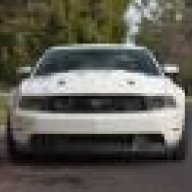
First, let's back up just a tick. If you've been reading this S197 build thread since we started (2010) you might remember that we ran our red 2011 GT at TMS on the infield road course back in 2012. That year was a turning point for this car: we had finally switched form running on 265mm street tires in SCCA's STX class to running 315mm R-compounds in SCCA's ESP autocross class and NASA TTS in time trial. The move out of STX was long overdue, as we fought badly for traction in this heavy (3440 pound at the time) car on those super skinny 265mm street tires. Every event was like driving on ICE. When we moved up to 315mm R-compound tires the Mustang CAME ALIVE, so we quickly did a single autocross test - where we made some set-up changes based on measured lap times - and took the Mustang to the SCCA Solo Nationals to run in ESP class against the best pony car autocrossers in the nation.
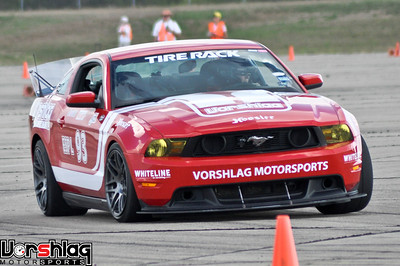
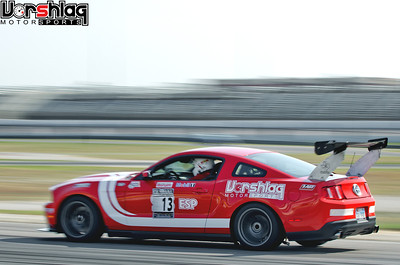 Left: Our brief foray into SCCA ESP class in 2012 was decent but under-developed. Right: Our NASA TTS set-up in 2012 also worked well enough in GTA
We did
fairly well at that 2012 Nationals, scoring a 3rd out of 47 cars in ESP and winning ESP-Ladies, after almost no changes to the old STX suspension set-up. Looking back now we know this was a very compromised set of spring rates, among other items. The suspension then was still on AST 4150 singles with soft-ish 450F/175R rates, which worked great for street tires and daily driver use but left the car under-sprung for foot wide wheels and uber-grippy tires, in autocross and especially road course use. The car had LOTS of body roll that we couldn't tune out with the swaybars (we had the massive Whiteline bars at full stiff on both ends, which our one test day showed to be fastest).
We entered this
Global Time Attack event at TMS a couple of weeks after the 2012 Solo Nationals on a lark, mostly to help bolster the entries for this event so the GTA series might come back in the future. We never hoped to beat the top cars prepped for this series or even get in the top 10. The turn-out by locals was somewhat poor, and even with a couple of dozen series regulars attending they couldn't afford to risk it on a low turn-out again and GTA has not returned to Texas. This is what prompted my series of calls to try to support the USCA event locally - we didn't want to lose a big event
again. I'll talk about the SCCA Texas Pro Solo at the end of this post, because we need local entrants to sign up to this one, too!
Anyway, 2012 was our first year to dip into R-compound territory and we used the following winter to test a better suspension set-up for the wider tires that led to a string of wins in TT3 for 2013 - where we won 13 of 15 NASA races and set track records at every track on the NASA Texas schedule. We still had a relatively poor showing at NASA Nationals (3rd) due to a poor rear aero set-up for the speeds seen at Miller, but we finally have a better solution for that coming in the next week or so (see details in my
next S197 build thread post!). So 2012 was a "building year" and the crude TTS/ESP set-up we had was somehow still good enough to win Unlimited RWD class at this GTA round in Texas and set the 5th fastest time of the event.
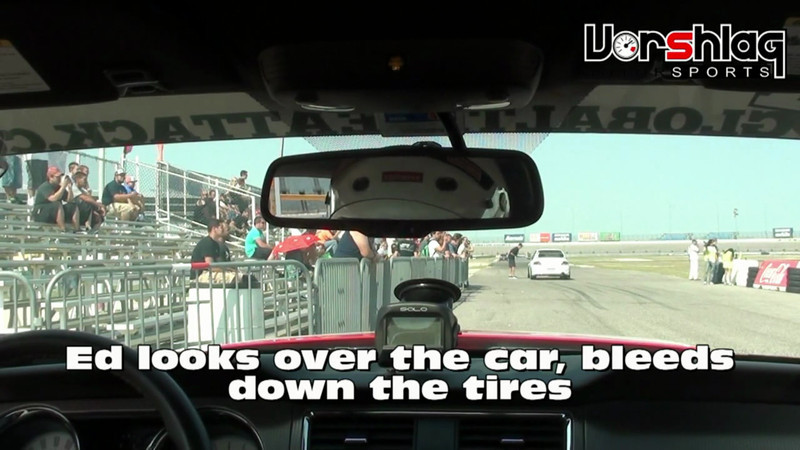 Some laps from GTA in 2012. Look at how much high speed understeer the car has! (with the old plastic LS front splitter)
Still, that event was riddled with mistakes: 1) I drove erratically (as usual) and was constantly over-driving the tires. 2) I forgot to plug-in the wired AMB transponder before the best track session on Sunday, when it was 78°F. That was a huge mistake, as the on-board AIM Solo lap timer showed several sub 40 second laps in an early Sunday session, with a best of a 39.8, but with our ghetto-wired transponder left unplugged it was all for naught (we have since added a lighted switch on the dash to show me when the transponder is on!).
I had to make up for that missed session of times by driving like a wild man in a nearly 100°F session late that afternoon, where I barely eeked a lone
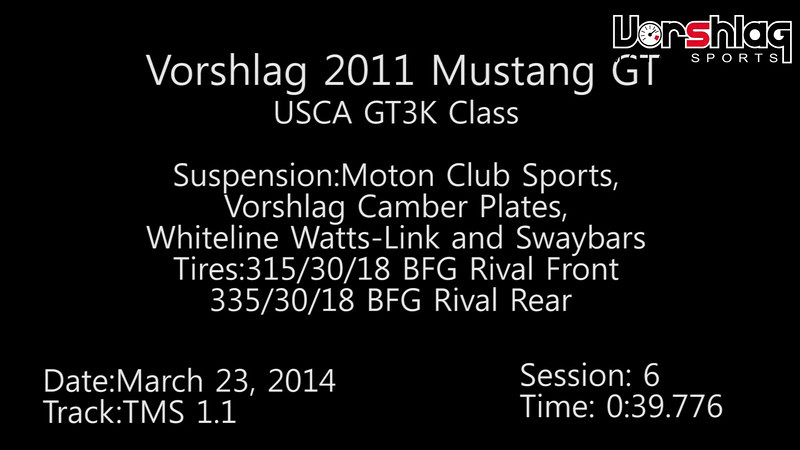
39.975 second official lap time, using all of the track surface
and then some. The 315mm Hoosier A6 tires were overheating but I kept pushing and found that time in the closing minutes of the event. It was nerve racking to know I left more time in the car, but it was all I could get in those circumstances. With our current aero and suspension set-up, plus the wider 335/345 Hoosiers, what would the Mustang run there now? No telling... but probably a good bit faster. We found 1.4 seconds just going from 315mm tires to the wider set at MSR this year, about one month apart. Bigger is better!
Anyway, at that event two years ago I logged two days of lapping on this 1.1 mile TMS road course, but on very different tires and a softer suspension set-up. It wouldn't hurt knowing the various corners and pavement sections of this track, of course.
USCA at TMS, Sunday March 23rd, 2014
So as you've read in my previous set of posts covering the USCA event above, we rolled into Day 3 of this weekend not knowing exactly where the Vorshlag Mustang was placed. We were doing somewhat OK after having scored a 2nd in the autox, a 3rd in the speed stop and a 4th in the Design challenge - but we didn't know
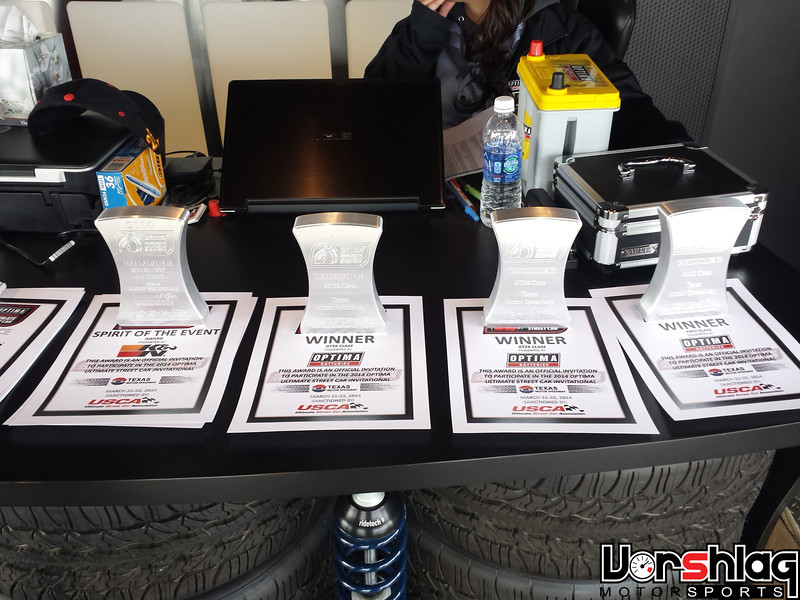
any of that. I thought my ranking was about 4th in the autocross and 4th or 5th in the speed stop, with no idea of how the design challenge went, so I was a bit pessimistic about our chances at the win in the GT3K class. I really wanted that invite to the SEMA show/Optima Shootout, but at this point I just wanted to redeem myself and try to pull out the win at Sunday's BFG Hot Lap event. I had no idea that I still had a real shot at the overall win...
Event Results: http://www.optimabatteries.com/en-u...street-car-invitational-field-adds-four-more/
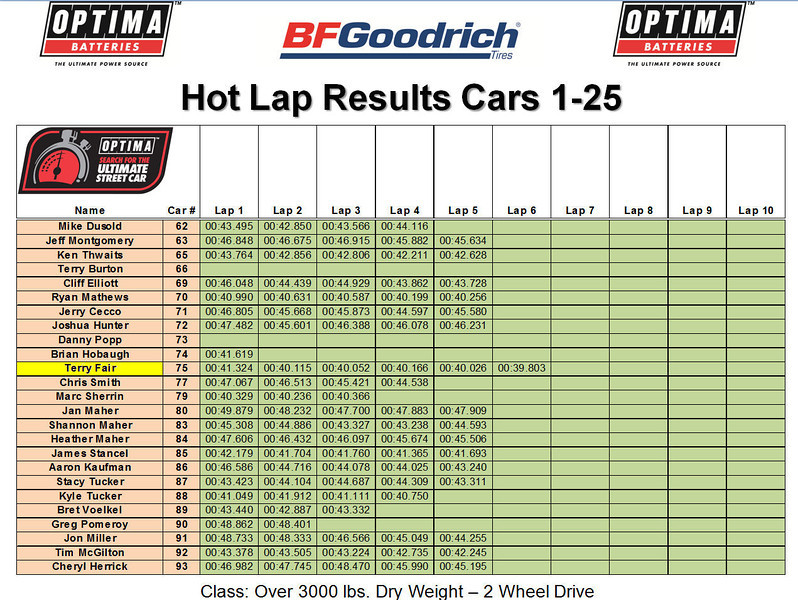
BFGoodrich Hot Lap Challenge
We got to the track Sunday morning early, cold and tired, but I was still looking forward to this Time Trial portion of the event. Even if I didn't have a snowballs' chance in hell of the overall win, I was
damn sure going to try to win this ONE single event. Sure, I was down 500+ whp to some of the entrants and had NO idea how these guys would do on the road course, but I knew this track. That was my one advantage. Would it matter after each competitor had their 6 sessions of 15 minutes each? That's a lot of track time to learn and master this little 1.1 mile road course.
Maybe our "wild aero" - which did virtually nothing for the car at autocross speeds nor in the speed stop, except make the car wider and grab cones - would finally show it's worth on the TMS infield course? We ran the same APR rear wing (mounted higher) back in 2012 at GTA but then we had the much less effective plastic Laguna Seca OEM front splitter and none of the other tricks we've since added, such as: the front wheel spats/flares, ducted hood, blocked off upper grill, and full depth splitter. We also have nearly doubled the spring rates on the suspension on both ends, so maybe that could allow the BFG tires to stay flatter and work more efficiently? We had the same Whiteline bars, control arms and Watts link, then as now.
The question was: Could I approach that same 39 second GTA lap time on 200 treadwear street tires? I sure hoped so, because this group of Pro Touring competitors looked fierce and I knew that a 40 second lap wasn't likely to win it.
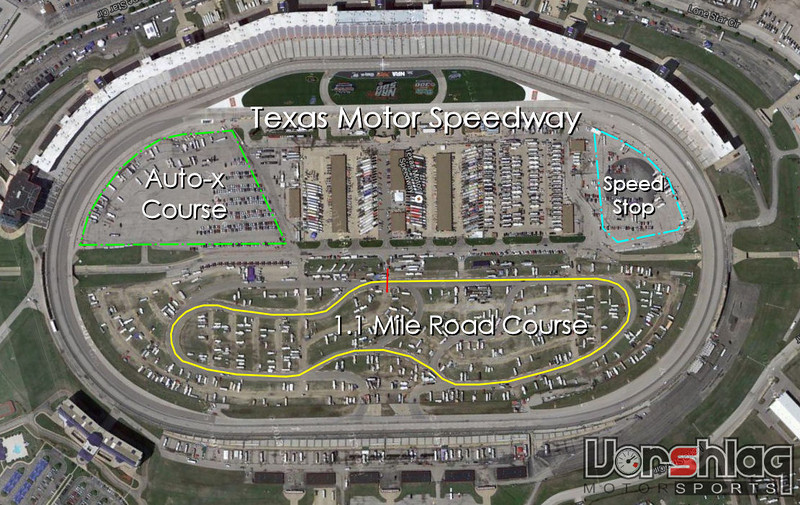
You can see the layout of the 1.1 mile, 7 turn road course above. It looks fairly straight forward but there are actually some very tricky spots on this track. I've seen a few too many cars crashed out there, as this course is lined in concrete barrier walls in many places. A few corners also have some run-off areas that you
don't want to get out into (Turn 1!). And while it looks totally flat, it is far from it - some corners have a tick of camber that works in your favor (Turn 1), but one corner is off camber (Turn 7) - especially if you go wide, like the textbook line would lead you to think - and others have lower grip asphalt, which makes for a very slippery situation.
Vorshlag event Photo and Video Gallery: http://vorshlag.smugmug.com/Racing-Events/Optima-Ultimate-Street-Car/
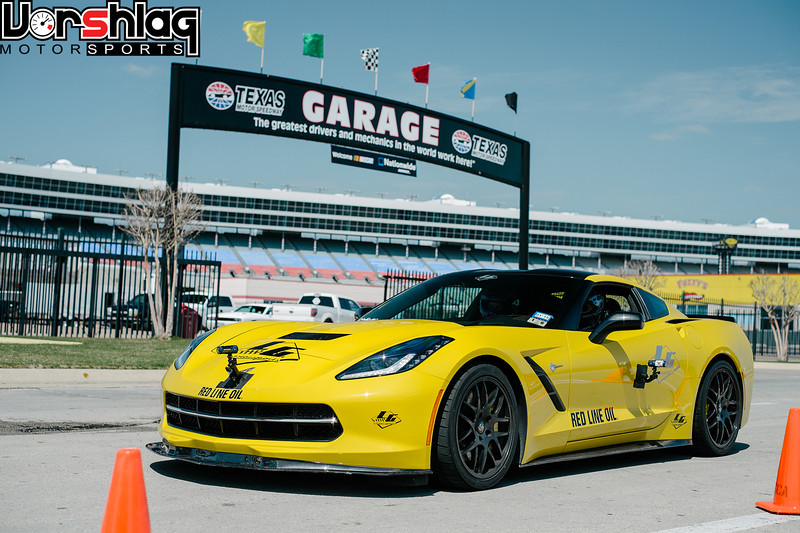
We had another driver's meeting that morning and the USCA organizers told us that there would be a yellow C7 Corvette "camera car" out in many of the sessions. We were told to "ignore this car as much as possible", as he would be making passes and/or pointing cars by to set up shots with both forward and rearward facing cameras. Turns out the driver was none other than local LGM business owner and former Pro racer Lou Gigliott. The C7 Corvette was one of his own test mules equipped with his coilovers, aero and headers, among other bits. That should be fast, especially in Lou's hands, and I mentally noted to be on the lookout for this Corvette - as I was always trying to ham it up for the camera! When you run a business you gotta get in the free marketing whenever you can, you know?
USCA Rules: http://ultimatestreetcarassociation.com/USCARules_v7-1.pdf
They had us split up into 3 types of run groups on Sunday based on previous road course experience levels: Novice, Advanced, and Expert. The differing groups had
slightly different safety requirements as well, which are explained in the USCA rules. For the Expert group I was slotted into, we had to have the following bits of safety gear:
- Helmet – SA2005 or better
- Neck restraint – Hans style, or SFI certified neck collar
- Properly mounted 4 or 5 point harness
- SFI 3.2A/1 rated single layer fire suit or better
- Nomex fire retardant gloves
- Fire retardant shoes


A lot of the local entrants we motivated to sign up had to make some hasty purchases at a local circle track supply house (Smileys) - to get racing suits, Nomex gloves, fire proof shoes and neck collars. One such entrant that had to get "geared up" was Shannon (above right) and her mom and sister, who both also entered. But like I told them, some HPDE groups and tracks are starting to require a full driving suit to run their events; I know MSR Cresson requires that sort of gear for their member days and at any other weekday track session, so their new gear wasn't a wasted purchase. And as cold as it was Sunday at TMS most of us stayed in our suits all day and were glad to have the warmth. Luckily I had all of this safety gear already, except a HANs, so I used my $25 SFI neck collar. Maybe not the smartest choice, and my helmet is already set-up for a HANs (which I've borrowed for LeMons racing) but I have yet to use one and
not limit my ability to see laterally, so I haven't pulled the trigger on a HANs system yet.
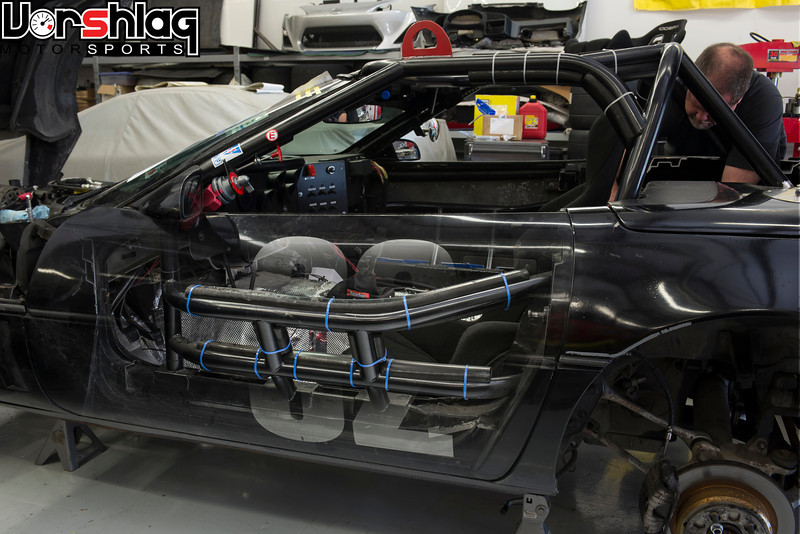
Please don't use my example of safety gear choices to influence
your choices. But please DO realize that there is more to using and picking a HANs device than just "swiping your credit card". There are many variables involved in the various brands, sizes and model options, plus other things that need to be checked, like shoulder harness and seat compatibility, and tethers vs quick releases. Its not a "no-brainer" choice to pick a HANs device. On a race car with a limited door opening in the roll cage (see above), or especially with the door closed and a cumbersome window net added - try to get out THEN when you have a big HANs device strapped to your back, while the car is on fire. Many variables... but then again, ripping your spinal column out of your brain stem can also ruin your day (aka: end your life).
At this event I knew the track had lower speeds, and the fact that there was going to be a good bit of passing, so being able to turn my head fully was more important - this time. But yes, I know, it is more dangerous than w/o a HANs in a big crash. I'm going to reassess my own safety equipment later this year and at the very least step up to a better fire suit than the inexpensive off-the-shelf Simpson suit I have now (we're a dealer for Puma, Sparco, OMP, Momo and Alpinestars suits) as well as possibly adding a real neck restraint system of some sort.
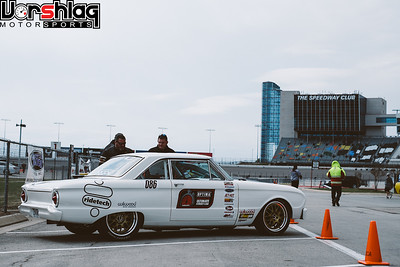
They had us go out briefly before our official run groups began for a lead/follow teaching session where we all followed along single file, to "learn the line". I went out with Marc Sherrin and Jerry Cecco behind me and I drove the line I remembered from before, at about half speed behind the lead car. Those 8 or so slow laps didn't show me much, but we came back in and waited for everyone else to get their reconnaissance laps in. We next lined up in our proper run groups, but in a random order for the first session. There were more expert drivers so they split us into two sessions, for a total of 4 run groups.
For the first timed Expert session I got to grid after some other cars had lined up, so once on track I was stuck in traffic. I made several passes, but after 15 minutes on track I never had a single clear lap. We were also playing with shock and tire settings in the hot pits. In this session my AIM Solo lap timer would show a fast lap but would always get held up at some point. I tried building a gap on a few laps but the session was packed and there were a couple of cars that were well off the pace. Best time I could manage was a 41.325 second lap, passing someone on that lap.
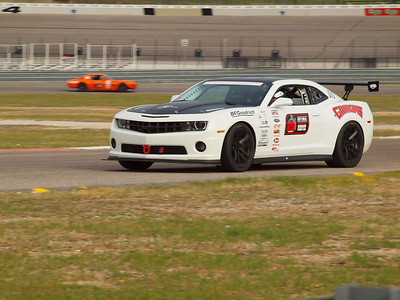
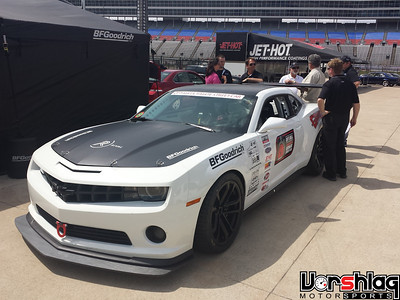
The fastest car in that Advanced session was Ryan Matthews in the white, DSE-prepped 5th gen Camaro race car. Yes, I said
race car, as this one had a full cage, gutted interior, big crazy motor, big aero and big tires. Nobody else would argue that term on this one. Not knocking their entry, just jealous.

Ryan (a former Pro NASCAR circuit driver) went out first in that session, and with clear track and clean air he knocked down a 40.990 second lap. He was the car everyone was talking about all morning as the car to beat, and one of his buddies saw me in the hot pits following this first session and said "You don't have a chance of beating him... you ain't got the power!" I smiled, agreed about not having a lot of power, and just waited until the next run group to see if I could get some clear laps.
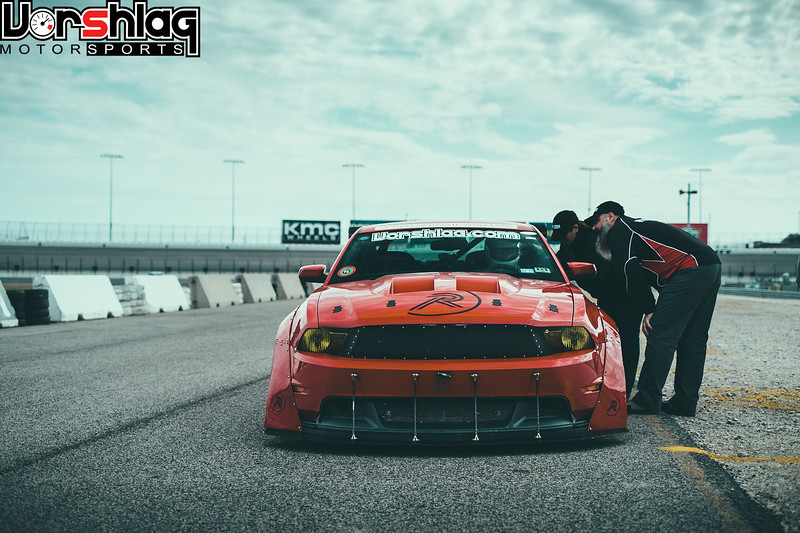
While Ryan's 40.99 first session best lap was quicker than my 41.32, I had to deal with massive traffic throughout the first session. Amy and Jason were watching live timing via the Race Monitor app and I came in halfway through that session to check on everyone's times, while also trying to find a gap. I went back out and immediately got stuck caught in another pack. After the 15 minutes was up it felt good to only be 3 tenths back from the lead, considering I never got an unobstructed lap. The other Expert group then ran and was led by Marc Sherrin in his Z06 with a 40.336 and followed by Kyle Tucker with a 41.049 second lap, so I made sure to keep an eye on them as well. The Advanced and Novice groups ran, and while there were not any eye opening laps from those groups yet we still watched them all day.

Fellow TT racers Marc Sherrin (above) and Todd Earsley (below) were getting quicker all day, and we kept an eye on each other from our friendly NASA TT rivalries. Marc started out fast and lead
everyone after the first sessions. He was on only 315mm wide Rivals in his TT1 prepped C6 Z06 (he normally runs a 345mm Hoosier) while Todd was on 265mm Hankook RS3s in his TT1 prepped EVO, and both of them knocked down very respectable laps. Todd has been practicing for this event this year, running NASA TT1 class on his RS-3 street tires just to work on his USCA set-up. That's dedication.
continued below