

GallopingFord
I'm Cam - Mr. Indecisive
Thanks for letting us know about the injectors. I'm not sure yet if I want to buy the 55lbs or just get the 72lbs when I put on a TVS later in the Fall.


Thanks for letting us know about the injectors. I'm not sure yet if I want to buy the 55lbs or just get the 72lbs when I put on a TVS later in the Fall.

I'm sure there is a reason people go with a return system but I can't figure it out.

It's far more consistent than a non return system.
It's much easier and more accurate to create and program a valve to maintain pressure than to create and program a pump to maintain pressure.


Is that a high gear pull? I think the issue comes when shifting fast. When on the gas the pumps are at 100%. When lifting to shift the ECU senses this and tells the pumps to slow down. Then when you get back on it the ECU has to tell the pumps to spin back up. I know this all happens quickly, but when you start dealing with high horsepower and high boost it doesn't take long to go lean. At least in my experience. With the return system the fuel volume is always available. It's a lot quicker to close a vacuum operated valve then having pumps spin up to increase pressure.
This is just my opinion of course. I'm no expert.
Misspelling brought to you by tapatalk
I'm not saying a returnless system is inferior to a return system performance wise. I'm just saying that a return system is MUCH easier to design and tune for a given performance level vs a returnless. No calculations, no varying voltages, nothing.
There are certain performance advantages of a return system based on parallel vs series rails, pressure regulator before or after rails, etc. it's all about constant pressure above your manifold pressure in the fuel rails.
I actually designed a "returnless" hydraulic system for my capstone project. It's far more heavy duty than a fuel system, we were operating at 3000 psi and it was required to be within plus or minus 50psi. Returnless just wasn't cutting it. Using a solenoid relief valve and pulse wave modulation for the pump we couldn't get anywhere near what we needed. I switched the system to an adjustable relief valve and ran the pump full throttle all the time. A return setup. Our pressures are easily controlled and within 30psi of our set point. Far superior control with less programming, complexity, or otherwise. That's just my personal experience.
So Bruce, in my experience with the twin 405's in a gt500 hat.....
The pumps are so large that at part throttle small changes in commanded voltage to the two pumps create a large variation of pressure. The variation in pressure tells the voltage to drop and then a dip in pressure. Its hard to get it worked out. My tuner made it better but it was still rough before I started the build. It would really take a lot of fine tuning to get these pumps to not create pressure spikes returnless. I'm going return just for drive ability since I don't think twin supercar in returnless would be enough to make the power i want on corn and the 405's are sucky and not meant for corn.

There must be a point in time when a return style becomes favorable over returnless otherwise people wouldn't do it. However, tuning for returnless is quite easy, at least it has been for my builds. I considered going return once and was quickly talked out of it. Pump life is less, fuel gets heated up, and there was no good reason to do it.


nice! I just finished mine up, have a few odds and ends to tinker with before tune.
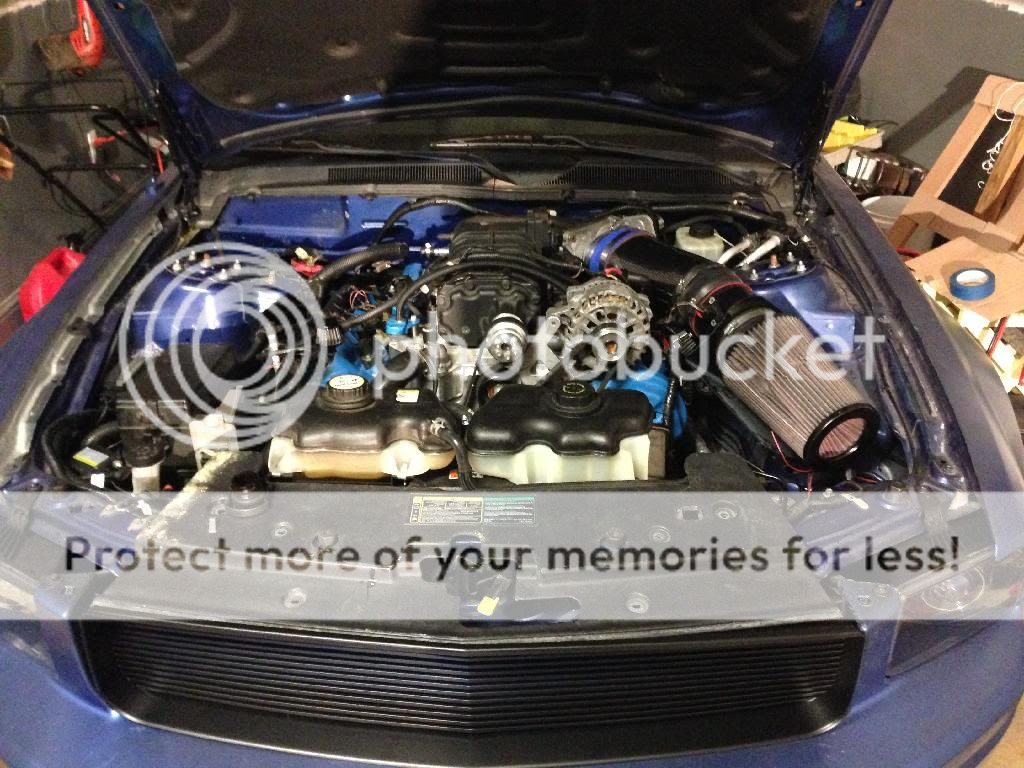
It looks like you didn't trim the ears off of the alternator. I've been hoping that is just a cosmetic step because my alternator is a parts store replacement with a lifetime warranty. I purchased it over a stock one for the lifetime warranty and I'm sure that grinding on it wouldn't be good if it had to go back.


