

partypants
Junior Member
Since it seems to be that lack of low rpm oil pressure is the cause for this issue, will just using a HP pump negate it?



Since it seems to be that lack of low rpm oil pressure is the cause for this issue, will just using a HP pump negate it?

wouldn't the thicker oil flow slower than the thinner oil?
wouldnt the thicker oil flow slower than the thinner oil? ,, so more wear quicker with thicker oil?
I'd add that the main reason manufacturers have migrated to thinner oils is mainly to increase fuel economy, at the expense of engine wear (synthetic benefits notwithstanding). Going slightly thicker (more viscous) on even a brand new engine isn't going to cause problems for most, and may be beneficial for anything other than optimal fuel economy. Too thick, of course, could degrade dynamic valve train performance that relies on oil flow through passages at a particular rate.Yes it would but on a high mileage engine that has bigger rod/main bearing clearances caused by significant wear, the thicker oil would restore some oil pressure for a while until you're ready to crack the engine open. A high pressure oil pump is a better solution but even that is only a crutch. If you need a HP oil pump to restore factory oil pressure, you should really be thinking about replacing worn rod/main bearings in addition to the cam followers/lash adjusters, the cam drive kit, and VCT solenoids. As long as the piston rings are maintaining good compression and there's insignificant oil consumption, these measures would keep the engine happy for thousands more miles.
I had a 2002 F150 5.4. Used that oil exclusively for 15+ years and over 200K miles. Still ran perfect with less than 1/2 qt of oil loss between oil changes when I sold it.My engine seems perfectly happy with 10w30 Mobile 1.
You have it backwards. You shouldn't use dino oil in these, only synthetic. And the synthetic 'blend' oils are about 10% synthetic and 90% dino oil.Full synthetic or blend? I have to change the oil in a couple hundred miles and i was planning on using 5w-30 anyway, but I thought Ford said not to use synthetic in these?
UnderstoodYou have it backwards. You shouldn't use dino oil in these, only synthetic. And the synthetic 'blend' oils are about 10% synthetic and 90% dino oil.

I'd add that the main reason manufacturers have migrated to thinner oils is mainly to increase fuel economy, at the expense of engine wear (synthetic benefits notwithstanding). Going slightly thicker (less viscous) on even a brand new engine isn't going to cause problems for most, and may be beneficial for anything other than optimal fuel economy. Too thick, of course, could degrade dynamic valve train performance that relies on oil flow through passages at a particular rate.
Right, noted and edited.Thicker usually means more viscosity not less.
Sent from my iPhone using Tapatalk Pro

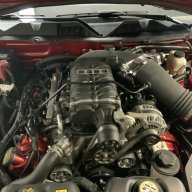
That's all that's ever been in my car until recently. Last oil change I switched to mobile 1 full synthetic. Just to try. 5w20 until super charged now 5w30. I am not sure why it needed thinner oil after being super charged but in was recommended.I bought oil at Wal Mart for years because of the low price. It was the only thing I bought there. But Wal Mart oil has gone up and I can find better deals on Amazon, delivered to my door. No need to deal with Wal Mart shoppers. My last purchase was Castrol 5w30 full synthetic for my new (to me) 2005 F350. Deals to be found there.
It get's worse. Several of the ..'semi synthetic' blends are actually just 3% synthetic..and 97% dino oil..when lab tested. The biggest problem with the semi synthetic crap is... they never say what the percentage is. I would avoid it like the plague.You have it backwards. You shouldn't use dino oil in these, only synthetic. And the synthetic 'blend' oils are about 10% synthetic and 90% dino oil.