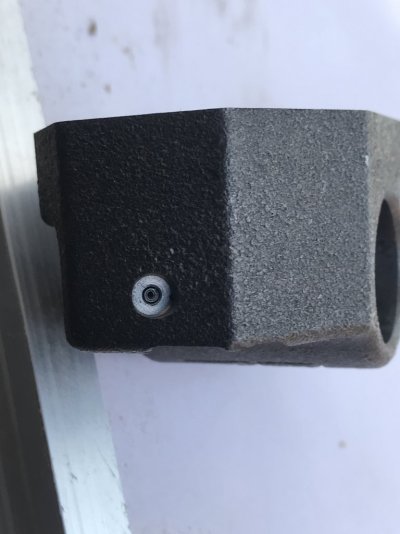
4.6 cast iron tensioner mod

GambleS197

Junior Member
Joined
Mar 29, 2025
Posts
9
Reaction score
1
Location
Chicago
Getting ready to change the timing set on my car with a mmr kit before my first event for the year after talking with a buddy who built his motor he told me to file the teeth off the the tensioners. After reading a few other post seen a few guys talking about adding plunger spacers as well when doing them. My question is is the spacer necessary or can I get away with just filling the last three or four teeth can’t really find a definite answer anywhere
 

lwarrior1016

Member
Joined
Feb 11, 2023
Posts
208
Reaction score
127
Location
mississippi
There is a lot of debate on this topic. Personally, I like the spacer better. The whole point is to keep the chain tight in the event oil pressure is low. Or even during cranking, when you have no oil pressure.
 

GlassTop09

Senior Member
Joined
May 24, 2019
Posts
1,369
Reaction score
843
Location
Farmington, NM
After reading a few other post seen a few guys talking about adding plunger spacers as well when doing them.
Personally, I like the spacer better. The whole point is to keep the chain tight in the event oil pressure is low. Or even during cranking, when you have no oil pressure.
Just did a search on this after reading y'all's postings.................damn, I also like the spacer remedy as well (didn't know this was a thing)........so much so I'm gonna get me a set of them to put under the plungers inside of my OEM Ford cast iron chain tensioners then grind off the last 3-4 teeth of the ratchet stands because w\ these spacers installed under the plungers, the ratchets operating, IMHO, is now a moot point. These spacers should make this a very bulletproof setup going forward.

Glad I procrastinated on starting\doing my timing refresh job 1 more time...........would've missed out on this.

OP, I also agree w\ lwarrior1016.............go w\ the spacers.


lwarrior1016

Member
Joined
Feb 11, 2023
Posts
208
Reaction score
127
Location
mississippi
Just did a search on this after reading y'all's postings.................damn, I also like the spacer remedy as well (didn't know this was a thing)........so much so I'm gonna get me a set of them to put under the plungers inside of my OEM Ford cast iron chain tensioners then grind off the last 3-4 teeth of the ratchet stands because w\ these spacers installed under the plungers, the ratchets operating, IMHO, is now a moot point. These spacers should make this a very bulletproof setup going forward.

Glad I procrastinated on starting\doing my timing refresh job 1 more time...........would've missed out on this.

OP, I also agree w\ lwarrior1016.............go w\ the spacers.

I had a machinist buddy that cut a new set of plungers for me one time. They were longer than stock, so no spacers. And I just completely removed the ratchet piece out of it.

Nowadays, I’ve just been running the stock iron tensioners with the ratchet setup untouched.
 

GlassTop09

Senior Member
Joined
May 24, 2019
Posts
1,369
Reaction score
843
Location
Farmington, NM
I had a machinist buddy that cut a new set of plungers for me one time. They were longer than stock, so no spacers. And I just completely removed the ratchet piece out of it.

Nowadays, I’ve just been running the stock iron tensioners with the ratchet setup untouched.
Ah, so you've already done some reengineering of this design I see.........good stuff!

I was gonna do exactly the same w\ my iron tensioners (use the ratchets untouched) until I saw this thread & noted that someone had made a spacer to do w\ the existing plungers what you've already done prior.

I've always thought that this issue was best controlled thru limiting the plunger compression stroke length (looking at a 3rd Gen Coyote\VooDoo chain tensioner it looked like Ford had done this w\ the plunger design in these thus the ratchet was no longer needed\used) but never thought that the old Ford 2V cast iron chain tensioner plungers could be modified to actually adjust this plunger compression stroke length..........now I know better as someone figured out a simple method of doing this..........which makes these OEM Ford 2V cast iron chain tensioners the far & away best replacement part to use w\ a 4.6L\5.4L 3V as these solve so many of the known issues w\ the plastic units w\o any downside.......IMHO, whether the ratchets are used untouched or modified in conjunction w\ the spacers added under the plungers.

The deciding factor in my mind which way to go is whether or not a 2-step\NM2B WOT box (so specifically drag racing centered......) is being used..........or in my case, I only want to go thru this work 1 time thus I'm looking at\for the best overall design setup to go with for longevity along w\ retaining cam timing accuracy while eliminating as many of the known deficiencies around the plastic units thus I'm now favoring the OEM Ford 2V cast iron tensioners w\ modified ratchets & plunger spacers limiting the plunger compression stroke length over untouched ratchets now that I've been made aware of these plunger spacers & the reasoning for their use.............maybe a little over engineered if no 2-step\WOT box is used but definitely just as effective.......also is permanent once done........which is what appeals to me.
 

JC SSP

Senior Member
Joined
Nov 8, 2022
Posts
2,291
Reaction score
1,356
Location
FL
Anyone have a pic of these plunger extensions or the filing of rachet teeth?
 

GlassTop09

Senior Member
Joined
May 24, 2019
Posts
1,369
Reaction score
843
Location
Farmington, NM
I had a machinist buddy that cut a new set of plungers for me one time. They were longer than stock, so no spacers. And I just completely removed the ratchet piece out of it.

Nowadays, I’ve just been running the stock iron tensioners with the ratchet setup untouched.
Hey lwarrior1016,

I got my set of 4.6L\5.4L cast iron tensioner plunger spacers in last week & pulled out my set of cast iron tensioners to see how these install..........what I saw when I pulled the plungers out of the tensioner bodies has answered a LOT of other questions I had surrounding these.......like why the "extra" chain oiling orifice in the tensioner body for 1..........that is not present on any Ford 3V Modular plastic chain tensioner.

Now I figured out\know exactly how Ford had initially designed these cast iron tensioners to operate & now even more, I understand that Ford knew they were making a substandard chain tensioner when they designed\used the plastic units for the production line 4.6L\5.4L 3V Modulars & why the 2V Modulars ran so long w\o timing & guide issues.....until folks started using 2-steps\NM2B WOT boxes or tuners sidestepping the ETC rev limiters for spark\fuel cut as primary rev limiters (mostly drag racing centered but some circle track racing as well when constantly running engines at\near rev limits).............also why Ford themselves only used these cast iron\metal designed chain tensioners in any Modular engine they deemed used for strictly performance (like the 03-04 Terminator 4.6L SC, 07-12 GT500 5.4L SC & 13-14 GT500 Trinity 5.8L SC & all Coyote\Coyote-variant engines from 11-present....).

The plungers in the cast iron\metal tensioners were designed w\ an oil metering plate under them to meter oil flow into the plunger\plunger bore then Ford installed a rubber piece that sits on top of the internal plunger spring & covers the plunger exit (or in reality, a vent) port in top of the plunger but this piece has spiral grooves cut into it to allow any trapped air to bleed out until oil gets there thus seals this off, so in effect the plunger would be hydro locked once extended in place under load as long as the EOP was there (the metering plate controlled the oil leakoff rate to allow the plunger to not become a rigid, solid fixture when extended & under pressure (thus no 1-way check like in a lash adjuster) but would allow a slow controlled compression when needed to keep from instantaneously shock loading the chain during rapid crankshaft accel\decel thus momentarily over tensioning it to keep from overly stretching\breaking it while at the same time prevent the chain from excess flopping due to excessive plunger over compression) thus this other orifice in tensioner body is where the chain gets it's continuous oiling from.
So, in essence, the ratchet stand was a secondary purpose part as long as the plungers properly hydro locked.......the chain guide would never rest on the ratchet stand at all except in a severe chain loading scenario (very rare in OEM-designed\tested usage cases but guaranteed to occur when using 2-steps\NM2B WOT boxes or using spark\fuel cut as primary rev limiting eventually overloading the ratchet stand & causing damage under prolonged use) or when the engine was shut off & EOP bled off (most common) .......thus would also protect the plastic stationary chain guides.......especially B1 chain guide.......from getting busted\broken from initial EOP loading the tensioner plungers back up (also what the internal plunger spring is for as well) causing excessive chain whip on startup.

So, these Ford 2V cast iron chain tensioners are designed by Ford to hold the cam timing in place\steady once EOP loaded them whereas the plastic units can't due to having to try to maintain sufficient EOP loading under plunger to hold cam timing steady while at the same time providing sufficient chain oiling thru the plunger orifice port in top of plunger (so EOP is trying to keep up w\ a designed EOP orifice leakoff rate at the same time trying to maintain sufficient tension loading under the plunger thus on the guide\chain) so these plungers in the plastic tensioners will not hydro lock in place at all so cam timing will fluctuate constantly under load (which I can easily see all this going on thru my datalogs on a 3V Modular w\ 180,000+ mi on it......) thus is highly susceptible to EOP swings thus swinging cam timing & momentarily cavitating cam phasers under load causing some false knock to occur from KS voltages momentarily dropping randomly then returning to normal tracing falsely emulating a detonation sine wave down avg signal frequency in which the ECU determines to be cyl knock if signal frequency avg is outside of the non-accelerated\decelerated down avg frequency filter setting when there isn't any & momentarily cuts spark timing then immediately returns it w\o going thru the knock spark timing recovery process algorithm (true cyl knock\detonation emits a KS-generated electrical frequency rapid up\down sine wave that can't be seen visually in the datalog tracing but the ECU can "see" thus detect it......then will implement the stair-stepped spark timing recovery process algorithm once the real knock stops)......especially during off idle & part throttle low RPM operations where the operational EOP is at its lowest (also have recorded on datalogs)..........while also allowing the chains to become excessively loose during shut down when EOP is bled off (especially when the internal plunger spring tension weakens from constant heat cycling over time.....have physically witnessed this starting to occur on B1 during my FRPP Hot Rod cam install which is what kicked off gathering all the parts to do this timing refresh work.......) since there is nothing stopping the oil from draining out allowing the chains to get whipped around when engine is starting w\o EOP established thus excessively striking the plastic chain guides (notably B1 stationary guide as the chain whips into this guide, B2 stationary guide is inverted thus the chain whips away from this guide under the same loading.....why B1 guide is the 1 that gets broken the majority of the time in most 4.6L\5.4L 3V Modulars) causing guide breakage eventually over time (this is worse in the 5.4L 3V Tritons due to the longer chains used due to taller block deck heights.....).

This action has got to be robbing available engine HP\TQ across the board due to excessively unstable cam timing in both the 4.6L & 5.4L 3V Modulars & gets progressively worse as they age out...................Ford deemed this acceptable for a production line 3V Modular not being purposed for true performance usage (like normal daily driving\towing) but is inadequate for any Modular being purposed for performance use........thus Ford used these plastic chain tensioners in all production line 4.6L\5.4L 3V Modulars to solely cut production costs (cheaper to produce).........these plastic chain tensioners don't provide any tangible performance benefits at all...........only the cast iron\metal chain tensioners do.........Ford plainly knew this.......they designed\created both of them.

I'll be finding this out myself (recording it as well) soon in the near future, Lord willing.............even though Ford themselves has already quantified\proven this thru their designs.........so why did using these cast iron tensioners w\ ratchets in a 3V even become a debate at all? Every front timing component in a 4.6L 3V, outside of the cam phasers & oil pump, are OEM Ford 2V designed timing components thus the cast iron tensioners w\ ratchets are a natural fit\operationally sound replacement component...........

This shouldn't have even\never been\become a debate period IMHO after seeing this Ford internal design myself..............if performance is your goal w\ these 3V's, the OEM Ford 2V cast iron chain tensioner w\ the ratchets is THE 1 to go to, period.... end of story.......whether the ratchets are used untouched or whether the ratchets are modded in conjunction w\ installing these plunger spacers as none of this affects\changes the basic original Ford-design focus of the plungers hydro locking under the chain guides once EOP is applied & plungers filled\ extended & fully bled out to remove chain slack thus properly tensioned........which steadies\maintains the engine's cam timing accuracy under varying loads.......which is the MAIN thing for performance purposes.......the rest is extra but just as important IMHO.

If longevity is your goal & only want to do this timing refresh work 1 time but retain all the performance advantages while eliminating all the known timing deficiencies\shortcomings, IMHO the Ford 2V cast iron chain tensioners w\ ratchets is also your go to (this is my goal)..........whether 1.) used untouched if no 2-step\WOT box or bypassed ETC rev limiter is employed or 2.) ratchets modified in conjunction w\ plunger spacers installed if a 2-step\WOT box or bypassed ETC rev limiter is used up front or not immediately installed\used but may\could potentially be employed later on in future (my way of thinking as I'll never say never...).......IMHO just modding the ratchets alone won't stop the plastic guide breakage if a 2-step\NM2B WOT box or bypassing the ETC rev limiter is employed & routinely thrashed.......IMHO is why the plunger spacers were designed\created to be used w\ the modded ratchets in these 2V cast iron tensioners.
Then going forward, the only reasoning for pulling the front timing cover off again is to remove all existing modified timing components w\ ARP hardware to swap over to a rebuilt short or long block engine......including the modified HV oil pump........thus the "buy once cry once" adage.......

If your goal is to do this work as cheap as you can, then stick w\ the plastic chain tensioners as there isn't any performance advantage associated w\ their use..............IOW's, status quo...............

I suspect the old verbage..................."swallowing a camel but choking on a gnat"......... w\ the ratchet stand being the gnat seems to be the appropriate response as to why these became such a huge debate topic........the reality is, w\o a 2-step or WOT box used or bypassed ETC rev limiter in the tune--thus racing is the central theme, not daily driving usage, the ratchet stand by design is a NON ISSUE......thus a "gnat".

Anything done to the plastic chain tensioners WILL NOT achieve this aspect simply due to their internal plunger design which cannot be changed........except to replace them w\ the cast iron units. You can cheat this to some extent by using a higher viscosity oil to offset the bleed off rate to increase the chain tension from EOP but to fully resolve it you have to replace them w\ the cast iron tensioners...........

My 2 cents FWIW to this "debate" going forward........................I know I'm not typing anything here that you, lwarrior1016, don't already know.......but once I saw the internal plunger design for myself, my mechanical engineering mindset filled in the rest as it was that obvious. I plan to take a couple of pictures of these internal parts for my records......didn't think to do it the 1st time when I disassembled 1 of the cast iron tensioners to look inside the plunger bore & plunger body...............

Also typed for those so interested................

 

GambleS197

Junior Member
Joined
Mar 29, 2025
Posts
9
Reaction score
1
Location
Chicago
Hey lwarrior1016,

I got my set of 4.6L\5.4L cast iron tensioner plunger spacers in last week & pulled out my set of cast iron tensioners to see how these install..........what I saw when I pulled the plungers out of the tensioner bodies has answered a LOT of other questions I had surrounding these.......like why the "extra" chain oiling orifice in the tensioner body for 1..........that is not present on any Ford 3V Modular plastic chain tensioner.

Now I figured out\know exactly how Ford had initially designed these cast iron tensioners to operate & now even more, I understand that Ford knew they were making a substandard chain tensioner when they designed\used the plastic units for the production line 4.6L\5.4L 3V Modulars & why the 2V Modulars ran so long w\o timing & guide issues.....until folks started using 2-steps\NM2B WOT boxes or tuners sidestepping the ETC rev limiters for spark\fuel cut as primary rev limiters (mostly drag racing centered but some circle track racing as well when constantly running engines at\near rev limits).............also why Ford themselves only used these cast iron\metal designed chain tensioners in any Modular engine they deemed used for strictly performance (like the 03-04 Terminator 4.6L SC, 07-12 GT500 5.4L SC & 13-14 GT500 Trinity 5.8L SC & all Coyote\Coyote-variant engines from 11-present....).

The plungers in the cast iron\metal tensioners were designed w\ an oil metering plate under them to meter oil flow into the plunger\plunger bore then Ford installed a rubber piece that sits on top of the internal plunger spring & covers the plunger exit (or in reality, a vent) port in top of the plunger but this piece has spiral grooves cut into it to allow any trapped air to bleed out until oil gets there thus seals this off, so in effect the plunger would be hydro locked once extended in place under load as long as the EOP was there (the metering plate controlled the oil leakoff rate to allow the plunger to not become a rigid, solid fixture when extended & under pressure (thus no 1-way check like in a lash adjuster) but would allow a slow controlled compression when needed to keep from instantaneously shock loading the chain during rapid crankshaft accel\decel thus momentarily over tensioning it to keep from overly stretching\breaking it while at the same time prevent the chain from excess flopping due to excessive plunger over compression) thus this other orifice in tensioner body is where the chain gets it's continuous oiling from.
So, in essence, the ratchet stand was a secondary purpose part as long as the plungers properly hydro locked.......the chain guide would never rest on the ratchet stand at all except in a severe chain loading scenario (very rare in OEM-designed\tested usage cases but guaranteed to occur when using 2-steps\NM2B WOT boxes or using spark\fuel cut as primary rev limiting eventually overloading the ratchet stand & causing damage under prolonged use) or when the engine was shut off & EOP bled off (most common) .......thus would also protect the plastic stationary chain guides.......especially B1 chain guide.......from getting busted\broken from initial EOP loading the tensioner plungers back up (also what the internal plunger spring is for as well) causing excessive chain whip on startup.

So, these Ford 2V cast iron chain tensioners are designed by Ford to hold the cam timing in place\steady once EOP loaded them whereas the plastic units can't due to having to try to maintain sufficient EOP loading under plunger to hold cam timing steady while at the same time providing sufficient chain oiling thru the plunger orifice port in top of plunger (so EOP is trying to keep up w\ a designed EOP orifice leakoff rate at the same time trying to maintain sufficient tension loading under the plunger thus on the guide\chain) so these plungers in the plastic tensioners will not hydro lock in place at all so cam timing will fluctuate constantly under load (which I can easily see all this going on thru my datalogs on a 3V Modular w\ 180,000+ mi on it......) thus is highly susceptible to EOP swings thus swinging cam timing & momentarily cavitating cam phasers under load causing some false knock to occur from KS voltages momentarily dropping randomly then returning to normal tracing falsely emulating a detonation sine wave down avg signal frequency in which the ECU determines to be cyl knock if signal frequency avg is outside of the non-accelerated\decelerated down avg frequency filter setting when there isn't any & momentarily cuts spark timing then immediately returns it w\o going thru the knock spark timing recovery process algorithm (true cyl knock\detonation emits a KS-generated electrical frequency rapid up\down sine wave that can't be seen visually in the datalog tracing but the ECU can "see" thus detect it......then will implement the stair-stepped spark timing recovery process algorithm once the real knock stops)......especially during off idle & part throttle low RPM operations where the operational EOP is at its lowest (also have recorded on datalogs)..........while also allowing the chains to become excessively loose during shut down when EOP is bled off (especially when the internal plunger spring tension weakens from constant heat cycling over time.....have physically witnessed this starting to occur on B1 during my FRPP Hot Rod cam install which is what kicked off gathering all the parts to do this timing refresh work.......) since there is nothing stopping the oil from draining out allowing the chains to get whipped around when engine is starting w\o EOP established thus excessively striking the plastic chain guides (notably B1 stationary guide as the chain whips into this guide, B2 stationary guide is inverted thus the chain whips away from this guide under the same loading.....why B1 guide is the 1 that gets broken the majority of the time in most 4.6L\5.4L 3V Modulars) causing guide breakage eventually over time (this is worse in the 5.4L 3V Tritons due to the longer chains used due to taller block deck heights.....).

This action has got to be robbing available engine HP\TQ across the board due to excessively unstable cam timing in both the 4.6L & 5.4L 3V Modulars & gets progressively worse as they age out...................Ford deemed this acceptable for a production line 3V Modular not being purposed for true performance usage (like normal daily driving\towing) but is inadequate for any Modular being purposed for performance use........thus Ford used these plastic chain tensioners in all production line 4.6L\5.4L 3V Modulars to solely cut production costs (cheaper to produce).........these plastic chain tensioners don't provide any tangible performance benefits at all...........only the cast iron\metal chain tensioners do.........Ford plainly knew this.......they designed\created both of them.

I'll be finding this out myself (recording it as well) soon in the near future, Lord willing.............even though Ford themselves has already quantified\proven this thru their designs.........so why did using these cast iron tensioners w\ ratchets in a 3V even become a debate at all? Every front timing component in a 4.6L 3V, outside of the cam phasers & oil pump, are OEM Ford 2V designed timing components thus the cast iron tensioners w\ ratchets are a natural fit\operationally sound replacement component...........

This shouldn't have even\never been\become a debate period IMHO after seeing this Ford internal design myself..............if performance is your goal w\ these 3V's, the OEM Ford 2V cast iron chain tensioner w\ the ratchets is THE 1 to go to, period.... end of story.......whether the ratchets are used untouched or whether the ratchets are modded in conjunction w\ installing these plunger spacers as none of this affects\changes the basic original Ford-design focus of the plungers hydro locking under the chain guides once EOP is applied & plungers filled\ extended & fully bled out to remove chain slack thus properly tensioned........which steadies\maintains the engine's cam timing accuracy under varying loads.......which is the MAIN thing for performance purposes.......the rest is extra but just as important IMHO.

If longevity is your goal & only want to do this timing refresh work 1 time but retain all the performance advantages while eliminating all the known timing deficiencies\shortcomings, IMHO the Ford 2V cast iron chain tensioners w\ ratchets is also your go to (this is my goal)..........whether 1.) used untouched if no 2-step\WOT box or bypassed ETC rev limiter is employed or 2.) ratchets modified in conjunction w\ plunger spacers installed if a 2-step\WOT box or bypassed ETC rev limiter is used up front or not immediately installed\used but may\could potentially be employed later on in future (my way of thinking as I'll never say never...).......IMHO just modding the ratchets alone won't stop the plastic guide breakage if a 2-step\NM2B WOT box or bypassing the ETC rev limiter is employed & routinely thrashed.......IMHO is why the plunger spacers were designed\created to be used w\ the modded ratchets in these 2V cast iron tensioners.
Then going forward, the only reasoning for pulling the front timing cover off again is to remove all existing modified timing components w\ ARP hardware to swap over to a rebuilt short or long block engine......including the modified HV oil pump........thus the "buy once cry once" adage.......

If your goal is to do this work as cheap as you can, then stick w\ the plastic chain tensioners as there isn't any performance advantage associated w\ their use..............IOW's, status quo...............

I suspect the old verbage..................."swallowing a camel but choking on a gnat"......... w\ the ratchet stand being the gnat seems to be the appropriate response as to why these became such a huge debate topic........the reality is, w\o a 2-step or WOT box used or bypassed ETC rev limiter in the tune--thus racing is the central theme, not daily driving usage, the ratchet stand by design is a NON ISSUE......thus a "gnat".

Anything done to the plastic chain tensioners WILL NOT achieve this aspect simply due to their internal plunger design which cannot be changed........except to replace them w\ the cast iron units. You can cheat this to some extent by using a higher viscosity oil to offset the bleed off rate to increase the chain tension from EOP but to fully resolve it you have to replace them w\ the cast iron tensioners...........

My 2 cents FWIW to this "debate" going forward........................I know I'm not typing anything here that you, lwarrior1016, don't already know.......but once I saw the internal plunger design for myself, my mechanical engineering mindset filled in the rest as it was that obvious. I plan to take a couple of pictures of these internal parts for my records......didn't think to do it the 1st time when I disassembled 1 of the cast iron tensioners to look inside the plunger bore & plunger body...............

Also typed for those so interested................

Probably the best write up and explanation I’ve read on the issue thank you for that. I still be believe I will get plunger spacers because as you said “I’ll never say I’ll never need it.”
 

lwarrior1016

Member
Joined
Feb 11, 2023
Posts
208
Reaction score
127
Location
mississippi
Hey lwarrior1016,

I got my set of 4.6L\5.4L cast iron tensioner plunger spacers in last week & pulled out my set of cast iron tensioners to see how these install..........what I saw when I pulled the plungers out of the tensioner bodies has answered a LOT of other questions I had surrounding these.......like why the "extra" chain oiling orifice in the tensioner body for 1..........that is not present on any Ford 3V Modular plastic chain tensioner.

Now I figured out\know exactly how Ford had initially designed these cast iron tensioners to operate & now even more, I understand that Ford knew they were making a substandard chain tensioner when they designed\used the plastic units for the production line 4.6L\5.4L 3V Modulars & why the 2V Modulars ran so long w\o timing & guide issues.....until folks started using 2-steps\NM2B WOT boxes or tuners sidestepping the ETC rev limiters for spark\fuel cut as primary rev limiters (mostly drag racing centered but some circle track racing as well when constantly running engines at\near rev limits).............also why Ford themselves only used these cast iron\metal designed chain tensioners in any Modular engine they deemed used for strictly performance (like the 03-04 Terminator 4.6L SC, 07-12 GT500 5.4L SC & 13-14 GT500 Trinity 5.8L SC & all Coyote\Coyote-variant engines from 11-present....).

The plungers in the cast iron\metal tensioners were designed w\ an oil metering plate under them to meter oil flow into the plunger\plunger bore then Ford installed a rubber piece that sits on top of the internal plunger spring & covers the plunger exit (or in reality, a vent) port in top of the plunger but this piece has spiral grooves cut into it to allow any trapped air to bleed out until oil gets there thus seals this off, so in effect the plunger would be hydro locked once extended in place under load as long as the EOP was there (the metering plate controlled the oil leakoff rate to allow the plunger to not become a rigid, solid fixture when extended & under pressure (thus no 1-way check like in a lash adjuster) but would allow a slow controlled compression when needed to keep from instantaneously shock loading the chain during rapid crankshaft accel\decel thus momentarily over tensioning it to keep from overly stretching\breaking it while at the same time prevent the chain from excess flopping due to excessive plunger over compression) thus this other orifice in tensioner body is where the chain gets it's continuous oiling from.
So, in essence, the ratchet stand was a secondary purpose part as long as the plungers properly hydro locked.......the chain guide would never rest on the ratchet stand at all except in a severe chain loading scenario (very rare in OEM-designed\tested usage cases but guaranteed to occur when using 2-steps\NM2B WOT boxes or using spark\fuel cut as primary rev limiting eventually overloading the ratchet stand & causing damage under prolonged use) or when the engine was shut off & EOP bled off (most common) .......thus would also protect the plastic stationary chain guides.......especially B1 chain guide.......from getting busted\broken from initial EOP loading the tensioner plungers back up (also what the internal plunger spring is for as well) causing excessive chain whip on startup.

So, these Ford 2V cast iron chain tensioners are designed by Ford to hold the cam timing in place\steady once EOP loaded them whereas the plastic units can't due to having to try to maintain sufficient EOP loading under plunger to hold cam timing steady while at the same time providing sufficient chain oiling thru the plunger orifice port in top of plunger (so EOP is trying to keep up w\ a designed EOP orifice leakoff rate at the same time trying to maintain sufficient tension loading under the plunger thus on the guide\chain) so these plungers in the plastic tensioners will not hydro lock in place at all so cam timing will fluctuate constantly under load (which I can easily see all this going on thru my datalogs on a 3V Modular w\ 180,000+ mi on it......) thus is highly susceptible to EOP swings thus swinging cam timing & momentarily cavitating cam phasers under load causing some false knock to occur from KS voltages momentarily dropping randomly then returning to normal tracing falsely emulating a detonation sine wave down avg signal frequency in which the ECU determines to be cyl knock if signal frequency avg is outside of the non-accelerated\decelerated down avg frequency filter setting when there isn't any & momentarily cuts spark timing then immediately returns it w\o going thru the knock spark timing recovery process algorithm (true cyl knock\detonation emits a KS-generated electrical frequency rapid up\down sine wave that can't be seen visually in the datalog tracing but the ECU can "see" thus detect it......then will implement the stair-stepped spark timing recovery process algorithm once the real knock stops)......especially during off idle & part throttle low RPM operations where the operational EOP is at its lowest (also have recorded on datalogs)..........while also allowing the chains to become excessively loose during shut down when EOP is bled off (especially when the internal plunger spring tension weakens from constant heat cycling over time.....have physically witnessed this starting to occur on B1 during my FRPP Hot Rod cam install which is what kicked off gathering all the parts to do this timing refresh work.......) since there is nothing stopping the oil from draining out allowing the chains to get whipped around when engine is starting w\o EOP established thus excessively striking the plastic chain guides (notably B1 stationary guide as the chain whips into this guide, B2 stationary guide is inverted thus the chain whips away from this guide under the same loading.....why B1 guide is the 1 that gets broken the majority of the time in most 4.6L\5.4L 3V Modulars) causing guide breakage eventually over time (this is worse in the 5.4L 3V Tritons due to the longer chains used due to taller block deck heights.....).

This action has got to be robbing available engine HP\TQ across the board due to excessively unstable cam timing in both the 4.6L & 5.4L 3V Modulars & gets progressively worse as they age out...................Ford deemed this acceptable for a production line 3V Modular not being purposed for true performance usage (like normal daily driving\towing) but is inadequate for any Modular being purposed for performance use........thus Ford used these plastic chain tensioners in all production line 4.6L\5.4L 3V Modulars to solely cut production costs (cheaper to produce).........these plastic chain tensioners don't provide any tangible performance benefits at all...........only the cast iron\metal chain tensioners do.........Ford plainly knew this.......they designed\created both of them.

I'll be finding this out myself (recording it as well) soon in the near future, Lord willing.............even though Ford themselves has already quantified\proven this thru their designs.........so why did using these cast iron tensioners w\ ratchets in a 3V even become a debate at all? Every front timing component in a 4.6L 3V, outside of the cam phasers & oil pump, are OEM Ford 2V designed timing components thus the cast iron tensioners w\ ratchets are a natural fit\operationally sound replacement component...........

This shouldn't have even\never been\become a debate period IMHO after seeing this Ford internal design myself..............if performance is your goal w\ these 3V's, the OEM Ford 2V cast iron chain tensioner w\ the ratchets is THE 1 to go to, period.... end of story.......whether the ratchets are used untouched or whether the ratchets are modded in conjunction w\ installing these plunger spacers as none of this affects\changes the basic original Ford-design focus of the plungers hydro locking under the chain guides once EOP is applied & plungers filled\ extended & fully bled out to remove chain slack thus properly tensioned........which steadies\maintains the engine's cam timing accuracy under varying loads.......which is the MAIN thing for performance purposes.......the rest is extra but just as important IMHO.

If longevity is your goal & only want to do this timing refresh work 1 time but retain all the performance advantages while eliminating all the known timing deficiencies\shortcomings, IMHO the Ford 2V cast iron chain tensioners w\ ratchets is also your go to (this is my goal)..........whether 1.) used untouched if no 2-step\WOT box or bypassed ETC rev limiter is employed or 2.) ratchets modified in conjunction w\ plunger spacers installed if a 2-step\WOT box or bypassed ETC rev limiter is used up front or not immediately installed\used but may\could potentially be employed later on in future (my way of thinking as I'll never say never...).......IMHO just modding the ratchets alone won't stop the plastic guide breakage if a 2-step\NM2B WOT box or bypassing the ETC rev limiter is employed & routinely thrashed.......IMHO is why the plunger spacers were designed\created to be used w\ the modded ratchets in these 2V cast iron tensioners.
Then going forward, the only reasoning for pulling the front timing cover off again is to remove all existing modified timing components w\ ARP hardware to swap over to a rebuilt short or long block engine......including the modified HV oil pump........thus the "buy once cry once" adage.......

If your goal is to do this work as cheap as you can, then stick w\ the plastic chain tensioners as there isn't any performance advantage associated w\ their use..............IOW's, status quo...............

I suspect the old verbage..................."swallowing a camel but choking on a gnat"......... w\ the ratchet stand being the gnat seems to be the appropriate response as to why these became such a huge debate topic........the reality is, w\o a 2-step or WOT box used or bypassed ETC rev limiter in the tune--thus racing is the central theme, not daily driving usage, the ratchet stand by design is a NON ISSUE......thus a "gnat".

Anything done to the plastic chain tensioners WILL NOT achieve this aspect simply due to their internal plunger design which cannot be changed........except to replace them w\ the cast iron units. You can cheat this to some extent by using a higher viscosity oil to offset the bleed off rate to increase the chain tension from EOP but to fully resolve it you have to replace them w\ the cast iron tensioners...........

My 2 cents FWIW to this "debate" going forward........................I know I'm not typing anything here that you, lwarrior1016, don't already know.......but once I saw the internal plunger design for myself, my mechanical engineering mindset filled in the rest as it was that obvious. I plan to take a couple of pictures of these internal parts for my records......didn't think to do it the 1st time when I disassembled 1 of the cast iron tensioners to look inside the plunger bore & plunger body...............

Also typed for those so interested................
Man, that is a very well written response. I cannot follow that up with anything of substance.

I do remember tearing these tensioners down, and on just about every other forum, everyone agrees the iron tensioners is superior. In every form. It wasn’t until I got on this forum that I saw folks that did not like the iron tensioners.

I do not like the chain slack that shows up in low pressure scenarios. I will use the iron tensioners in all my engines. And have been doing so in all of them that I have built for many years.
 

GlassTop09

Senior Member
Joined
May 24, 2019
Posts
1,369
Reaction score
843
Location
Farmington, NM
Finally got around to take 1 of these apart again (Rt side tensioner in pictures, Lft side tensioner internals are identical) & took pictures of the internal components along with the plunger spacers I picked up from Wonder Racing provided below for those so interested............ Note: I haven't gotten around to getting out my Dremel & removing the lower 4 teeth on the ratchet stands yet, but time is getting close........my plan is to start on my timing refresh after returning from vacation so sometime in July.

The small notch in the air bleed plate is where air\oil enters the spiral grooves cut into this plate that sits on top of the internal plunger spring to allow any trapped air\aerated oil to bleed out until clean oil further restricts flow thru the grooves thus causing the "hydrolocking" of the tensioner chain guides in place once plunger is extended & under EOP thru the oil metering plate shown in bottom of plunger bore (pressed in thus is permanent) in tensioner body, thus stabilizing the chain tension to stop the advent of cam timing walking out of phase during crank accel\decel & VCT solenoid activation\bleedoff into\out of both cam phasers once all is bled out & pressure equalizes (have recorded this walking out as much as 4* out of phase thru my engine's OEM plastic chain tensioners.....the threshold is around 6* before the ECU will start flagging cam timing DTC's.....which is guaranteed to cause engine power unbalancing bank to bank thus loss of power......especially during low engine RPM's & any transient throttle inputs or VCT operations). Then the plunger will only compress if the inertial load by the cam phaser created during crank decel (only time this action will occur during engine operations) is strong enough to apply enough force against the tensioner guide to cause an internal EOP imbalance inside of the plunger against the internal engine oil galley EOP (meaning higher than the oil galley EOP at any engine RPM's) to cause oil to displace out of the plunger cavity after 1st overcoming the internal plunger spring's applied tension thus relieving TENSION off the chain on the stationary guide. The ratchet height is set by the plunger body......not by the top of the plunger that is contacting the tensioner guide....thus is always set 1\4" BELOW the guide so the only way this tensioner guide will make contact w\ the top of the ratchet stand is that the PLUNGER has to COMPRESS the 1\4" travel distance to allow this to occur.........so this ratchet stand can NEVER cause the chain to be over tensioned in ANY WAY as this is simply not possible. It's job is to not allow the plunger thus tensioner guide to over compress enough to cause the chain to DROOP away from the stationary guide (this side will try to gain slack in it due to the reversing of the chain tension against the tensioner guide from cam phaser inertial over rotation during a crankshaft decel only.....) while this is going on until the crank regains accel or cam phaser inertial rotation equalizes back to the crankshaft's rotational speeds thus allows the EOP & internal plunger spring to then simultaneously reapply pressure back against tensioner guide which then takes back any chain slack thus reverses chain tension back to the stationary guide side......w\o causing the chain to "whip" or snap back into this guide so the stationary guide will not be struck by the chain (B1 stationary guide in particular).......AND stops the cams from walking out of timing synch phase w\ each other & the crankshaft at the same time due to excessive chain slack on stationary guide side & unequal cam\crank rotational balance.

This is a very momentary operation.........this is over in mere seconds if it started at all after an initial crank decel event & will hardly even attempt to move this hydro locked plunger due to inadequate counter force generated by the cam phaser as the valve springs\cam followers\lash adjusters will simply eat up a large majority of this inertial rotation energy thru spring\exhaust cyl pressure resistance against the exhaust valves alone across the camshaft's cross-sectional length.......along w\ any friction as well once the decel'd crankshaft initially stops applying tension to the cam phasers thru the chains..........mechanical engineering\physics 101...........which is exactly what Ford was counting on to allow them to get away w\ using the plastic tensioner designs thus is why the cam out of phasing threshold is set as wide in these Spanish Oaks ECU strategies......Ford knew the plastic tensioners weren't good enough......this is not conducive for performance operations at all as you WANT these cams to STAY in PHASE at ALL TIMES......thus is strictly a corporate decision to save some manufacturing costs & to exceed the 3 yr\36,000mi powertrain warranty period offered on this platform......nothing more.

Under all normal engine operational conditions, the tensioner guide will never make it to the top of the ratchet stand due to the hydraulic "seal" (fluids don't compress.....) inside of this plunger bore\cavity which will exert\maintain the full internal galley EOP against the tensioner guide thru the plunger (due to near 0 internal plunger EOP thus oil volume bleed off since chain is not being lubed thru the plunger itself but thru another orifice in tensioner body that has its own access port thus is not sharing the same access port w\ the plunger bore) thus the cam timing should never walk no more than 1* out of phase which will stabilize thus optimize engine HP\TQ output across all RPM's. The cast iron body ensures that there aren't any EOP leaks (outside of the intentional chain oiling orifice) that can cause the internal EOP to excessively drop off thus defeating this purpose due to the metal mechanical sealing against the machined block surface & can tolerate\allow an increase of EOP\volume into the system if desired w\o failure (ala Terminator, GT500 usage........you might want to rethink using a 13-14 GT500 oil pump w\ these plastic chain tensioners........Ford certainly didn't do it.........hhhhmmmm....?). When engine is shut down, due to the clean oil sealing the grooves in the air bleed plate & the small orifice in the metering plate, the oil is trapped inside of the plunger cavity (has to get air inside to allow the trapped oil to have any chance of draining out once loaded inside plunger) thus helps the internal spring to maintain the tensioner guide in place w\ the ratchet stand as backup thus preventing the chain from drooping away from the stationary guide so there is no chance of the dreaded "engine startup rattle" occurring while the EOP is reestablished during startup AND the chain getting whipped into the stationary guide when the crankshaft starts rotating. This also helps the cam phasers to live longer as well (reduces\eliminates cavitation.......which is part of the startup rattle from the cam phaser locking pin wallowing the hole out inside of the cam phasers from all this excess chain flopping.......).

So, if any over tensioning of these chains is occurring, it is due to the EOP exerting itself against the plunger thus tensioner guide while it is extended (which Ford accounted for this thus is engineered into the chain design to accommodate for it......using OEM valve springs....) OR from folks installing higher rated valve springs vs OEM units to accommodate higher lift camshafts while still using OEM chains OR from running excessively high EOP oil pumps in excess of 80 psi using these OEM chains (which I see or read of absolutely NOONE alluding to\admitting this very real aspect as both increase camshaft rotational resistance thus increasing rotational chain tension......as well as using FI.....increasing exhaust valve opening resistance from increased cyl pressure exertion....etc...) & NOT from the ratchet stand.......thus is a BIG RED HERRING & a NON-ISSUE........no matter how 1 tries to spin this & tries to maintain a straight face doing it........it's just blatantly FALSE that this is due to these cast iron tensioners w\ these ratchets, period.

So once again, the MAIN issue is using any type of spark or fuel cut excessively w\ these Modular engines (whether by sidestepping the ETC rev limiters in the tune to use spark\fuel cut as primary rev limiting or using 2-step spark cut rev limiting or NM2B WOT boxes spark cut rev limiting\manual trans no-lift shifting for drag racing use) which is hard on BOTH these cast iron AND plastic chain tensioners due to the constant back & forth hammering caused by the rapid crankshaft accel\decel from intentional cyl pressure unbalancing to control engine RPM's under WOT while staging in the lanes, but the cast iron units will certainly take FAR, FAR more of this punishment vs the plastic units any day........but also these cast iron chain tensioners will outperform & outlive these plastic units any day, in any form chosen to use them in, under any operational conditions, period (to date I can't find even 1 instance over the Internet of any OEM Ford Modular cast iron chain tensioner failing........but I can find a LOT of instances of the plastic units failing in 4.6L as well as 5.4L Modulars, both in 2V & 3V engines.....even under normal operations & also under very low mileage\usage to boot......even thru FordTechMakuloco's videos.....including the plungers getting stuck fully extended in these plastic tensioners thus will not compress anymore which CAN cause chain over tensioning.......this should cause some of us to really rethink all this........also to reevaluate all this prior verbage put out.......regardless of the source.

I have for myself........is why the cast iron chain tensioners are going in my engine now & in any Modular engine I acquire going forward......period, end of story.

The only downside of using these Ford cast iron tensioners that I can see is the costs of the parts when comparing them to the plastic units (for 4.6L\5.4L 3V usage as they aren't provided in the Ford provided OEM Ford timing kits for these 3V engines, but MMR buys these same OEM Ford timing components\gaskets\hardware individually then reassembles their version of the same OEM Ford timing kit w\ the OEM Ford cast iron tensioners in place of the plastic units, others do this as well......why I went w\ MMR.....) .........depending on a person's POV on what cost\price point is too much for that person.............

If 1 wants to keep using the plastic chain tensioners, more power to you. My issue now is all the misrepresentation & falsehoods being\been put out\spread about to dissuade others from considering using these cast iron chain tensioners........under the intention of being helpful.

But to each their own.....................

My aim is to put out the truth as best I can, whether good or bad & provide creditable proof (thus the disassembled pictures below) instead of pure speculation not backed up by creditable proof or sound, solid engineering then let the individual reading this to make up their own minds..........it's their car, their money & their decision to make thus I respect that regardless of which way they choose to go.

Whether I agree or not w\ their decision made is totally irrelevant to me........

Hope this helps someone to make an informed decision either way.

OEM Ford 2V Cast Iron Chain Tensioner Rt Side Air Bleed Plate (2).JPG

OEM Ford 2V Cast Iron Chain Tensioner Rt Side Chain Oiler Orifice (7).JPG

OEM Ford 2V Cast Iron Chain Tensioner Rt Side Full Assembly (10).JPG

OEM Ford 2V Cast Iron Chain Tensioner Rt Side Full Dissembled (1).JPG

OEM Ford 2V Cast Iron Chain Tensioner Rt Side Oil Orifice Plate in Body (5).JPG

OEM Ford 2V Cast Iron Chain Tensioner Rt Side Oil Ports for Plunger and Chain Oiler (6).JPG

OEM Ford 2V Cast Iron Chain Tensioner Rt Side Plunger Spacer under Plunger (9).JPG

OEM Ford 2V Cast Iron Chain Tensioner Rt Side Plunger Vent (3).JPG

OEM Ford 2V Cast Iron Chain Tensioner Rt Side Plunger with Air Bleed Plate Installed (4).JPG

OEM Ford 2V Cast Iron Chain Tensioner Rt Side Ratchet Stand and Plunger Spacers (8).JPG
 

Autokyrios

Member
Joined
Aug 15, 2024
Posts
290
Reaction score
110
Location
VA, USA
My conclusion after these discussions was to keep the new plastic units that came in the Ford timing kit, but replace the stock gaskets with the FelPro gaskets.
 

whitmanink

Member
Joined
Dec 28, 2020
Posts
609
Reaction score
267
Location
denver pa
My conclusion after these discussions was to keep the new plastic units that came in the Ford timing kit, but replace the stock gaskets with the FelPro gaskets.
as per fordmikiluko tech , i also used the plastic units with felpro gaskets.
i beat the p*ss out of my car on the highway,, rev to 6,500rpm ., downshift and take off,, bounced off the limiter quite a few times,,
heck just yesterday some fancy bike guy wanted to race,, 140mph and he never could reel me in..

i love my 410 gears, it really is the only gear to go with this car imo,

but yes i agree with you can your choices,
 

Support us!

Support Us - Become A Supporting Member Today!

Click Here For Details

Back
Top