Watts link or struts/springs??

Hvacmike

Junior Member
Joined
Mar 17, 2012
Posts
26
Reaction score
0
Location
BG Ohio
I bought the Steeda comp springs and d-spec shocks and struts during the thanksgiving special. I also bought MM camber plates and Whiteline panhard bar. I am very happy with my setup. I set up the shocks and struts stiffness how the instructions said and i was pissed because the car felt like a Caddy. Lmfao. Now i have it riding slightly stiff. I like the car to respond to my inputs but i dont like my wife to complain when she is in the car.

The MM camber plates do not make any noise. The rear end stays put, i dont know if this is because the rear suspension is more controlled because of the shocks or the panhard rod. i think its because of the shocks control the rear compression and rebound 100 times better.
 

gomb3

Junior Member
Joined
Jan 30, 2013
Posts
23
Reaction score
0
How much dinero did you put down HVAC for your setup?
 

Vorshlag-Fair

Official Site Vendor
Joined
Nov 12, 2010
Posts
1,592
Reaction score
116
Location
Dallas, TX
How much does the stock diff cover weigh? If you're including the weight of the Whiteline differential cover, you should include the weight of the OEM one with the Fays2 unit.

_DSC9766-S.jpg
_DSC9774-S.jpg


Good point. Here is the weight of the stock S197 steel diff cover, 2.9 pounds, which is made from fairly insubstantial stamped steel. The stock cover, panhard bar and PHB brace (13.3 pounds total) come off when you install the Watts link, of course. The cast aluminum covers that come on the Boss 302 LS and track pack and GT500 might weigh a tick more, but probably not a whole lot. The OEM diff covers that have come on the S197 aren't meant to take all of the lateral loads of the cars in cornering, unlike a unit designed to mount a Watts Link propeller...

_DSC3998%20copy-S.jpg
_DSC3995%20copy-S.jpg

Left: Whiteline diff cover is 8.5 lbs. Right: The Whiteline diff cover, propeller and two lateral arms weighs 20.4 lbs (then subtract half the arm weight)

As you can see the Whiteline diff cover weighs 8.5 pounds. It is quite substantial so this was lower than I had guessed. Being aluminum it will be stiffer than steel in bending per unit of weight. The entire Whiteline S197 Watts Link kit is 28.3 pounds, with all hardware and parts, as shown below. The amount of that that is unsprung is (20.4 lbs - 3.1 lbs for half the weight of the two lateral arms) 17.6 lbs. The difference to the stock PHB set-up, which itself has an unsprung mass of (2.9 for the cover + 3.6 for half the PHB weight = 6.5 lbs) is 11.1 lbs. That's the magic number for the Whiteline unit's unsprung weight difference, from our scales and calculations. But to keep this in perspective, let's add the weight of the axle housing (150+ lbs, aka: massive), rear brake rotors and calipers, rear wheels and tires, and half the weight of the rear control arms. That is the total unsprung weight on the rear suspension, which is literally HUNDREDS of pounds. So does an 11.1 lb unsprung weight difference really matter? And remember, the diff cover alone is 8.5 lbs of that (and has its own benefits, and according to the SCCA, these could involve "magic", hehe). On a car that weighs upwards of 3600 pounds with driver? Then look at the benefits that a proper Watts Link can provide, and ask yourself... am I chasing rainbows?

_DSC4001%20copy-S.jpg
_DSC4004%20copy-S.jpg

Left: The entire Whiteline Watts Link kit weighs 28.3 lbs. Right: The WL lateral arms weigh 3.12 lbs each

Personally, I think it is a bit extreme to be chasing the unsprung weight differences between the Fays2/Steeda "ladder" style vs the Whiteline/Cortex/Griggs/everyone else's Watts link design. When we take the axle housing out of our car I'll get the total unsprung weight from the entire rear suspension, just to show how little 11.1 lbs is in the grand scheme of things. This is just one small thing to consider of many differences between these two popular Watts Link units. There are other, more substantial goals to chase on the S197 chassis, in my opinion. The clamped mounts that attach the lateral load arms to the axle housing are something to ponder about the Fays2, to me. We have seen the pressed-in axle tubes slip out of the 8.8" axle center section in road racing; we've been paint marking the axle tubes to make sure it isn't happening on our car and we're going to weld the tubes into the center section when we tear the unit down for a differential upgrade. Since this is a known area of potential weakness, I sure wouldn't want to be "clamping" and supporting all of the lateral loads of the car from the Watts Links to the pressed-in axle tubes, especially at road race speeds on big R-compound tires or slicks, with aero loading. We have heard of axle clamps slipping under heavy lateral loads, and propellers breaking, and noise from the rods ends. But that's only what we've heard, and that's just a few of the differences.

IMG_2369-S.jpg

The lateral loading seen in just one corner, the 270° "carousel" at MSR-H, lasts for more than 13 seconds in the same loaded direction (see video from 3:23 to 3:36)

Someone asked "Whats the difference between a 1.4 g lateral load on a road course vs an autocross?" Well, there are several differences, really. The consequences of a suspension part failure go up exponentially with speed, and the length of time that higher loads are placed on suspension parts goes up as well. You don't see sustained lateral loading for more than a second or two on almost any autocross course, but you can and do see long sections of lateral loading in big sweepers on road courses, like in the video linked above from our last track event. Thirteen seconds at max lateral loading in one corner? You'd never see that in a parking lot. I've seen suspension parts fail at autocrosses and not much bad usually happens, other than some broken parts. When parts fail on a road course it usually isn't pretty. Off course, into dirt, dig in, flip, anything can happen. That's why tech for a track event is usually performed at a certified shop before the event, with the car on a lift, so we can check everything. And then there are additional aero loads, which are very low at 30-60 mph (autocross) but which can add significantly to suspension loading at 100-150+ mph (road course speeds).

DSC_2100-S.jpg
jpf_DSC9316%20copy-2%20copy-S.jpg


The difference in the quality of components, the ease of installation, the manner in which the lateral loads of the car are placed into the axle housing, and the lack of all-metal rod ends make the Whiteline one of the few Watts Link kits suitable for real, sustained street use, in my opinion. There are many ways to build a Watts Link, and all of the offerings out there have their pros and cons - as everything you can build is always a compromise. Some or all of these points are not as important to dedicated autocross-only S197 race cars, of which there are might be fewer than a dozen in the country, but the clanking and banging of worn rod ends will be noticeable to most people on the street.

DSC_1989%20copy-S.jpg
_DSC0981-S.jpg


And there is a cost difference as well. Apparently the Fays2 is $650 whereas the Whiteline unit is $900. If you see the kits side by side you will likely understand see why - the Whiteline kit's cast differential cover is a beautiful, substantial piece - so good the SCCA banned it (for a year). This part does allow for optional differential cooling, if you get to the point where that might help (sustained road course use). We're burning up axle seals and differentials on long, hot track days and an external cooler is in our car's future. It will be easy to do with the beefy WL supplied diff cover already in place, which has ports for diff fluid feed and return lines.

dsc_0188-S.jpg
DSC_4534-S.jpg

2012 Solo Nats - 1st and 2nd were running AST coilovers, therefore those are the best?

As for "proof in racing", well, the WL unit just hasn't been out too terribly long, so take that with a gain of salt. We installed an early Whiteline Watts production unit on our car in August 2012 and ran it in ESP class at the September 2012 Solo Nationals a couple of weeks later, with a total of 4 months of testing in ESP class, and one practice event before Nationals with the Whiteline Watts installed. And as dearest Sam loves to point out, over and over and over again, the top 3 cars in ESP last year at this event (which were each dedicated, race-only builds with a lot of testing and exceptional drivers) had Fays2 Watts Link kits that he sold to the owners. Kudos to you, Sam. We placed 4th in ESP with the only WL Watts unit in the entire class, in a real daily-driven street car, that outweighed the winner by 400+ pounds. Using the same logic we had AST coilovers on the 1st and 2nd place cars and Motons in 4th, that we had sold and/or built for the owners. Is that a definitive endorsement of these parts? One autocross event? Of course not.

That was our first autocross on the Whiteline Watts unit, but we've run a lot of track and autocross events since then. So don't read too much into who won on what Watts Link in this parking lot or that, as the WL unit is very new and in the hands of relatively few... but we keep selling more and more kits to more and more street cars, autocrossers and circuit racers. Give it a little time to start showing what it is capable of. We will try to keep winning more races and setting new track records with it on our own car, and we will continue to help our customers do the same.

DSC_0412%20copy-M.jpg

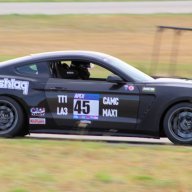
Whiteline equipped 2011 GT winning TT3 both days and setting track record, NASA at MSR-Houston, Jan 19-20

Just my two cents. :)
 
Last edited:

Whiskey11

SCCA Autoscrosser #23 STU
Joined
Feb 24, 2012
Posts
1,644
Reaction score
4
Terry think of it this way, with the axle clamps the lateral loads are spread out over both axle tubes. With the PHB all of those forces are put through the driver's side axle tubes. Do the FR500/Boss302R cars have welded axle tubes? No? Apparently Ford thinks it is safe enough on those cars to run a PHB with all of the lateral loads being placed through the driver's side axle tubes. At least with the Fays2 those loads are spread through both axle tubes rather than loading all of that weight on the driver's side. If anything I would think the Fays2 would be keeping the axle tubes in the car. Maybe not keeping them from rotating, but there aren't any tangible rotational forces applied through the Fays2 when compared to the torque placed on the tubes from the lower control arms (and amplified with relocation brackets).

There are also a LOT of the ESP driver's running the Fays2 unit. Either through Sam's recommendation or through word of mouth. It flat out works, regardless of what people want to say.

Someone with more engineering/physics knowledge correct me if I'm wrong, but wouldn't fast, repeated hammering at 1.4G in autocross be worse for axle slipping due to impulse forces than a continual 1.4G applied on a road course? I'm thinking a hammer pounding continuously at the same force vs applying the same force once and continuously for the same time. Just thinking out loud here! :p
 

19COBRA93

Ford Racing
Joined
Dec 17, 2008
Posts
7,577
Reaction score
22
Location
Clinton, Ut
If you're looking at lateral forces, the Fayes would technically be the hardest on the axle tubes. Now, I think this is nit picking, but since it was brought up, I'll explain.

During a hard turn, the lateral force is transferred through the axle shaft into the center carrier to the center pin, then to the side bearings and bearing journals of the cast diff housing. With a watts that is attached to the diff cover (which is directly bolted to the diff housing), the opposing force applied by the watts, the lateral forces are met at the same spot. With the Fayes, the opposing force from the watts is actually pushing outward on one side of the axle tubes while the axle shaft is pushing the center diff the opposite way.

So during a hard left hander, the RH axle shaft will be forcing the center diff to the left, while one arm of the Fayes watts will be forcing the RH axle tube to the right (away from the center diff), and pulling the LH axle tube to the right (towards the center diff). All this back and forth could, IMO over time, weaken the attaching point between the cast center diff and axle tubes. Simply welding the tubes would completely solve any potential risk of failure.

I hope that makes sense. And if the axles were retained by pressed bearings on the ends like a 9" rear, then the Fayes attachment would be ideal.
 

sheizasosay

Alive
Joined
Jun 28, 2011
Posts
1,024
Reaction score
4
I don't think weight is the "big difference"on the watts. The roll couple does not change with the Steeda/fays style whereas it does with the diff mounted regardless of a fixed RC. I've never driven the Fay's style though and have no idea what that feels like. I have diff mounted.


Sent from my iPhone using Tapatalk
 

Whiskey11

SCCA Autoscrosser #23 STU
Joined
Feb 24, 2012
Posts
1,644
Reaction score
4
If you're looking at lateral forces, the Fayes would technically be the hardest on the axle tubes. Now, I think this is nit picking, but since it was brought up, I'll explain.

During a hard turn, the lateral force is transferred through the axle shaft into the center carrier to the center pin, then to the side bearings and bearing journals of the cast diff housing. With a watts that is attached to the diff cover (which is directly bolted to the diff housing), the opposing force applied by the watts, the lateral forces are met at the same spot. With the Fayes, the opposing force from the watts is actually pushing outward on one side of the axle tubes while the axle shaft is pushing the center diff the opposite way.

So during a hard left hander, the RH axle shaft will be forcing the center diff to the left, while one arm of the Fayes watts will be forcing the RH axle tube to the right (away from the center diff), and pulling the LH axle tube to the right (towards the center diff). All this back and forth could, IMO over time, weaken the attaching point between the cast center diff and axle tubes. Simply welding the tubes would completely solve any potential risk of failure.

I hope that makes sense. And if the axles were retained by pressed bearings on the ends like a 9" rear, then the Fayes attachment would be ideal.

I typed something up last night in response but my internet decided it would rather not work.

So how do you feel then about a PHB? All of those lateral forces are going through just the driver's side axle tubes. All of the pushing and pulling. If anything the Fays2 mounting reduces the load on the driver's side tube and spreads it to the passenger side, maybe not quite in half, but the total forces on the tubes is less than with the PHB arrangement.

No one is disputing that the Whiteline unit applies less force to the axle tubes, this is about the Fays2 damaging axle tubes and I'm just not seeing it being worse than a PHB arrangement and the FR500/Boss302 (race car) and hundreds of thousands of street cars use that arrangement without issue.

It is neither here nor there, there are PLENTY of people pushing the Fays2 unit hard without incident.
 

Roadracer350

Senior Member
Joined
Sep 11, 2011
Posts
1,215
Reaction score
0
Location
Tulsa OK
What prompted me to purchase the WL unit over the Fays was its simplicity. The unit is more compact, easier to install and user friendly.
 

19COBRA93

Ford Racing
Joined
Dec 17, 2008
Posts
7,577
Reaction score
22
Location
Clinton, Ut
I typed something up last night in response but my internet decided it would rather not work.

So how do you feel then about a PHB? All of those lateral forces are going through just the driver's side axle tubes. All of the pushing and pulling. If anything the Fays2 mounting reduces the load on the driver's side tube and spreads it to the passenger side, maybe not quite in half, but the total forces on the tubes is less than with the PHB arrangement.

No one is disputing that the Whiteline unit applies less force to the axle tubes, this is about the Fays2 damaging axle tubes and I'm just not seeing it being worse than a PHB arrangement and the FR500/Boss302 (race car) and hundreds of thousands of street cars use that arrangement without issue.

It is neither here nor there, there are PLENTY of people pushing the Fays2 unit hard without incident.

I agree that the fays2 would reduce the load on the LH axle tube compared with the panhard bar, and even while I typed all that out last night, I feel it's really not a major issue with either of them.

With that said, I have a rearend in my garage that's out of an '07 that's had the LH axle tube slip. I don't know how bad it is, or the cause, or the history with it. But it's leaking a reasonable amount of oil at the tube-to-housing pressed joint, a clear sign of slipping. So, I know these tubes can move around. This proves nothing though as the history of it is unknown.

I haven't chosen a watts yet, and I'm planning on welding my axle tubes regardless of what I choose. It will probably be a Griggs simply because it will guarantee the fitment of the Griggs torque arm I'll be running as well.
 

SoundGuyDave

This Space For Rent
Joined
Apr 9, 2007
Posts
1,978
Reaction score
29
I don't have a WL in my car, but I've driven FAYS2-equipped S197s on track before. Maybe it's just me, but my final reaction was... meh... While you may gain a huge benefit in the rapid-fire transitions on an autocross course, on an open track, the WL really doesn't seem to do that much in comparison to a rod-end equipped PHB. In Terry's case, I can see it, since he's working with millimetric clearances for his rear rubber, but for me, it's just not that big of a deal.
 

Roadracer350

Senior Member
Joined
Sep 11, 2011
Posts
1,215
Reaction score
0
Location
Tulsa OK
I agree that the fays2 would reduce the load on the LH axle tube compared with the panhard bar, and even while I typed all that out last night, I feel it's really not a major issue with either of them.

With that said, I have a rearend in my garage that's out of an '07 that's had the LH axle tube slip. I don't know how bad it is, or the cause, or the history with it. But it's leaking a reasonable amount of oil at the tube-to-housing pressed joint, a clear sign of slipping. So, I know these tubes can move around. This proves nothing though as the history of it is unknown.

I haven't chosen a watts yet, and I'm planning on welding my axle tubes regardless of what I choose. It will probably be a Griggs simply because it will guarantee the fitment of the Griggs torque arm I'll be running as well.


Theiorietcly you could machine some of the WL diff cover to install the Torque Arm. My whole outlook is if you cant buy it make it. Do you know the difference in thicknesses between the WL unit and Griggs? It may not be a factor.:thumb:
 

19COBRA93

Ford Racing
Joined
Dec 17, 2008
Posts
7,577
Reaction score
22
Location
Clinton, Ut
Theiorietcly you could machine some of the WL diff cover to install the Torque Arm. My whole outlook is if you cant buy it make it. Do you know the difference in thicknesses between the WL unit and Griggs? It may not be a factor.:thumb:

I don't know the thickness. It may not be a factor. As far as the Griggs and WL, I don't see one being any better over the other, so if I had to machine anything, I would just buy the one that works with what I have instead.
 

Whiskey11

SCCA Autoscrosser #23 STU
Joined
Feb 24, 2012
Posts
1,644
Reaction score
4
Has anyone here taken a Fays2-equipped car out on a road course?

Sam and I'm sure plenty of others have and I wasn't talking about JUST a roadcourse, I'm talking about those of using them for autocross.
 

Sam Strano

Senior Member
Joined
Oct 23, 2009
Posts
918
Reaction score
6
Look. Everyone is entitled to their opinion. Everyone has one, I think that's clear.

A Fays2 works, period. It's proven, I've used it. Mark Madarash uses on. Tim Bergstrom's car has my old one from my 2007 on it. If you want to use something else, that's just fine. I sell 3, take your pick. Others sell others, and some of us have the same brands too.

Yet again, I can only point out the proof is in the pudding. <shrug>

SoundGuyDave... You drove a car with a Fays2 and you were "meh". Fair enough. Was the rest of the setup comparable? I don't know anyone who has driven a properly setup Watts link and would opt to return to a PHB, nobody... myself included.

As for weight differences, I often think it's splitting hairs to worry about every last pound, but much as been made by some about the weight of everything. Frankly I'd happily take a little more weight for something that gives me 7 RC height options.

As for slipping and all that. Doesn't happen. It can be claimed, stated, said to be the case. I've never slipped one that was properly tightened. And as for loads on the axle tubes, well the axle is subjected to some pretty big forces already, what with the fact the rear tire takes a lot of lateral load and that force is ultimately put into the axle (has to be that's how the PHB works) and that's not really a problem.
 

Hvacmike

Junior Member
Joined
Mar 17, 2012
Posts
26
Reaction score
0
Location
BG Ohio
How much dinero did you put down HVAC for your setup?

I think i spent around $1300. I could have gotten some cheaper coilovers but honestly i dont need to raise and lower the car. I think i got more quality parts going the route i did.
 

SoundGuyDave

This Space For Rent
Joined
Apr 9, 2007
Posts
1,978
Reaction score
29
Hey, Sam! Yes, I would certainly say the rest of the car was pretty much up to snuff. A47 SLA up front, Penske dampers, etc. I drove the car at Road America (long, high-speed track, 4 miles, 14 corners, but no real transitional stuff, just the usual sweepers, carousels, traditional 90*, etc. but with decent elevation changes), and also at GingerMan, which is a pretty tight club-style track (flat, couple of fairly quick L-R combinations)...

For me, it just wasn't all that. It did have a different feel to the rear right at entry, but it wasn't a night/day "OMG! I GOTTA GET ONE" experience. If points/time/money was no object, sure I'd toss one on the car, if for no other reason that RC tunability and to bias the weight a little more rearward, but it's just not that high on the list of planned stuff for the car. I certainly don't think that I can find tenths of a second with the Watts Link. If I worked with the other car for a weekend or two dialing it in, my opinion might change, but I can only report my reactions.

Oh, and I have also instructed several students with WL-equipped S197s, and the "butt dyno" wasn't telling me anything that different from what I get with PHB cars.
 
Back
Top