Midlife Crises
Senior Member
Didn’t think to take pictures before bolting them on. Here they are on Torque Thrust Ms. Wheels are 10” wide in the rear and 9” wide on the front.Got pics?



Didn’t think to take pictures before bolting them on. Here they are on Torque Thrust Ms. Wheels are 10” wide in the rear and 9” wide on the front.Got pics?
Finally put on my trans cooler scoop. Forgot I had purchased this a couple of years ago when I was modding my car a lot. Was under my car fixing my splash shield for the third time.
View attachment 109334
I'm curious if you see a MPG decline.Finally put on my trans cooler scoop. Forgot I had purchased this a couple of years ago when I was modding my car a lot. Was under my car fixing my splash shield for the third time.
View attachment 109334
View attachment 109335

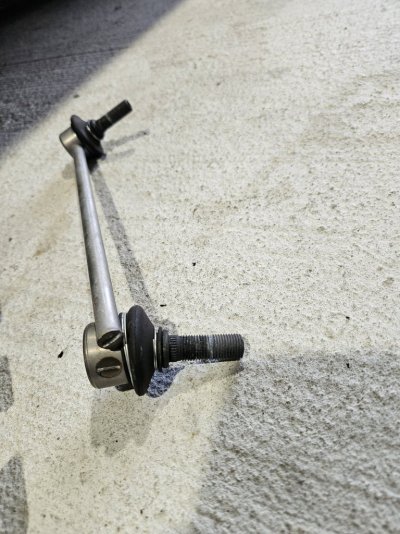
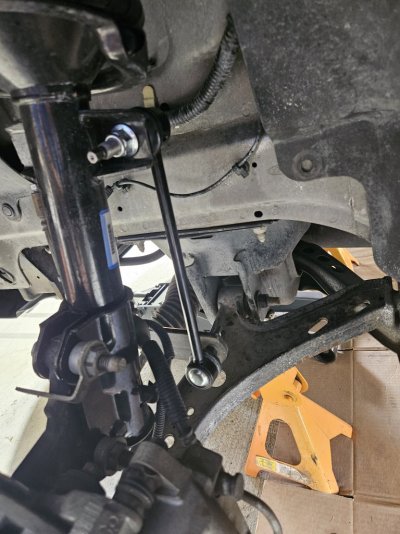
 www.fordpartsgiant.com


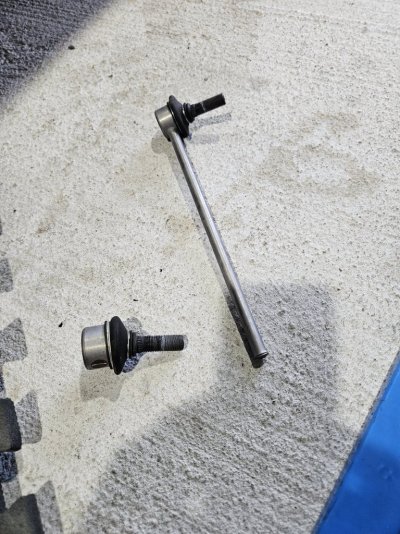
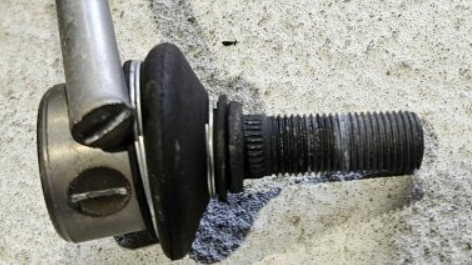
Same experience, 10 years now with the new style. BTW Lemfoerder (OEM supplier for Mercedes) found that the link joints with this balloon type rubber does not hold the grease inside the joint effectively. They must be molded with at least one more wrinkle to avoid this.Ford had an updated part for the sway bar link, been working great on my car for the last 12 years
BR3Z-5K483-B BR3Z5K483B - Genuine Ford Base part # 5K483 Link
Ford part # BR3Z-5K483-B BR3Z5K483B, Base part # 5K483, $54.66 online at FordPartsGiant.com. Wholesale-priced and fast-delivered Ford parts Link.
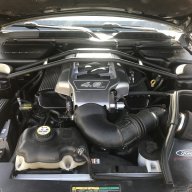
From the test results, especially the AAB-2227 sample (0 mi Ford MC 5W-30 FS) & the advent of the new Ford redesigned cam follower's oil squirt hole size, I'd be leery of using any other main brand's 30 grade oil w\o some actual proof of the oil's tested 0 mi viscosity cSt @ 100*C falling around\under 10 cSt due to the fact that the SAE J300 API viscosity rating range for a 30 grade oil is between 9.3 cSt thru 12.5 cSt (see chart provided below) as the other brands only target is to meet within the API specs.......whereas Ford has the extra impetus to not only ensure their MC oils meet the appropriate SAE J300 API rating specs but also to meet the specific internal design requirements of their engines since they use their own oil formulations when they design\test\qualify their OEM engine designs......thus the additive packages (which would include viscosity improvers.....like HTHS...is why I believe the viscosity tested where it did in the 0 mi sample instead of higher........) used wouldn't necessarily be similar across all 30 grade oils--only to qualify\meet within the API grade specs target & to meet any other OEM's specific specs for their engines (like the DEXOS spec.....this is GM's specific oil formulation specs that any brand's oil has to meet in addition to the SAE J300 API specs to qualify for use in all GM engines......why GM doesn't carry an OEM branded oil anymore........you'll also note that Ford's MC oils don't meet the GM DEXOS specs, simply due to Ford not wanting to pay the GM licensing fee to have their oil tested to qualify for the DEXOS specs........this is a very important reason why 1 just shouldn't blindly use any brand's viscosity grade spec'd oil just because it meets the OM's given API oil specs to use.........you really need to check into the rest of the specs to ensure that the oil is really compatible, especially if moving away from the oil that the OEM spec'd in their OM's........you'd be kinda foolish to use a Ford MC 5W-30 oil in a GM engine that is spec'd for the same API 5W-30 oil since the Ford MC oil isn't tested\qualified to meet GM's DEXOS specs & vice versa.......irrespective that both meet the same SAE J300 API specs to qualify for a 30 grade viscosity........the additive packages designed\used in the oils really matter.....especially when sludge & varnish is an issue in which the particular engine's internal component designs will heavily dictate the additive package formulation........).I use 5w30 since the 2nd change, but when I see the oil pinholes in the new style roller follower arms, I have some thoughts.
I just looked in my catch can and there is not much in it. Half than I usually find after 1000 miles, looks like you are right.From the test results, especially the AAB-2227 sample (0 mi Ford MC 5W-30 FS) & the advent of the new Ford redesigned cam follower's oil squirt hole size, I'd be leery of using any other main brand's 30 grade oil w\o some actual proof of the oil's tested 0 mi viscosity cSt @ 100*C falling around\under 10 cSt due to the fact that the SAE J300 API viscosity rating range for a 30 grade oil is between 9.3 cSt thru 12.5 cSt (see chart provided below) as the other brands only target is to meet within the API specs.......whereas Ford has the extra impetus to not only ensure their MC oils meet the appropriate SAE J300 API rating specs but also to meet the specific internal design requirements of their engines since they use their own oil formulations when they design\test\qualify their OEM engine designs......thus the additive packages (which would include viscosity improvers.....like HTHS...is why I believe the viscosity tested where it did in the 0 mi sample instead of higher........) used wouldn't necessarily be similar across all 30 grade oils--only to qualify\meet within the API grade specs target & to meet any other OEM's specific specs for their engines (like the DEXOS spec.....this is GM's specific oil formulation specs that any brand's oil has to meet in addition to the SAE J300 API specs to qualify for use in all GM engines......why GM doesn't carry an OEM branded oil anymore........you'll also note that Ford's MC oils don't meet the GM DEXOS specs, simply due to Ford not wanting to pay the GM licensing fee to have their oil tested to qualify for the DEXOS specs........this is a very important reason why 1 just shouldn't blindly use any brand's viscosity grade spec'd oil just because it meets the OM's given API oil specs to use.........you really need to check into the rest of the specs to ensure that the oil is really compatible, especially if moving away from the oil that the OEM spec'd in their OM's........you'd be kinda foolish to use a Ford MC 5W-30 oil in a GM engine that is spec'd for the same API 5W-30 oil since the Ford MC oil isn't tested\qualified to meet GM's DEXOS specs & vice versa.......irrespective that both meet the same SAE J300 API specs to qualify for a 30 grade viscosity........the additive packages designed\used in the oils really matter.....especially when sludge & varnish is an issue in which the particular engine's internal component designs will heavily dictate the additive package formulation........).
I know some EU oils are specifically formulated\spec'd for use in specific OEM engines (BMW, Audi, Mercedes, VW, etc) as well as meeting the EU equivalent SAE J300 specs.
IMHO, this is where you GriffX are in a position that this isn't that much of an issue since the majority of engine designs (thus the various oil formulations available) in your neck of the woods have been using similar internal designs, components (stepped\continuously variable cam timing systems, tight clearances, all aluminum alloys, etc) for decades, thus IMHO most EU oil formulations should be formulated by default to work well within this Ford 3V Modular's internal design, thus the viscosity cSt ranges would be in similar alignment.
But the only way to know this for sure is to have the oil tested @ 0 mi to then compare the results to the AAB-2227 Ford MC 5W-30 FS 0 mi oil sample results..........but that will be up to you to consider (if I read into your post, you've already done this..............).
I can guarantee that Ford has done all the necessary testing to ensure that their MC oil formulations will work well w\ the new redesigned 3V cam followers.........I'll wager that will also include their MC 5W-50 grade oils (for performance engine usage) as well..........or I believe they would've never released them for Ford OEM warranty replacement parts.......
But this is just my take on all this....................been running them in my 3V for 4+ yrs using Ford's MC 5W-30 FS oil w\o issue & I drive my car year-round thus thru US 4 Corners winter conditions as well.....unless there's snow\ice\rain on the roads (......due to the API SAE J300 5W cP spec which is at -30*C for cranking flow thru -35*C for pumping flow......).
A plus for the Ford MC 5W-30 FS oil is it also meets the API SP spec (tested\qualified to resist LSPI......targeted for use in turbo'd EcoBoost & 3rd Gen Coyotes...due to DI use....) as well as the API SN\SN+ spec that the 05-10 S197 GT OM calls for (backwards compatibility......the MC 0W-20, MC 5W-20 & MC 5W-30 all meet this API SN\SN+ spec........but not all meet the API SP spec....yet) which makes this oil useful to run in these 3V's which are known for PCV oil misting carryover into intake manifolds (resist detonation from oil depositing on pistons\in combustion chambers).
I believe your engine will be just fine running the new redesigned cam followers...........w\ some improvement to running EOP as well from their use. You might check to see if the PCV oil misting reduces over time as well (the oil spray is directed at the cam lobe\follower roller contact area instead of up at the cam lobe alone thus should reduce the amount of oil slung up off cam lobes\sprayed into crankcase blowby air off #8 cylinder (this is where the valve cover oil baffle opening for access to the internal PCV valve is located).
I just looked in my catch can and there is not much in it. Half than I usually find after 1000 miles, looks like you are right.
Regarding the viscosity difference between 5w20 and 5w30, I'm more curious if the time-to-oil-the-cam from cold start is different with the tiny holes in the followers. The 100°C value is not a big concern for me. I have 5w20, 5w30 and 5w40 on my shelf and the room temp difference in viscosity is high. Compared to 5w20 the 5w40 is thick. I wonder how much difference the time is until everything is supplied with oil.
My Mercedes has an upside down oil filter which gets empty after some days of not driving it, you can literally hear the oil pump through time in the engine, because of the oil starvation in the chain tensioner around 2 sec. after start-up when the oil filter was empty.
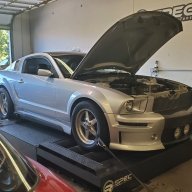
Poo. Thank for the reminder guys. I haven't changed my oil in so long. I better find out how long it's been. The cat gets driven less than 1k miles per yearI use 5W 30 and change it every 6000K or yearly. My take on it would be that the catch can will probably collect less as 30 grade oil wont be as prone to misting at temperature? Yes over time theres a possibility the cam might suffer.
That's why I mentioned this to you as I've made note that you are keen on checking for this type of thing............This is what I noted very quickly after the cam follower changeout to the new redesigned parts I did back in winter 2020 from finding the broken '09 MY original design production cam follower on 1 intake valve @ #7 cyl........the oil collection in my ADD W1 catch can had dropped almost to nothing. Changed out the ADD W1 catch can (used a double baffle design w\o any collection media mesh) to an Evil Energy catch can that had a baffle design that included a SS media mesh--similar to a Brillo pad which greatly increased the collection surface area for oil mist to drop out of the air\blowby--noted that the oil collection rate didn't increase thus verified to me that the drop off in oil misting rate thru PCV valve was internal thus is connected to the new cam follower oil squirt hole design redirecting the oil spray\flow (at that time, they were the only internal valvetrain parts I changed out......like you just did thus an apples to apples scenario.............).I just looked in my catch can and there is not much in it. Half than I usually find after 1000 miles
I think the Mustang has a 10,000 miles oil change interval? dont quote me on that, but I just like to change mine at 6,000 as mine is only out in the summer and not a daily driver. barely done 1000 miles last year due to it being a very wet summer.Poo. Thank for the reminder guys. I haven't changed my oil in so long. I better find out how long it's been. The cat gets driven less than 1k miles per year
5000 Miles, but on some years I change the oil every 2 years (it is a summer only car) with no problems. The oil ages with usage much more. The van't Hoff rule says with increase of 10 deg Kelvin the chemical reactions gets faster by factor 2 to 4, so from room temp to 100°C is a big difference.I think the Mustang has a 10,000 miles oil change interval? dont quote me on that, but I just like to change mine at 6,000 as mine is only out in the summer and not a daily driver. barely done 1000 miles last year due to it being a very wet summer.
5000 miles? I didn't know that GriffX, Thanks. I never got to 5000 miles anyways its mostly 2000 at most before an oil change. Probably should push oil changes to two years as oil has got so expensive.5000 Miles, but on some years I change the oil every 2 years (it is a summer only car) with no problems. The oil ages with usage much more. The van't Hoff rule says with increase of 10 deg Kelvin the chemical reactions gets faster by factor 2 to 4, so from room temp to 100°C is a big difference.
BTW: The book J. Kerry, Psalm of Lies form the Church of Global Warming says, "no matter how much it rains, it is to dry, no matter how cold the summer is, it is too hot"
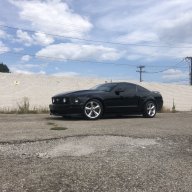
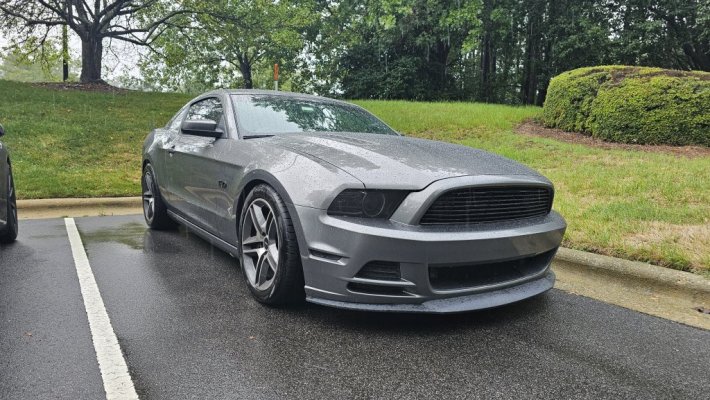
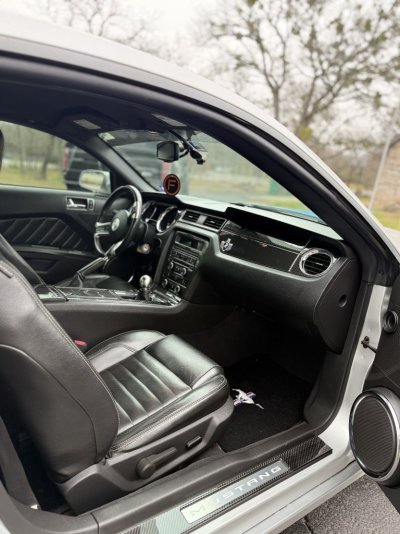
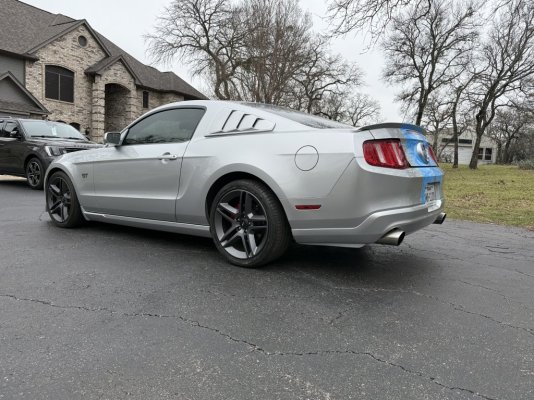
Gotta work on resizing my pictures, they’re all too big to post. Anyway I’m a ford guy, mainly ford raptors since 2010, only a fan of Gen 1’s. Currently own a 2013 supercharged raptor. I never thought I’d own a Mustang, not a car I would buy but this little beauty fell on my lap and I love it. 2010 GT Premium. Love that it’s a one year only and love the 3v 4.6
Lowered,CAÍ,Exhaust, Gt500 wheels and brakes, front Lip and paint touches, added blue stripes, restitched steering wheel and added carbon fiber bits to interior. Pretty pristine shape.
Taking it to True Street in McKinney to add cams, headers, and a 93 tune. That’s all I’m doing to it, just looking for that muscle car sound and anything over 300whp.
View attachment 109378
View attachment 109379