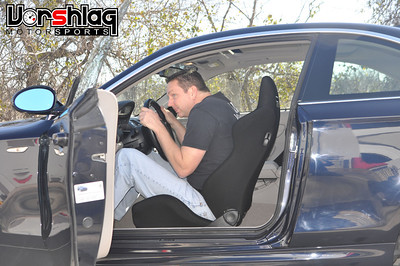
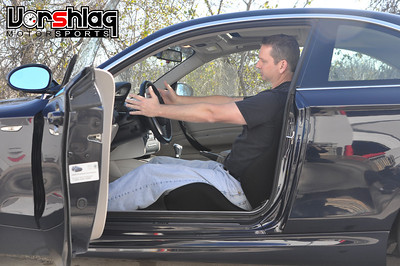
What seats are you running?

Mike K

WANNA BE FAST
Joined
Apr 8, 2010
Posts
11,404
Reaction score
10
Location
Richfield, MN
That doesn't matter to me since my car is slow and only sees the strip. Good to know they are decent seats.
 

Philostang

Chrome Hater
Joined
Dec 19, 2009
Posts
429
Reaction score
3
Location
Chicago
Just spent the weekend on track in a Boss with the FRPP Recaro seats. Overall a pretty nice street seat with adequate support on track. Here's a more full review.

First, I'm a medium build guy (5'8", 175 lbs). I was in the seat with only the standard seat belts (no CG-Lock, etc.). They held me in place fairly well without having to hold on as I would have in the stock GT seats. The cloth construction has a lot to do with this, as the leather GT seats are too slick and let you slide right out of them under modest g-load. The bolsters were working, esp. the lumbar ones. By the end of the first day my ribs were starting to feel a bit tender. As my student smoothed out, the second day was less harsh on the upper body. I could still feel some upper-body movement into the supports, and they felt like they were just holding me in. They're not a track-seat set of lateral supports for sure. Still, they held. A bigger guy might run into the supports with less lateral movement than I had and feel a bit more planted. A really bigger guy might run into and over the side-supports, depending on how aggressive the driver is and/or how adept he/she is at maintaining a high lateral load.

Were these equipped with a full harness up top I'll bet this wouldn't have even been noticed much. Of course, w/o provisions for a sub-belt I wouldn't use these with a harness, but they did a fine job all things told. The more serious track junkie wouldn't want to give up his track seat for them (esp. to abandon the harness), but a more casual one might want to look at them. Just sitting in them on grid is very pleasant.

Best,
-j
 

ArizonaGT

Road Course Member
Joined
Dec 2, 2009
Posts
1,248
Reaction score
3
Location
Phoenix, AZ
The BOSS seats are super comfortable and very supportive on the track, but if you're spending money with the intent to get a seat(s) specifically for track use, there are better options out there. However, if you want a dual purpose street/track seat, get the BOSS recaros.
 

Morris

Senior Member
Joined
Jan 19, 2012
Posts
822
Reaction score
1
I'm thinking hard about those Sparco Chrono Road seats but can't seem to find any reviews on them.

For those that have them...how was the fitment and comfort level?
 

fastduo

Member
Joined
Feb 21, 2010
Posts
122
Reaction score
0
Location
Sunny Miami, FL
I love my Boss seats but my last car had Sparco EVO XL 2 and they were awsome. I may buy one for track events in my car.

94Gtint-Copy.jpg
 

OkieSnuffBox

Member
Joined
Feb 25, 2011
Posts
323
Reaction score
0
I wouldn't mess with a reclining seat for track use.

It's an easy job to swap seats. Pull out the stockers, go to track day, come home, reinstall stock seats.

Done.
 

Morris

Senior Member
Joined
Jan 19, 2012
Posts
822
Reaction score
1
Ya, I hear you there but the issue for me is that I don't like the stock seats in my daily driver. I do about 100 miles a day and my low back is killing me. I need to have my back more upright, not hunched over. The stock seat sort of has a divot where that seam is that doesnt support the back at all.

I have to have a reclining seat so my kids can get in the back when needed. The only other seat I have seen that would work for me is a Recarro but its 3 times the cost.
 

DTL

Member
Joined
Jul 16, 2012
Posts
295
Reaction score
0
Location
SoCal
I just put a pair of Corbeau LG1s in my '13 GT, and I'm not too happy with them. The reclining mechanism feels pretty weak and the seat back is not nearly tall enough. The shoulder harness openings are about 3" below the top of my shoulders and the top of the seat back only makes it to the base of my head. I'm only 6'0". Now I'm shopping for a one-piece race seat. I need something tall enough for me. I've used Sparco, Kirkey and Butler in the past. Any other suggestions for something that bolts in?
 

cruzing2much

Member
Joined
Mar 15, 2009
Posts
380
Reaction score
2
Location
hammonton,nj
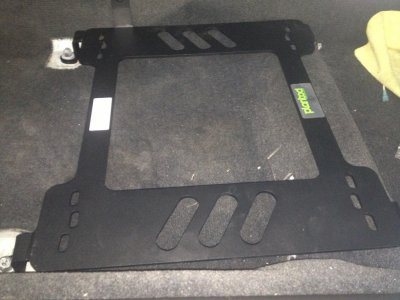
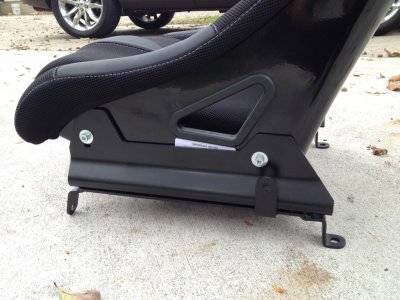
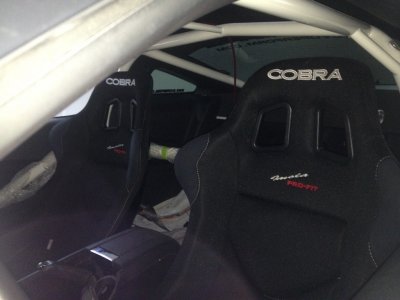
Just put a pair of cobra imola pro Kevlar gt seat in my my 5.0. Very solid and comfortable seat seat. I used a set of planted seat brackets to mount them in the car and they are super strong and solid! Had originally made a set of aluminum seat brackets but was getting to much flex out of them. Here some quick picks sorry for the quality.

ImageUploadedByTapatalk1349616838.785618.jpgImageUploadedByTapatalk1349616848.235920.jpgImageUploadedByTapatalk1349616868.154081.jpgImageUploadedByTapatalk1349616878.758829.jpgImageUploadedByTapatalk1349616892.480501.jpgImageUploadedByTapatalk1349616903.692870.jpgImageUploadedByTapatalk1349616915.818806.jpg
 

SherrodMustang

Senior Member
Joined
Aug 22, 2010
Posts
5,229
Reaction score
4
Location
Montgomery, Alabama
Just put a pair of cobra imola pro Kevlar gt seat in my my 5.0. Very solid and comfortable seat seat. I used a set of planted seat brackets to mount them in the car and they are super strong and solid! Had originally made a set of aluminum seat brackets but was getting to much flex out of them. Here some quick picks sorry for the quality.

View attachment 37008View attachment 37009View attachment 37010View attachment 37011View attachment 37012View attachment 37013View attachment 37014

Really digging these seat a lot. Where did you pick them up at?
 

Roadracer350

Senior Member
Joined
Sep 11, 2011
Posts
1,215
Reaction score
0
Location
Tulsa OK

DILYSI Dave

Member
Joined
Jan 5, 2012
Posts
721
Reaction score
0
Location
Braselton, GA
Anyone here got some OE seat rails that they aren't using? I need to mount up my OMP seat, but would prefer to adapt OE rails. I've got a WTB ad, but you are the guys who are most likely to have these collecting dust in the garage.
 

Vorshlag-Fair

Official Site Vendor
Joined
Nov 12, 2010
Posts
1,592
Reaction score
116
Location
Dallas, TX
Great thread here, chock full of good tech! We've done a lot of racing seat installs in a lot of different cars over the years, including S197's, so I will throw my two cents in.

DSC_1186-S.jpg
DSC_7956-S.jpg


Why Add Racing Seats?

There are FOUR REASONS to use a fixed back racing seat, which I will go over here. However, there are some downsides too. People really need to think about all of the Pros and Cons before making this investment. A good composite (Kevlar or fiberglass) or aluminum fixed back racing seat comes with a lot of compromises and costs and you better be prepared to deal with the down sides if this is a dual-purpose car (street/autox or street/track). You can easily spend upwards of $2000 to get a pair of good seats into your S197. For a dedicated race car there is no ifs, ands or buts - you put in a fixed back seat and harness. But for that dual purpose car, that we are discussing here, it is not always an easy choice.

Let's say you have a dual purpose street/track car and have moved beyond street tires and are now running some fat R compounds. The S197 can easily make 1.4g of lateral grip with the right suspension tweaks and tires, and that amount of force will throw you out of the stock seats in a hurry! Even with 295mm street tires, I get tossed around my '13 GT like a rag doll on track, and end up expending a lot of effort with my legs and upper body trying to keep my ass in the seat and my torso upright.

Recaro-Boss302-M.jpg

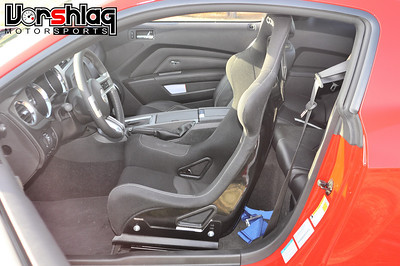
Boss 302 Recaro seats aren't bad, but they are not a fixed back racing seat.

Why upgrade? Well that is easy - the stock Mustang seats are terrible, as are 99% of the seats available in most cars. There are a few car models that have great factory seats - the Mitsubishi EVO X, the 911 GT3, and some other high end sports cars. But most Mustangs have flat, non-supportive seats designed to fit all sizes. The base Mustang GT cloth seats are some of the worst factory seats I've ever sat in. Big, flat foam bricks with no lateral torso or leg support and few adjustments. My 2013 GT came with these cloth base seats and I cannot wait to get them out. Our 2011 GT has the "Premium" leather 401A power driver's seat and this one is marginally better than the base GT seat at keeping you in place, but heavier still. The Boss302 Recaro seats are a big step up and if you have those you might not want to bother with fixed back racing seats. Lots of comfort and convenience + decent lateral support and pass-through holes for proper racing harnesses. The best of both worlds for about $2000? Not a bad compromise. But they still don't hold you in place like a true fixed back race seat.

DSC_7414-S.jpg
DSC_7413-S.jpg

Left: Base GT cloth seats in our 2013 GT. Right: Premium leather seats are a little better in our 2011 GT.

Four Reasons To Use Race Seats In A Track Car

I'll list the positives to using a fixed back racing seat on a dual-purpose track/street car below:


  1. Increased safety
  2. Increased feel and communication with the car
  3. Improved control of the driver's body
  4. Lower weight / Better packaging


Safety
is easy to understand if you've seen a few crashed cars. Go to a junk yard sometime and ask if you can walk around and look at wrecked cars - it is an eye opener. Rear end collisions (which can happen at track events if you back into a wall or barrier) tend to break stock reclining seat backs pretty easily. They are fairly weak in bending loads, and with a 5-10+ g impact plus the weight of a human torso (approx 100 lbs) can break that reclining hinge or even the seat back structure. So a fixed seat can help immensely in a rear impact, as well as a side impact by keeping your torso from flopping out of the seat laterally.

DSC_0705-S.jpg
DSC_1548-S.jpg

Cobra Kevlar composite seats in our 2011 GT allow the driver and passenger to stay in place on track.

However, there is a potential safety downside: in a roof crush rollover crash, your torso could be more likely to be crushed in a fixed back seat if you don't have a roll bar or roll cage. This is often spouted on the internets as soon as a track driver says he wants to go to a race seat "You're gonna die!!!" In reality, I've only seen one or two real rollovers at HPDE events in 25 years, including one my college roommate suffered at TWS (he was fine). Modern coupes and sedans cars just don't "pancake" the roof flat that easily, but convertibles sure do! The thought is that in a rollover crash with a stock seat and 3-point belt, you will bend your torso out of the seat and prevent a spinal injury. Not very likely, but who knows. This can be debated for pages of posts, but there is little to no data to support the fears. I have put fixed back seats and harnesses in a dozen of my own cars, using a harness bar and no roll bar. Probably done 100 track days like that and I'm still alive and walking. Of course a roll cage is safer, but you cannot safely use a roll caged car on the street, either. Imagine your bare head hitting overhead roll cage tubing - it would split your melon. The best compromise is a 4-point roll bar with roll over protection, but no forward facing bars near your head. This makes your back seat virtually unusable though. I have one dual-purpose car like that and it is another compromise/cost/modification.

_DSC0251%20copy%203-M.jpg

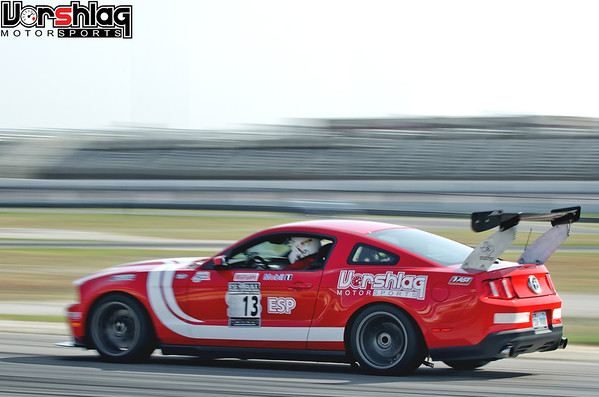
One of Vorshlag's S197 Mustang dual-purpose street/track cars running at a Global Time Attack event.

The added communication that a racing seat provides between the car and your body is harder to quantify, but it is definite and easy to feel when you track a car with (or without!) a racing seat. I have two S197s now and one has Cobra Suzuka fixed back racing seats and the other has the base GT cloth seats. Driving both back to back, the most immediate difference comes from the seats and how little "feel" you get from the car with the stock seats. What you are missing is that connection of all of your back and butt and legs with the seat, which itself is bolted to the chassis. Then you can feel intuitively when the car is yawing, or pitching, or shuddering, or whatever - because you are bolted to the car. With a stock seat + a 3-point seat belt your body is NOT connected to the seat very well at all, which leads me to point three.

Driver Body Control. Thrashing around a road course in a Mustang, especially one with a properly set-up aftermarket suspension and race tires, will throw your body around. As stated above, with good R-compound 315mm tires on our '11 GT we are able to generate 1.4g lateral and close to 1.5g in braking. That means your torso and legs are getting pushed around with forces nearly 2.5 times their normal resistance. With a proper fixed back racing seat comes DEEP lateral bolsters for your torso, legs, and sometimes even your head. This, plus a proper 5-7 point racing harness strapping you into the seat, keeps your body bolted down, and not flopping around in response to these increased g-forces.

"I am a man and I can hold myself in place!" Well, while it is true that most people can support themselves in a high-g race car, you end up expending more energy keeping yourself on the stock seat than if you were strapped to a well supported race seat. You use your arms and the steering wheel to hold your torso upright and lose a LOT of steering control. You use your knees against the console or door and your left leg planted to the firewall to keep your butt back in the seat, but then lose control of your feet and toes, not to mention making Left Foot Braking impossible. A properly harnessed driver in a racing seat only has the weight of his legs and arms and helmeted noggin to control, which leaves more strength to make smooth inputs to all three pedals, steering wheel and shifter.

DSC_5927-M.jpg

I am barely hanging on inside this slewing car!

When I am strapped into our 2011 GT's Cobra seats I can LFB, transition to RFB, heel-toe downshift easily, and make quick but smooth steering wheel inputs on track. In our 2013 GT's OEM seats and factory seat belts I cannot hope to LFB and can barely heel-toe downshift accurately. Steering inputs are lagging behind where they should be, leading to attitudes like the one above. One more reason why our faster, more powerful, higher grip 2011 GT is easier to drive than our 8 seconds-a-lap slower 2013 GT on street tires. I suspect that a racing seat and harness would lower lap times by at least a second, just from the added control.

DSC_9115-S.jpg
DSC_9117-S.jpg
DSC_9129-S.jpg


Last on the list and less important to many is lowering weight in the car and improved driver/seat packaging. A fixed back composite seat can weigh between 14 and 22 pounds, with the huge majority of them in the 18-20 pound range. Only the most expensive carbon fiber $2500+ seats weigh less than 18 pounds and often the weights given by manufactures are quite optimistic. Stock seats can weigh from 45-80+ pounds each, depending on adjustment styles (manual vs power), number of adjustments, construction type, airbag inclusion, and more. It is not uncommon to drop 50+ pounds out of a car with lightweight racing seats. Weight is another place where aluminum usually beats composite, as well as price.

Along with weight, I include better packaging potential. The stock seat has a lot of crap going on underneath it, often with height, tilt and fore-aft adjustments just for the seat bottom alone. This makes for a lot of height to package all of those gears and levers, so in the end an OEM seat usually sits up pretty high. For taller drivers this means that your helmeted head can often get jammed in the roof (a factory sunroof often compounds this problem!), and that makes for a less than ideal seat tilt angle to compensate. I drove a GT500 at a recent event and had to tilt the seat WAY back to keep my head from being jammed into the headliner, which was uncomfortable and made my forward view compromised. With a fixed back seat and no slider you can often get the seat 2-4" lower than an OEM seat, which both lowers the CG of your body in the car and often makes for better visibility and a lot more head room.

(continued below)
 

Vorshlag-Fair

Official Site Vendor
Joined
Nov 12, 2010
Posts
1,592
Reaction score
116
Location
Dallas, TX
(continued from above)

Downsides Of Racing Seats

DSC_7955-S.jpg
DSC_7954-S.jpg


There are drawbacks to almost any aftermarket part you add to your S197 Mustang, of course. A fixed back racing seat pretty much makes the back seat inaccessible. We have made custom bracket + seat installs that used dual-locking sliders (Recaro or Sparco brand) on some cars, and often they can just barely slide forward enough to allow limited back seat access with a fixed back seat, but this isn't always possible. On the car above the seats are reclining, so the seatback can be flopped forward for excellent back seat access. On a fixed seat it is always a contortionist's trick to get a body back there, even with the seat slid all the way forward. In the event of a crash on the street with rear seat passengers behind a fixed back front seat, it would be much more difficult to get out of the back than with a traditional OEM reclining seat.

So if back seat access for passengers is a concern, look at the plethora of reclining aftermarket seats with sliders that have added torso and leg bolstering and harness pass-through holes. Recaro, Cobra, Sparco, Corbeau and many others make these style seats. They can cost more, and will almost always weigh more, and are always less than ideal for rigidity and body-to-car communication, however. These never have the bolstering depth of a proper fixed back racing seats. Everything is a compromise, to someone. For an S197 Mustang, the Boss 302 / FRPP Recaro seats are an great, if costly, bolt-in choice. These include a recline function yet still has additional bolstering and harness pass-thrus.

We talked about the rollover crash fears and how these may or may not be grounded in reality. You could have more chance of spinal damage in a rollover pancake roof crash with a fixed back seat with no roll bar or roll cage. If you have some weird variables happen I could see it, but some online experts are just adamant about never dong this. That said, I have never not been allowed to compete at any NASA TT, Redline Time Attack, UTCC, TX2K, or HPDE event with fixed back seats and no rollover bar or cage.

Sizing a racing seat to your body (and to the car in some cases) takes some forethought, and nothing beats actually sitting in a showroom full of racing seats to find what fits you best. There are reams of technical data online from the seat makers, on widths and shoulder heights for harness holes and tilt-back angles, so look at all of the variables. Width is the biggest one - get a seat that is snug but not TIGHT on your hips, and not so big that you flop around between the hip/leg side bolsters. If you have a tall torso, there are different shoulder heights you need to make sure to fit correctly. Again, go to a dealer of racing seats' showroom if you can, sit in several seats, and find what suits you. And then if you do that, buy the seats from them - it costs money to have sample seats in stock, so patronize these dealers in your area. Ask around - local racers will know the dealer nearby you that keeps a bunch of seats in stock.

DSC_0935-S.jpg
DSC_0925-S.jpg

Side-Mount Brackets and Sliders cost more...

Cost for any racing seat is another downside. High quality and especially FIA approved fixed back composite seats are costly. If you want a light and rigid composite seat, then it is a side-mount style and the side mount brackets cost extra (and are part of the FIA certification now). Get the side mount brackets from the same manufacturer as the seat - and know that even then, they don't always fit without some "adjustments". A decent quality, somewhat lightweight, composite, fixed back, side-mount, FIA certified seat is going to run $600-1000 each. Then add the cost for the side mount brackets, lower chassis adaper brackets, maybe a dual-locking slider, some of which might have to be fabricated custom ($$$), and you could easily spend $1500+ per side. Ouch!

Making the brackets to fit your seat and car are always a hassle. Even finding "off the shelf" adapter brackets ones that fit the particular car and seat you want can be a futile search, or could end up making the seat sit REALLY high in the chassis (this is normally the case). You have to hope you actually fit with these pre-made brackets with your helmet on, and not have your head in the ceiling. Often times people are disappointed with the fit of the seat or themselves, and their $150-250+ off-the-shelf bracket and/or slider ends up getting tossed in the trash. The seat is too high, or the angle of the seat is wrong, or the fore-aft throw is off, or the hardware is undersized, or the entire assembly has massive amounts of flex under load - we've seen all of these outcomes first-hand. In the end we always just make custom chassis "adapter" brackets to fit the car / seat / driver combination. The sliders used on many aftermarket seat bracket kits are often JUNK; usually only having one side of the slider that locks and the other side moves around. This makes for movement under braking/loading and the feel is all shot.

DSC_9779-S.jpg
DSC_2288-S.jpg

A couple of seat-to-car adapter brackets we have made. Either strap steel or tubular steel is used.

So now you're stuck - you have a seat and no way to bolt it to your car. Then a custom bracket or bracket and slider combination has to be fabricated for this particular driver, car and seat combo, and this could easily take 5+ hours to get made properly. At Vorshlag we always budget close to a day of fabrication work for a driver's side racing seat installation with a slider. It takes a lot of seat test fitting, driver testing, measuring and fabrication work to get a racing seat fitted properly - and time is money.

We have worked with a lot of seats and a lot of sliders and always end up with the Sparco dual-locking slider kit. It has a short stack-up height, has locks on both rails (dual locking), a nice handle, is tight when in use (no slop), and is easily adapted to many chassis and seats. Not every car needs a slider and most race cars with single drivers do NOT have one, but almost all dual-purpose cars DO need a fore-aft slider. This is because a street/track or street/autocross car serves multiple purposes, and your street seating position is often different than your race position with a helmet and gear on. Also, autocrossers love to double-up on drivers, and almost no two drivers sit in the same position, so a slider is a requirement. So budget for a slider unless this is your purpose built race car that nobody else will ever drive (which is not what this post is about)

When it comes to the passenger seat you have some extra mounting flexibility. Some folks don't even bother with a racing seat on the passenger side and make anyone unlucky enough to ride along hang on for dear life. Still, if you are going to the trouble of upgrading one seat, and you frequently take passengers, it is usually worth it to add a second racing seat. You can save money and NOT worry about a slider, as the passenger is only along for the ride and does not need fore-aft adjustment nor the need to reach the pedals or shifter or steering wheel. So make a fixed-placement bracket and stick that seat as low and rearward as you can, to better place the dead weight of a passenger in the chassis. When it comes to seat sizing, though, get one of the larger sizes - so you can take a "wider" variety of passengers, as some are "wider" than others.

DSC_2252-M.jpg


The high step-over sides make racing seats a bit more cumbersome for ingress-egress, which is another downside to any fixed back racing seat for street use. Every time you get in or out you have to climb over that tall wall that provides leg support, and sometimes it helps to slide the seat back to make getting in easier. Just one of the joys of racing seats on the street.

Aluminum vs Composite Fixed Back Seats

I like the comments by Kent and Philostang regarding aluminum seats. UltraShield makes some good ones, but Kirkey is the hands-down leader in aluminum seats. There is some negative stigma attached to aluminum seats, mostly from their lack of FIA approval, but that is mostly just French snobbery run amok.

Kirkey%20seats%20025-S.jpg
Kirkey%20seats%20017-S.jpg
Kirkey%20seats%20021-S.jpg

Kirkey Aluminum Road Racing Seat

Kirkey aluminum racing seats tend to be more rigid, stronger, and more durable in a crash. They also have a lot more models, sizes and variations to choose from - literally hundreds of options. But the FIA doesn't certify these seats or the American based aluminum seat makers don't bother with FIA certifications, or both. So to use aluminum racing seats in most U.S. wheel-to-wheel racing series, you need a seat back brace bolted to the seat and a roll bar cross tube. This is an easy mod to do to your race car and I/O port and others make adjustable, easy to adjust, "fixed" seat back bracing kits. But for HPDE or Time Trial Use, this is optional (and you need a roll bar or roll cage anyway - also optional).

DSC_2912-S.jpg
DSC_7290-S.jpg


What I love about aluminum seats over composites is their lower cost, lower weight, and flexible installation methods. They cost less because, well, they just do. Hand-laid fiberglass or Kevlar or especially Carbon Fiber composite work is messy and quality composite seats probably take more time to build this way. Aluminum seats from Kirkey and the like use less costly materials, but can also be fabrication intensive. Look at all of the cold-formed lightening holes and TIG welding that goes into an aluminum seat. Sometimes aluminum seats have less than ideal padding or coverings, but again, Kirkey does it better than most.

287518517_davSr-S-1.jpg
287518410_NK8RR-S-1.jpg

UltraShield Rally Pro "wide", 15.8 pounds with upholstery, $275.

UltraShield makes several styles and sizes of aluminum seats, and I have had decent luck in autocross cars with their Rally Pro versions. Great lateral support, ultra-low weight, and they cost less than $300. However, they are not nearly as rigid as a high-end composite seat or the road-race rated Kirkey aluminum seats. Personally, I would go with a Kirkey over an UltraShield, for the added rigidity and safety.

290704724_sKeEX-S-1.jpg
303548662_2mnut-S-1.jpg


When mounting aluminum seats you sometimes have to drill your own mounting holes. This allows you the freedom to bottom-mount or side-mount, but you need to use load-spreading hardened washers to keep the holes from tearing out under crash loads. A seat flopping around inside a rolling, crashing race car is almost completely useless if it has ripped free of the roll cage/bracketry. This also applies to dual-use street/track cars - make sure to spread those loads!

333560376_aWztk-S-1.jpg
DSC_6759-S.jpg


When it comes to composite seats, I have found them to be more comfortable on longer trips - which isn't a concern on track (unless you are doing endurance racing), but on a dual-use car that you are driving to the track, it can be. A trick for making aluminum seats more comfortable is to take the removable, Velcro-secured seat bottom cushion from a Sparco racing seat and slapping it into your aluminum seat's upholstered surface (see above, left). Night and day improvement!

We have used Recaro, Cobra, and Sparco racing seats on many of our dual-purpose cars and they tend to feel pretty supportive and have good cushioning. And they look... better? Maybe that is a mental thing, as most gearheads are conditioned to like higher end composite seats with known brand names? It's not like they put aluminum seats in 911 GT3 Cup cars for us to drool over. But they tend to BE better than lower end aluminum or cheap composite style seats, too. And there are tons of cheap, far-East built composite seats out there - which are mostly junk. They tend to be too small for American drivers, poorly built, heavier, use marginal hardware, and feel more flexible and weaker - and we know they don't have any enforced quality standards in these parts of the world. None of these are ever FIA certified and for good reason. Just be careful when choosing a brand.

One cost saving option for fixed back racing seats includes steel framed, upholstered seats. Corbeau makes a lot of these, but even the big named companies like Cobra, Sparco and Recaro make steel framed fixed back racing seats - and some even have FIA certification. These can be as strong or stronger than composite shell seats, are very cost effective, but they are almost always a tick heavier. 20-21 lbs is the norm. How much is 3-4 pounds worth to your wallet? And unlike almost all composite seats, steel framed seats are always bottom-mount. That's a good indicator when you don't know how a seat is built - how do they mount? Composite seats are almost always side-mount style. Most reclining "race seats" (which aren't really racing approved) are steel framed style, as are all OEM style seats, and are bottom-mounted. Steel = heavier, but strong and less costly.

The Choice Is Yours

If you've made it all the way through this post you can see that there are a lot of things to think about before you drop major coin on racing seats for your dual-purpose street/track car. There are distinct safety, control and performance benefits, and maybe even a place to drop some weight with most fixed back racing seats. On a fat ass car like the S197, this is a good place to look for 50 or so pounds to lose, if you are competing in it. But there are some steep costs involved, possibly major mounting/bracket/slider hassles to deal with, and getting in and out of racing seats is more work, each and every time you open that door. And then there's the compromise - a reclining seat with more side and leg bolstering, so you get some of the benefits of a race seats with most of the convenience of an OEM seat. Then there are the slider and bracket options, too. Enough to make your head spin!

As your car gets more competitive in HPDE/Time Trial, or autocross, or any wheel-to-wheel car, you will have to move to a fixed back racing seat at some point. So read, research, and learn as much as you can before you take the plunge!

Good luck

 

Chim-Chim

Will drive for food
Joined
Feb 19, 2010
Posts
160
Reaction score
0
Location
Thousand Oaks, CA
Sparco actually makes a tilt enabled seat bracket for fixed back seats, if you want back seat access. I was going to go that route, but my kids (young) can get in the back seat if I slide the passenger seat all the way forward.
 

Latest posts

Support us!

Support Us - Become A Supporting Member Today!

Click Here For Details

Back
Top