

SD_Stang
Junior Member
SD, when you say competitive, exactly what format do you mean? Drag, Autocross or Open Track?
More aimed at Open Track.

SD, when you say competitive, exactly what format do you mean? Drag, Autocross or Open Track?
Keep in mind that about half of what you interpret as "nose dive" is actually rear lift as load transfers forward. Gratuitous picture included.

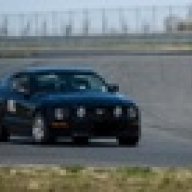

Relo brackets will help with the outward visible evidence, but the reality is that limiting rear end lift via additional rear anti-squat geometry actually takes more load off the rear tires and does so sooner in the braking event. Rear "anti-lift" is sometimes called anti-squat's evil twin, at least when there's too much of it.
Norm

I have been a vocal opponent of the LCA relo brackets. I just think they open up a can of worms... but with my new car sitting as shown below, I think it's time to make the change. My LCAs have a crazy angle to them now. UPR has a new set of LCA Relos coming out Spring 2014 which I feel will be the strongest on the market. I'm planning to pick up a pair and take my car to a proper chassis shop to have them professionally tig-welded into place. The end goal is just to have the arms parallel to the ground at this ride height.
Relo brackets will help with the outward visible evidence, but the reality is that limiting rear end lift via additional rear anti-squat geometry actually takes more load off the rear tires and does so sooner in the braking event. Rear "anti-lift" is sometimes called anti-squat's evil twin, at least when there's too much of it.
Any time you put the car into some sort of horizontal acceleration - forward or rearward acceleration, forward or rearward braking, or cornering - load is transferred off the wheels on one side or at one end of the car to the other. Some of this load is resisted geometrically by the type and details of the suspension. Since the suspension linkage is essentially rigid, this portion of the total load transfer happens virtually as fast as you can build the lateral or longitudinal acceleration. Almost instantaneously in the case of extremely abrupt braking. The portion of the load transfer that's carried by spring compression and extension (or sta-bar deformation in roll) can only happen as fast as the suspension can move, which is an effect that is significantly slower to develop.
You're right in that geometric changes due to ride height are related to predictability and driver confidence. But so are the force changes, which aren't so easy to visualize because they are related to more than just the suspension position in bump or rebound.
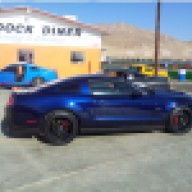

Although there was no setting which would put the arms parallel to the ground with the FR P springs. Still it appeared to help the AS ratio considerably after the drop.
And then there's still the discussion on whether/when to replace the stock LCA's, with what and why.
Okay, but with a suspension geometry that prevents the rear axle from moving relative to the body that way, what it means is that the load on the rear tires will reach a steady state condition more quickly than they would in the case where the suspension is able to move.
I don't see how that's a bad thing here...
Understood. But what I'm referring to here is the way changes to the forces are happening. For example, if the rear end is allowed to rise and fall, then it means that the actual amount of traction on the rear will take a longer time to reach a steady state condition than if the geometry is such that the rear end does not move vertically due to acceleration or braking. Instead, the energy storage, release, and absorption capability of the springs and shocks will be fully available for absorption of variations in the road even when under braking or acceleration.
I don't see how any of that does anything but good for the predictability of the car under heavy braking or acceleration.
It usually helps me to visualize something like this by exaggerating the situation to a ridiculous amount... We know that the anti-squat properties of the rear suspension tend to resist compression geometrically with rearward transfer of force. Picture, if you would, the rear axle with VERTICAL control arms, exaggerating that effect to the absolute maximum. Upon rearward transfer, the ONLY portion of the rear suspension that would show deflection would be the tire itself. Now, picture the same suspension system with forward transfer (as it would have under braking). Zero droop means instant and complete unloading of the tire's contact patch. Now, start scaling that effect back towards reality, and you'll see fairly easily that with higher A/S, you still have a reduction in tire loading, and thus traction. This is why, I believe, that torque-arm cars (in general) suffer a tendency towards brake-hop, the opposite of acceleration-based wheel-hop.
But this is actually incorrect, at least for the steady state case (it's true of the transition). You can't affect the load on the rear tires via the suspension in the steady state condition (at least via the mechanisms we're talking about here. Toe and camber would, however, have an effect on that), as that is solely a function of the forces on the car. You can only affect the amount of time it takes to transition from the pre-load condition to the post-load one.Be careful that you don't mistake reduction in chassis motion for an effective increase in contact patch loading, which is, after all, the source of the ability to change force vectors, be they lateral or longitudinal. Earlier, we talked about how sometimes changes made at one end of the car affect the other. This is one of those cases... When the car pitches forward under braking, it does so around a side-view fulcrum point, and the more front-dive is allowed creates a corresponding tendency towards lift in the rear. If the geometry of the rear suspension is such that it strongly resists that tendency towards lift, then you wind up reducing the load on the rear tires, and thus the tractive capability at that end.
Well, yes, exactly. But in a way, that's essentially what I'm arguing here. Do you want the period of time where the amount of traction is varying to be longer or shorter? I'd generally think shorter, since constant traction is more predictable than variable traction.I think you're mistaking contact-patch loading with chassis motion. Given that load will transfer under acceleration or braking, regardless of the type of suspension, what matters most at that point is how that load is managed.
I'd expect that, if you used the LCAs to increase AS%, you'd also want to use a stronger rear sway bar to tune the roll oversteer.Again, looking at the stupidly-exaggerated model, we can see that there can EASILY be "too much" of a good thing, in terms of anti-forces, even when looked at in pure longitudinal form. For a road-race car, you also need to look at it in lateral transfer conditions as well. High anti-squat is generally achieved through lower control arm angle, sloping downwards from chassis to axle, on the S197 by relocating the axle mounting point downwards. Picture those suspension links from a side-veiw under cornering conditions. As the chassis rolls, the outside link's forward mounting point will drop, pushing the axle rearwards. The inside link's mounting point, however, will rise, pulling the axle forwards. This creates roll-steer, biased towards oversteer. If, on the other hand, the links slope UPWARD from chassis to axle, the roll-steer becomes biased towards understeer. With the links parallel to the ground, the roll-steer tendencies are minimized (eliminated) as there is symmetrical axle motion relative to the chassis.
That's precisely what I'm unsure about. I'm not convinced that it is indeed the right answer.Obviously, the "right" answer is to allow a small amount of anti-squat to help put the power down,
I agree. I guess the most interesting question is: how much of a roll oversteer effect are you going to get with the rear LCAs relocated to achieve something approaching 100% AS, and might that not be something you can use to your advantage?however it's imperative to understand that what works well for straight-line traction may have negative impacts for braking and cornering, and to strike a balance where no one area is overly compromised.
I've had over 100% AS via relos AND UCA mount adjustments with a 24mm rear sway bar and stock front on a 430rwhp car and let me tell you...."handful" would be one adjective to use. Fucking scary would be another. I learned a lot that day.
TA would have a benefit in the high AS while negating rear steer category.
On a side note...over 100% AS is helpful in getting a rear wing higher in the air. Fast track stuff.
I wouldn't want over 100% AS. I'd want at most 100% AS.
I'm not opposed to having some squat and lift in the rear, but the stock amount seems excessive.
What's the AS% for the stock suspension on the GT and Boss 302?
In any case, did you try to dial out the roll oversteer through the rear bar?
Yeah. I may wind up going that way regardless. Gotta get some seat time in the car in stock form first...
Interesting. Hadn't thought of that. Not really applicable to me (I'm just running with a GT500 wing), but interesting all the same.
Explain to me how the rear bar has anything to do with roll oversteer.
Considering the root cause of roll steer, I don't see how changing the sway bar wouldn't have an effect on it.Roll oversteer is independent of the condition of oversteer, basically the axle is providing added steering at the expense of grip and driver confidence. No amount of bar is going to fix that.
Cool. Thanks!As for the stock GT numbers, somewhere around 35%AS. I think Norm calculated ~34% for the 05-10 GT's, probably a little different with the 1" longer UCA on the 2011-2014 cars)
Wasn't my idea I assure you. That was somewhere in a book I read I think.I wouldn't want over 100% AS. I'd want at most 100% AS.
I'm not opposed to having some squat and lift in the rear, but the stock amount seems excessive. I'm not the resident suspension expert, but I wouldn't focus on it yet. Spring rate, damping and bushing compliance comes ahead of that as far as modding....to me anyway.
What's the AS% for the stock suspension on the GT and Boss 302? Think Whiskey said it right. That's what I heard it was also and that, I believe, came from Norm, who definitely is a suspension expert. Not taking anything away from SoundGuyDave or Whiskey. They are sharp guys.
In any case, did you try to dial out the roll oversteer through the rear bar?
That's what happens when you don't baseline your car and you start modding shit before you have any idea of what the hell you are doing or the impact. My suspension modding came in the form of screwing everything up and then unscrewing it. So I read the book backwards basically. By the end of it all, the fix was to remove the rear sway bar and then I raised the UCA into stock hole aswell as brought the LCAs up 1 hole. I played around with the UCA vs the LCA for the AS. The thing that pisses me off with the adj components (relo's and UCA mount) is how limited of tuning you can get. Ride height tuning wound up helping out a lot. As 2 degrees of inclination vs say 5 degrees is noticeable with relo's in regards to roll steer effect. And sometimes the holes leave you with having to adjust the ride height (rear atleast). I never corner-weighted my car so atleast I didn't have to worry about messing that up from trying to tune. With the rear swaybar off and the LCA's somewhere at 1.5 degrees pushing into the pavement....I was doing way better.
Yeah. I may wind up going that way regardless. Gotta get some seat time in the car in stock form first...
Do that.
Interesting. Hadn't thought of that. Not really applicable to me (I'm just running with a GT500 wing), but interesting all the same.


