

Torque Arm on an S197

kcbrown

Member
Joined
Jul 24, 2013
Posts
656
Reaction score
5
Keep in mind that about half of what you interpret as "nose dive" is actually rear lift as load transfers forward. Gratuitous picture included.

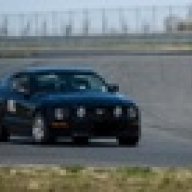
norm-peterson-albums-my-cars-picture5788-2012-run-coast-start-stop-squared10.jpg

Yeah, that's pretty much what I figured. It's why I'm wondering if using LCA relocation brackets would help with that. A torque arm apparently does, but I couldn't say by how much.
 

Norm Peterson

corner barstool sitter
Joined
Feb 5, 2011
Posts
3,615
Reaction score
326
Location
RIP - You will be missed
Relo brackets will help with the outward visible evidence, but the reality is that limiting rear end lift via additional rear anti-squat geometry actually takes more load off the rear tires and does so sooner in the braking event. Rear "anti-lift" is sometimes called anti-squat's evil twin, at least when there's too much of it.


Norm
 

Sharad

Site Sponsor
Joined
Jan 3, 2011
Posts
2,403
Reaction score
0
Location
Fort Myers, Florida
Relo brackets will help with the outward visible evidence, but the reality is that limiting rear end lift via additional rear anti-squat geometry actually takes more load off the rear tires and does so sooner in the braking event. Rear "anti-lift" is sometimes called anti-squat's evil twin, at least when there's too much of it.


Norm

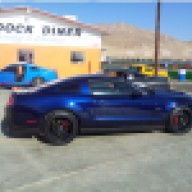
I have been a vocal opponent of the LCA relo brackets. I just think they open up a can of worms... but with my new car sitting as shown below, I think it's time to make the change. My LCAs have a crazy angle to them now. UPR has a new set of LCA Relos coming out Spring 2014 which I feel will be the strongest on the market. I'm planning to pick up a pair and take my car to a proper chassis shop to have them professionally tig-welded into place. The end goal is just to have the arms parallel to the ground at this ride height.

11drivewayLFricher_zps811e9ebc.jpg
 

TheViking

Junior Member
Joined
Dec 5, 2011
Posts
42
Reaction score
0
I have been a vocal opponent of the LCA relo brackets. I just think they open up a can of worms... but with my new car sitting as shown below, I think it's time to make the change. My LCAs have a crazy angle to them now. UPR has a new set of LCA Relos coming out Spring 2014 which I feel will be the strongest on the market. I'm planning to pick up a pair and take my car to a proper chassis shop to have them professionally tig-welded into place. The end goal is just to have the arms parallel to the ground at this ride height.

I think it's lowering the rear of the car to any degree opens that can of worms. But what other option would there be to fix the geometry with a 3-link on a lowered car? Most any aftermarket spring is going to lower the car to some degree and then the geometry problem starts (coil-overs aside).

I went with the Ford Racing units since they seemed to have the least amount of negative PR. But agree they should be welded in place after having a competent shop/person check to ensure everything is square. Although there was no setting which would put the arms parallel to the ground with the FR P springs. Still it appeared to help the AS ratio considerably after the drop.

And then there's still the discussion on whether/when to replace the stock LCA's, with what and why.
 

kcbrown

Member
Joined
Jul 24, 2013
Posts
656
Reaction score
5
Relo brackets will help with the outward visible evidence, but the reality is that limiting rear end lift via additional rear anti-squat geometry actually takes more load off the rear tires and does so sooner in the braking event. Rear "anti-lift" is sometimes called anti-squat's evil twin, at least when there's too much of it.

Can you explain how this physically happens (taking more load off the rear tires)? I thought the load on the rear tires was determined primarily by the amount of weight over them and the amount of torque they're seeing from the twisting forces of the axle, the former of which isn't really changing a whole lot. I can understand how there might be some instantaneous changes due to vertical motion of the chassis, but I would expect those to actually reduce predictability (thus implying that the less in the way of squat/dive you have, the more predictable the rear end will be under acceleration/deceleration).
 

Norm Peterson

corner barstool sitter
Joined
Feb 5, 2011
Posts
3,615
Reaction score
326
Location
RIP - You will be missed
Any time you put the car into some sort of horizontal acceleration - forward or rearward acceleration, forward or rearward braking, or cornering - load is transferred off the wheels on one side or at one end of the car to the other. Some of this load is resisted geometrically by the type and details of the suspension. Since the suspension linkage is essentially rigid, this portion of the total load transfer happens virtually as fast as you can build the lateral or longitudinal acceleration. Almost instantaneously in the case of extremely abrupt braking. The portion of the load transfer that's carried by spring compression and extension (or sta-bar deformation in roll) can only happen as fast as the suspension can move, which is an effect that is significantly slower to develop.

On rear suspension rise, the upward velocity of the body means that dynamically the rear shocks are also temporarily lifting load off the rear tires as well. Even this effect peaks before the suspension has reached its new equilibrium position, so when you come right down to it, all the suspension position shows is the slowest of these three effects and only a portion of the total force involved.

You have to think in small time steps and suddenly applied horizontal accelerations here, on a millisecond to maybe a tens of milliseconds order of magnitude. Not something that most of us could identify by the butt-dyno.

You're right in that geometric changes due to ride height are related to predictability and driver confidence. But so are the force changes, which aren't so easy to visualize because they are related to more than just the suspension position in bump or rebound.

Norm
 
Last edited:

kcbrown

Member
Joined
Jul 24, 2013
Posts
656
Reaction score
5
Any time you put the car into some sort of horizontal acceleration - forward or rearward acceleration, forward or rearward braking, or cornering - load is transferred off the wheels on one side or at one end of the car to the other. Some of this load is resisted geometrically by the type and details of the suspension. Since the suspension linkage is essentially rigid, this portion of the total load transfer happens virtually as fast as you can build the lateral or longitudinal acceleration. Almost instantaneously in the case of extremely abrupt braking. The portion of the load transfer that's carried by spring compression and extension (or sta-bar deformation in roll) can only happen as fast as the suspension can move, which is an effect that is significantly slower to develop.

Okay, but with a suspension geometry that prevents the rear axle from moving relative to the body that way, what it means is that the load on the rear tires will reach a steady state condition more quickly than they would in the case where the suspension is able to move.

I don't see how that's a bad thing here...


You're right in that geometric changes due to ride height are related to predictability and driver confidence. But so are the force changes, which aren't so easy to visualize because they are related to more than just the suspension position in bump or rebound.

Understood. But what I'm referring to here is the way changes to the forces are happening. For example, if the rear end is allowed to rise and fall, then it means that the actual amount of traction on the rear will take a longer time to reach a steady state condition than if the geometry is such that the rear end does not move vertically due to acceleration or braking. Instead, the energy storage, release, and absorption capability of the springs and shocks will be fully available for absorption of variations in the road even when under braking or acceleration.

I don't see how any of that does anything but good for the predictability of the car under heavy braking or acceleration.

Admittedly, the front is still absorbing and re-releasing the energy in question, so fixing the rear in that way won't entirely eliminate the problem, but it'll eliminate about half of it.
 

barbaro

Member
Joined
Jan 23, 2011
Posts
281
Reaction score
0
Norm, Its all good. I am not butthurt anymore but it does help to have Whiskey use a torque arm so he could articulate his experience. I also do have a more balanced view of its benefits. It definitely does improve grip but I could see that on a course that was not brake heavy like Big Willow, depending on your driving style, it may not improve lap times.

Does the extra rear grip improve confidence. Absolutely. Especially on slower curves where you can just throw the car in with full confidence in the grip. But it also tightens up the setup and takes away the looseness. The slop is lost, but so is the easy torsen controlled outside rear tire digging on trackout. You can still do it, only you have to grow a bigger set of cojones because it takes getting on it a lot harder than I am usually comfortable with. I think if I was a better driver, I could take better advantage, but at my skill level that is what I notice.

I still think it is the bomb. Incidentally we will have Big Willow on November 19th all afternoon. To the Southern California guys and gals I extend an invitation. Only rule to get on track is call me, have $300 and promise not to drive anybody into a ditch.
 
Last edited:

sheizasosay

Alive
Joined
Jun 28, 2011
Posts
1,024
Reaction score
4
Although there was no setting which would put the arms parallel to the ground with the FR P springs. Still it appeared to help the AS ratio considerably after the drop.

And then there's still the discussion on whether/when to replace the stock LCA's, with what and why.

Standard 2.5" coilover springs can fit in the OEM rear spring spot just perfect. You could very easily just order a set of adjustable rear spring perches and put a coilover spring and dial in parallel EASY. You wouldn't be spending much money either. Those perches can't be to pricey and a couple hyperco springs in the 175-200lb range could work.

Steeda Competition springs use exactly that for the rear minus the perches.

You would replace the stock LCA's with something that doesn't bind if you want am improvement over stock. Changing the stock rear LCA's should affect your wheel rate if moving to an LCA without bind. What kind? You could go with a poly/heim ends, heim/heim ends or a variant. I'm using the J&M Street Extreme jointed LCA's and it is my 3rd different-than-stock set of LCA's and I can say I'm pretty damn satisfied.
 

SoundGuyDave

This Space For Rent
Joined
Apr 9, 2007
Posts
1,978
Reaction score
29
Okay, but with a suspension geometry that prevents the rear axle from moving relative to the body that way, what it means is that the load on the rear tires will reach a steady state condition more quickly than they would in the case where the suspension is able to move.

I don't see how that's a bad thing here...

It usually helps me to visualize something like this by exaggerating the situation to a ridiculous amount... We know that the anti-squat properties of the rear suspension tend to resist compression geometrically with rearward transfer of force. Picture, if you would, the rear axle with VERTICAL control arms, exaggerating that effect to the absolute maximum. Upon rearward transfer, the ONLY portion of the rear suspension that would show deflection would be the tire itself. Now, picture the same suspension system with forward transfer (as it would have under braking). Zero droop means instant and complete unloading of the tire's contact patch. Now, start scaling that effect back towards reality, and you'll see fairly easily that with higher A/S, you still have a reduction in tire loading, and thus traction. This is why, I believe, that torque-arm cars (in general) suffer a tendency towards brake-hop, the opposite of acceleration-based wheel-hop.

Be careful that you don't mistake reduction in chassis motion for an effective increase in contact patch loading, which is, after all, the source of the ability to change force vectors, be they lateral or longitudinal. Earlier, we talked about how sometimes changes made at one end of the car affect the other. This is one of those cases... When the car pitches forward under braking, it does so around a side-view fulcrum point, and the more front-dive is allowed creates a corresponding tendency towards lift in the rear. If the geometry of the rear suspension is such that it strongly resists that tendency towards lift, then you wind up reducing the load on the rear tires, and thus the tractive capability at that end.

Understood. But what I'm referring to here is the way changes to the forces are happening. For example, if the rear end is allowed to rise and fall, then it means that the actual amount of traction on the rear will take a longer time to reach a steady state condition than if the geometry is such that the rear end does not move vertically due to acceleration or braking. Instead, the energy storage, release, and absorption capability of the springs and shocks will be fully available for absorption of variations in the road even when under braking or acceleration.

I think you're mistaking contact-patch loading with chassis motion. Given that load will transfer under acceleration or braking, regardless of the type of suspension, what matters most at that point is how that load is managed.

I don't see how any of that does anything but good for the predictability of the car under heavy braking or acceleration.

Again, looking at the stupidly-exaggerated model, we can see that there can EASILY be "too much" of a good thing, in terms of anti-forces, even when looked at in pure longitudinal form. For a road-race car, you also need to look at it in lateral transfer conditions as well. High anti-squat is generally achieved through lower control arm angle, sloping downwards from chassis to axle, on the S197 by relocating the axle mounting point downwards. Picture those suspension links from a side-veiw under cornering conditions. As the chassis rolls, the outside link's forward mounting point will drop, pushing the axle rearwards. The inside link's mounting point, however, will rise, pulling the axle forwards. This creates roll-steer, biased towards oversteer. If, on the other hand, the links slope UPWARD from chassis to axle, the roll-steer becomes biased towards understeer. With the links parallel to the ground, the roll-steer tendencies are minimized (eliminated) as there is symmetrical axle motion relative to the chassis.

Obviously, the "right" answer is to allow a small amount of anti-squat to help put the power down, however it's imperative to understand that what works well for straight-line traction may have negative impacts for braking and cornering, and to strike a balance where no one area is overly compromised.

Finding that balance is all part of chassis setup and tuning.
 

SoundGuyDave

This Space For Rent
Joined
Apr 9, 2007
Posts
1,978
Reaction score
29
SD: If you're trying to be competitive in an open-track format, focus everything you can on maximizing lateral grip to allow you to keep your speeds up. Dampers/springs/bars would be where I would start. Then go after the bushings. The chassis-side UCA bushing is soft, yes, however it's a low-percentage gain compared to a lot of the rest of the things that can/should be done. The UCA is really just a pivot-link, the real forces are through the LCAs in the rear, and once you have springs and dampers sorted (which will DRASTICALLY affect how the car pitches and rolls, as well as how quickly the car can react to surface changes, that's where I would look next.
 

Whiskey11

SCCA Autoscrosser #23 STU
Joined
Feb 24, 2012
Posts
1,644
Reaction score
4
Dave, don't forget there are other forces at work with Torque Arms and brake hop. The same effect that creates windup (pinion gear climbing ring gear and "tucking under" the differential) on acceleration tries to force the end of the torque arm up but because it is constrained in the upward direction the equal but opposite force takes over and plants the tires. When applying the brakes, the brake torque tries to cause the opposite to occur, the chassis end of the TA to try and pull down and away from the chassis and because it's constrained the equal and opposite force must occur and reduces load on the rear axle and thus rear grip. The geometric %AL comes in to play as you say though because of the location of the IC being relatively fixed longitudinally and no way to vary that the %AL stays pretty high and contributes to the brake hop issue and may actually be the same thing I just described just described entirely differently than I did. Norm might be able to clarify some.


Now, I will tell you that I've done some hard braking with the Cortex Racing Torque arm at stock ride height (roughly 80% AS) and have not experienced any brake hop so I think it is safe to assume that at least with my current brake torque, you wont experience any brake hop on a stock setup car. I can't guarantee it wont do it with more aggressive pads.
 

kcbrown

Member
Joined
Jul 24, 2013
Posts
656
Reaction score
5
It usually helps me to visualize something like this by exaggerating the situation to a ridiculous amount... We know that the anti-squat properties of the rear suspension tend to resist compression geometrically with rearward transfer of force. Picture, if you would, the rear axle with VERTICAL control arms, exaggerating that effect to the absolute maximum. Upon rearward transfer, the ONLY portion of the rear suspension that would show deflection would be the tire itself. Now, picture the same suspension system with forward transfer (as it would have under braking). Zero droop means instant and complete unloading of the tire's contact patch. Now, start scaling that effect back towards reality, and you'll see fairly easily that with higher A/S, you still have a reduction in tire loading, and thus traction. This is why, I believe, that torque-arm cars (in general) suffer a tendency towards brake-hop, the opposite of acceleration-based wheel-hop.

That's a good way of thinking about it. I like it.

But it doesn't detract from my point. All you're really doing by involving a moving suspension is increasing the amount of time it takes to achieve steady state. That can have beneficial effects, but I expect you'd have to be an incredibly good driver to take advantage of them.


Be careful that you don't mistake reduction in chassis motion for an effective increase in contact patch loading, which is, after all, the source of the ability to change force vectors, be they lateral or longitudinal. Earlier, we talked about how sometimes changes made at one end of the car affect the other. This is one of those cases... When the car pitches forward under braking, it does so around a side-view fulcrum point, and the more front-dive is allowed creates a corresponding tendency towards lift in the rear. If the geometry of the rear suspension is such that it strongly resists that tendency towards lift, then you wind up reducing the load on the rear tires, and thus the tractive capability at that end.
But this is actually incorrect, at least for the steady state case (it's true of the transition). You can't affect the load on the rear tires via the suspension in the steady state condition (at least via the mechanisms we're talking about here. Toe and camber would, however, have an effect on that), as that is solely a function of the forces on the car. You can only affect the amount of time it takes to transition from the pre-load condition to the post-load one.

Increasing the amount of time it takes to go from the pre-load condition to the post-load one will increase the total amount of time the rear end is able to maintain traction at a level (in the case of braking) greater than the steady state one, but unless the amount of time one is going to be braking is roughly comparable to the amount of time it takes for the rear to transition to its steady state configuration, the benefit isn't likely to be all that significant, I'd expect. The amount of time for the rear suspension to reach steady state is, I'd expect, on the order of fractions of a second.

During that period of time, the amount of traction at the rear is variable, and I expect that generally means it'll be harder to predict and harder to drive at the limit (because the limit is now changing) until steady state is reached.


I think you're mistaking contact-patch loading with chassis motion. Given that load will transfer under acceleration or braking, regardless of the type of suspension, what matters most at that point is how that load is managed.
Well, yes, exactly. But in a way, that's essentially what I'm arguing here. Do you want the period of time where the amount of traction is varying to be longer or shorter? I'd generally think shorter, since constant traction is more predictable than variable traction.

Think of it in terms of controlling something remotely. The more quickly that something reacts to your inputs, the easier it is for you to control it, because you're not really just attempting to reach some set state, but instead are actively controlling it by varying your inputs. The more slowly it reacts to your inputs, the harder it is to control, because you now have to anticipate what it's going to do and factor that into the changes you're making. This requires that you be able to predict in advance what you're going to need and when, while something that responds to your inputs instantaneously allows you to simply react to the changing environment without as much anticipation.


Again, looking at the stupidly-exaggerated model, we can see that there can EASILY be "too much" of a good thing, in terms of anti-forces, even when looked at in pure longitudinal form. For a road-race car, you also need to look at it in lateral transfer conditions as well. High anti-squat is generally achieved through lower control arm angle, sloping downwards from chassis to axle, on the S197 by relocating the axle mounting point downwards. Picture those suspension links from a side-veiw under cornering conditions. As the chassis rolls, the outside link's forward mounting point will drop, pushing the axle rearwards. The inside link's mounting point, however, will rise, pulling the axle forwards. This creates roll-steer, biased towards oversteer. If, on the other hand, the links slope UPWARD from chassis to axle, the roll-steer becomes biased towards understeer. With the links parallel to the ground, the roll-steer tendencies are minimized (eliminated) as there is symmetrical axle motion relative to the chassis.
I'd expect that, if you used the LCAs to increase AS%, you'd also want to use a stronger rear sway bar to tune the roll oversteer.


Obviously, the "right" answer is to allow a small amount of anti-squat to help put the power down,
That's precisely what I'm unsure about. I'm not convinced that it is indeed the right answer.

Here's my thinking: the AS% is going to control the amount of time the rear suspension is in a transition phase between steady state points. The greater the AS% (as long as it remains at or below 100%), the faster that transition period. In acceleration, this is of great benefit because it means you're putting the power down more quickly, with the primary delay being at the front. In braking, this is of benefit because it means you reach steady state more quickly (again, now controlled primarily by the front suspension). With an AS% of 100, you now only have one variable, the front suspension, to contend with as regards predictability of the car with respect to acceleration and braking.


There's a similar analog here: the use of stiffer springs. That, too, decreases the amount of time it takes for the car to reach steady state in acceleration or braking.


however it's imperative to understand that what works well for straight-line traction may have negative impacts for braking and cornering, and to strike a balance where no one area is overly compromised.
I agree. I guess the most interesting question is: how much of a roll oversteer effect are you going to get with the rear LCAs relocated to achieve something approaching 100% AS, and might that not be something you can use to your advantage?
 
Last edited:

sheizasosay

Alive
Joined
Jun 28, 2011
Posts
1,024
Reaction score
4
I've had over 100% AS via relos AND UCA mount adjustments with a 24mm rear sway bar and stock front on a 430rwhp car and let me tell you...."handful" would be one adjective to use. Fucking scary would be another. I learned a lot that day.

TA would have a benefit in the high AS while negating rear steer category.

On a side note...over 100% AS is helpful in getting a rear wing higher in the air. Fast track stuff.
 

kcbrown

Member
Joined
Jul 24, 2013
Posts
656
Reaction score
5
I've had over 100% AS via relos AND UCA mount adjustments with a 24mm rear sway bar and stock front on a 430rwhp car and let me tell you...."handful" would be one adjective to use. Fucking scary would be another. I learned a lot that day.

I wouldn't want over 100% AS. I'd want at most 100% AS.

I'm not opposed to having some squat and lift in the rear, but the stock amount seems excessive.

What's the AS% for the stock suspension on the GT and Boss 302?


In any case, did you try to dial out the roll oversteer through the rear bar?


TA would have a benefit in the high AS while negating rear steer category.

Yeah. I may wind up going that way regardless. Gotta get some seat time in the car in stock form first...


On a side note...over 100% AS is helpful in getting a rear wing higher in the air. Fast track stuff.

Interesting. Hadn't thought of that. Not really applicable to me (I'm just running with a GT500 wing), but interesting all the same.
 

Whiskey11

SCCA Autoscrosser #23 STU
Joined
Feb 24, 2012
Posts
1,644
Reaction score
4
I wouldn't want over 100% AS. I'd want at most 100% AS.

I'm not opposed to having some squat and lift in the rear, but the stock amount seems excessive.

What's the AS% for the stock suspension on the GT and Boss 302?


In any case, did you try to dial out the roll oversteer through the rear bar?


Yeah. I may wind up going that way regardless. Gotta get some seat time in the car in stock form first...


Interesting. Hadn't thought of that. Not really applicable to me (I'm just running with a GT500 wing), but interesting all the same.

Explain to me how the rear bar has anything to do with roll oversteer. If you are talking about "Chapman Lawing" the rear suspension into a more ideal part of it's roll steer curve are you accounting for the increase in roll stiffness exacerbating the oversteer condition? Roll oversteer is independent of the condition of oversteer, basically the axle is providing added steering at the expense of grip and driver confidence. No amount of bar is going to fix that.

As for the stock GT numbers, somewhere around 35%AS. I think Norm calculated ~34% for the 05-10 GT's, probably a little different with the 1" longer UCA on the 2011-2014 cars)
 

kcbrown

Member
Joined
Jul 24, 2013
Posts
656
Reaction score
5
Explain to me how the rear bar has anything to do with roll oversteer.

Roll steer (whether under or over) occurs as a result of a difference in the suspension height between the left and the right resulting in a difference in horizontal length of the lower control arms that locate the axle. That difference in horizontal length causes the axle to rotate relative to the chassis.

If you stiffen the rear sway bar, the end result will be less of a difference in the suspension height between the left and right side for a given amount of side loading, and thus less roll steer when taking a given curve at a given speed. I expect you'd have to stiffen the front as well if you wanted to maintain the same understeer/oversteer balance.


Roll oversteer is independent of the condition of oversteer, basically the axle is providing added steering at the expense of grip and driver confidence. No amount of bar is going to fix that.
Considering the root cause of roll steer, I don't see how changing the sway bar wouldn't have an effect on it.


As for the stock GT numbers, somewhere around 35%AS. I think Norm calculated ~34% for the 05-10 GT's, probably a little different with the 1" longer UCA on the 2011-2014 cars)
Cool. Thanks!
 
Last edited:

sheizasosay

Alive
Joined
Jun 28, 2011
Posts
1,024
Reaction score
4
I wouldn't want over 100% AS. I'd want at most 100% AS.

I'm not opposed to having some squat and lift in the rear, but the stock amount seems excessive. I'm not the resident suspension expert, but I wouldn't focus on it yet. Spring rate, damping and bushing compliance comes ahead of that as far as modding....to me anyway.

What's the AS% for the stock suspension on the GT and Boss 302? Think Whiskey said it right. That's what I heard it was also and that, I believe, came from Norm, who definitely is a suspension expert. Not taking anything away from SoundGuyDave or Whiskey. They are sharp guys.


In any case, did you try to dial out the roll oversteer through the rear bar?
That's what happens when you don't baseline your car and you start modding shit before you have any idea of what the hell you are doing or the impact. My suspension modding came in the form of screwing everything up and then unscrewing it. So I read the book backwards basically. By the end of it all, the fix was to remove the rear sway bar and then I raised the UCA into stock hole aswell as brought the LCAs up 1 hole. I played around with the UCA vs the LCA for the AS. The thing that pisses me off with the adj components (relo's and UCA mount) is how limited of tuning you can get. Ride height tuning wound up helping out a lot. As 2 degrees of inclination vs say 5 degrees is noticeable with relo's in regards to roll steer effect. And sometimes the holes leave you with having to adjust the ride height (rear atleast). I never corner-weighted my car so atleast I didn't have to worry about messing that up from trying to tune. With the rear swaybar off and the LCA's somewhere at 1.5 degrees pushing into the pavement....I was doing way better.


Yeah. I may wind up going that way regardless. Gotta get some seat time in the car in stock form first...
Do that.


Interesting. Hadn't thought of that. Not really applicable to me (I'm just running with a GT500 wing), but interesting all the same.
Wasn't my idea I assure you. That was somewhere in a book I read I think.
 

SoundGuyDave

This Space For Rent
Joined
Apr 9, 2007
Posts
1,978
Reaction score
29
KC: I think that you may be focusing on one particular sapling in a FOREST of trees... The "time slice" that you're really dialing into is about 250mS wide (if that) for the transition between straight-line acceleration into braking at the entry to a braking zone, before the suspension "sets" from load transfer. During that period, where you are probably correct in that the grip available is variable, you should be smoothly ramping up the braking forces to ABS threshold, so the variability in loading is immaterial at best. Probably the biggest variable in that transitional period is the track surface, and it's ability to provide grip, which will NOT be modified by the suspension geometry in any event. In essence, you are "feeling for grip" just as you would in a corner.

While I did bring up roll-steer as an example of a negative effect associated with high A/S, Whiskey and Sheiza are dead on the money about trying to tune that effect out with the rear bar. The more bar you dial in, the less grip you have on that end of the car, which would actually exaggerate the over-steer tendencies of the rear.

I think what you need to do (other than your stated plan to drive it as-is and see what really needs to be fixed) is separate cause and effect. The S197, even in stock form, certainly isn't "diabolical" under hard braking. Does the rear end lift? Yes. Is there a measure of rear instability under hard braking? Yes, but... It really doesn't show it's head until you've seriously increased grip levels (think slicks and very aggressive race pads) to create enough transfer to really unload the rear. If this tendency becomes bothersome, THEN start looking at the car as a whole and figure out what needs fixing on a large scale first. If it's diving too hard, fine. Is it also rolling too much? If so, then increase the spring rates to fix the problem first, before you start doing anything else. Once you put "proper" springs on the car, with dampers that can control them properly, you may find that the braking issues are reduced to the point of being a non-issue. IF they're still there, and they actually bother you, then perhaps you should look at front anti-dive.

The bottom line is that increasing rear A/S is generally done to tune-in more straight-line traction. If you've got enough power to blow off the tires at 50mph in a straight line (and you already have good rubber under the car), then perhaps it will be a benefit. If that's not the case, and I'm betting it isn't, then you would be better served focusing your attention elsewhere in the car.

The S197 really isn't a warmed-over FOX body. To track a FOX, you had to do a LOT of things to it just to prevent it from tripping over it's feet in a corner. Not so with the S197. I'm sure you recall Randy Pobst's back-to-back runs in a GT and an M3? Within a couple of tenths... That, right there, tells me that the car is capable in stock form. Yes, the springs are far too soft, and yes the dampers suck, but that would be the MOST I would change on the car until I really had a handle on the idiosyncrasies of the chassis. Look at the BOSS 302R/S race cars: Very short relocation brackets to compensate for the lowered ride height, but otherwise nothing trick with the rear suspension.
 

Support us!

Support Us - Become A Supporting Member Today!

Click Here For Details

Back
Top