
Oil temperature

DUFUS

Member
Joined
May 13, 2011
Posts
101
Reaction score
0
Location
Northern Illinois
So, I got around to installing an oil temp gauge (on 2011 GT) as a precaution for the upcoming HPDE season. What range should I expect to be normal/acceptable under track conditions, at what temps should I start to be concerned, and when should I shut 'er down or get back to the pits ASAP before she 'splodes?
I figure I'll monitor water temps via the engineering/tech mode display (whatever it's called) as well.
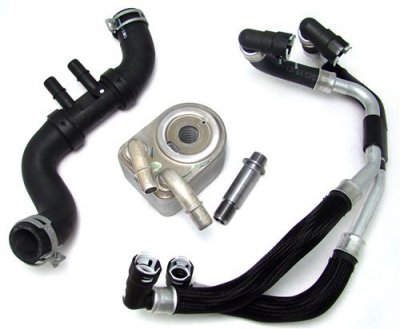
I have the Boss oil cooler, ready to be installed if warranted. But I want to know what that point is, and also be able to make a before/after comparison.

 

JAJ

Member
Joined
May 22, 2011
Posts
239
Reaction score
1
Location
Vancouver, BC
So, I got around to installing an oil temp gauge (on 2011 GT) as a precaution for the upcoming HPDE season. What range should I expect to be normal/acceptable under track conditions, at what temps should I start to be concerned, and when should I shut 'er down or get back to the pits ASAP before she 'splodes?
I figure I'll monitor water temps via the engineering/tech mode display (whatever it's called) as well.
I have the Boss oil cooler, ready to be installed if warranted. But I want to know what that point is, and also be able to make a before/after comparison.


Articles written back when the 5.0 engine was introduced said that the ECU will back the power off if the Cylinder Head Temp gets to 250 degrees, so your risk of cooking the engine is somewhat reduced.

I saw 250 degree oil temps on my car before I put the Boss Cooler on, but since then I haven't run under the same conditions to find out what difference it actually made.
 

Kobie

Member
Joined
Dec 23, 2007
Posts
198
Reaction score
7
Will this fit earlier S197 cars?
M-6642-MB


Attachments

  • Ford Oil Cooler.gif
    Ford Oil Cooler.gif
    43 bytes · Views: 293
  • Ford Oil Cooler.jpg
    Ford Oil Cooler.jpg
    25.6 KB · Views: 36
Last edited:

ddd4114

Member
Joined
May 22, 2011
Posts
353
Reaction score
29
Location
Columbus, OH
I've seen 280 degF on track so far, and my engine is completely stock.

For track use, anything under 280 degF is fine. If it gets up to 300 degF, keep a close eye on it. If it gets over 320 degF, pull in. When do you that, don't go into high gear right away because your oil pressure will be extremely low. Keep your engine speed somewhat high, but only give the engine ~50% load. Once your oil temperature drops back down to an acceptable level, then you can decrease speed. You also don't want to completely let off the throttle at high speed because your connecting rod stress will be very high, and you could scrape the rod bearings on the crankpins if your oil pressure is already low from the hot oil.

Also, even if you're not exceeding 280 degF, let your engine idle in the paddock for a while before shutting it off. Chances are the oil will be extremely hot even after the cool-down lap. Letting it idle and drop to ~220 degF will minimize oil coking.
 

knownukes

Member
Joined
Nov 20, 2010
Posts
121
Reaction score
0
Location
South FL & Oak Island, NC
I've seen 280 degF on track so far, and my engine is completely stock.

For track use, anything under 280 degF is fine. If it gets up to 300 degF, keep a close eye on it. If it gets over 320 degF, pull in. When do you that, don't go into high gear right away because your oil pressure will be extremely low. Keep your engine speed somewhat high, but only give the engine ~50% load. Once your oil temperature drops back down to an acceptable level, then you can decrease speed. You also don't want to completely let off the throttle at high speed because your connecting rod stress will be very high, and you could scrape the rod bearings on the crankpins if your oil pressure is already low from the hot oil.

Also, even if you're not exceeding 280 degF, let your engine idle in the paddock for a while before shutting it off. Chances are the oil will be extremely hot even after the cool-down lap. Letting it idle and drop to ~220 degF will minimize oil coking.

That is contrary to anything I have read or been advised of by my mechanics with both Porsches and Mustangs. 250 is the highest anybody has ever said to go. I would not spend anytime above 250. It's not worth it for HPDE and if u aren't racing for $ why risk a blowup?
 

ddd4114

Member
Joined
May 22, 2011
Posts
353
Reaction score
29
Location
Columbus, OH
If you're daily driving a car, you should never see greater than 240-250 degF or so. In this case, yes, 250 degF would be a cause for alarm.

Driving a car on a track is a completely different story. Sustained high engine speeds raise oil temperature considerably, even without load. It's not terribly uncommon for race engines to hit 300 degF, although it's not a great practice.

As long as you're changing your oil and filter regularly, I wouldn't worry about it. As soon as you pull your car onto the track, you're accepting the fact that your engine will see accelerated wear, regardless of oil temperature. If this is a huge concern for you, you shouldn't be participating in these events.

I do engine testing for an OEM (not Ford), and I wouldn't think twice about letting the oil reach 280 degF during a torture test. I'm sure Ford's tests are similar. I'm ASSuming if my factory engine is reaching 280 degF with fresh oil, Ford engineers are aware of it.
 

hightechrdn

Member
Joined
Sep 22, 2011
Posts
145
Reaction score
0
So, I got around to installing an oil temp gauge (on 2011 GT) as a precaution for the upcoming HPDE season. What range should I expect to be normal/acceptable under track conditions, at what temps should I start to be concerned, and when should I shut 'er down or get back to the pits ASAP before she 'splodes?
I figure I'll monitor water temps via the engineering/tech mode display (whatever it's called) as well.
I have the Boss oil cooler, ready to be installed if warranted. But I want to know what that point is, and also be able to make a before/after comparison.

Based on the Boss articles, I would install the oil cooler. The Ford engineers state in the Boss articles that elevated engine speeds in the Coyote quickly raise oil temperature. Not an issue with street cars as it is rare to see high rpm for extended periods. If you already have the cooler, why not install it?


Sent from my NookColor using Tapatalk 2
 

JAJ

Member
Joined
May 22, 2011
Posts
239
Reaction score
1
Location
Vancouver, BC
I ran at my "home" track today. 120 degrees C (248 degrees F) was as high as the temps got even with the S/C. Ambient was up to 75 F.

Water temp gauge never budged.
 

kevinatfms

EX-ford tech(6 years)
Joined
Jul 7, 2008
Posts
1,780
Reaction score
9
Location
MD
^280* is stupid hot for a modular engine, i dont know about the coyote motor though. you should see 260* at the highest point and then i would start looking into a cooler.

i run around 240-245 on a 15-20min HPDE and i change my oil after every track day.
 

argonaut

Member
Joined
Nov 22, 2010
Posts
57
Reaction score
0
i run around 240-245 on a 15-20min HPDE and i change my oil after every track day.
I'm curious why you change oil so frequently. Do you have data from oil analysis that has led to this decision or is it more just a matter of 'better safe than sorry'?

Personally I've settled on 5 track days per oil change. In my Stang, using Mobil 1, I've had Blackstone test it after 5 track days and all wear was very low and the oil showed no signs of breakdown. So I concluded I can go at least 5 days.

In my Vette I've yet to reach a conclusion. I had it tested once after approx 5 days and some of the wear was a little high (lots of copper), but from what I've heard thats typical for early LS engines. The oil's viscosity was right in the middle of the expected range. I'll have it tested again this year.
 

kevinatfms

EX-ford tech(6 years)
Joined
Jul 7, 2008
Posts
1,780
Reaction score
9
Location
MD
I'm curious why you change oil so frequently. Do you have data from oil analysis that has led to this decision or is it more just a matter of 'better safe than sorry'?

Personally I've settled on 5 track days per oil change. In my Stang, using Mobil 1, I've had Blackstone test it after 5 track days and all wear was very low and the oil showed no signs of breakdown. So I concluded I can go at least 5 days.

In my Vette I've yet to reach a conclusion. I had it tested once after approx 5 days and some of the wear was a little high (lots of copper), but from what I've heard thats typical for early LS engines. The oil's viscosity was right in the middle of the expected range. I'll have it tested again this year.


ive been a part of tests both commercial and private in the manufacturing process and have seen all sides of oil viscosity discussions but im in the "better safe than sorry" crowd of the engineers that i worked with. the ASTM test is a standard test which includes variables to a certain extent, your individual track days at the point may be different than mine, different engine combos can be different than mine, breakdown of certain brands of oil can be different also.
i run 5-30 motorcraft full synthetic and have found no signs of breakdown or additional wear in the cylinder heads or bottom end. i will probably stick to my oil and filter after every track day just to be safe as i was taught by my mentor from Ford. i would bet i dont need to change it but its a great forced habit and could, if the oil did break down during a track day, help prevent any engine damage on that "one bad occasion".

id rather spend $50 now than $5000 when it does crap out...
 

kevinatfms

EX-ford tech(6 years)
Joined
Jul 7, 2008
Posts
1,780
Reaction score
9
Location
MD
also forgot to ask, what year was the LS motor? a buddy has a later post 2000 camaro LS1 and he has been getting some valvetrain noise after extended oil change periods. i kept telling him that if he continues he is going to end up buying a short block...would be nice to show him some proof that someone else has had oil longevity issues with an LS series engine.
 

Sky Render

Stig's Retarded Cousin
Joined
Feb 24, 2011
Posts
9,463
Reaction score
358
Location
NW of Baltimore, MD
A good full-synthetic should be able to handle oil temperatures above 250*F. The concern would be viscosity, which could be solved by using thicker-weight oil. I knew a guy who tracked an S2000 that changed his oil at the track. As soon as he got there, he put 15W-40 in the crankcase, ran the event, then switched back to 5W-20 (or whatever the nominal factory oil weight is) right before he went home.
 

ddd4114

Member
Joined
May 22, 2011
Posts
353
Reaction score
29
Location
Columbus, OH
^^ that's a good point.

I've only been running Mobil 1 full synthetic in my engine, which is claimed to be "good" to 400 degF. If I was running a dinosaur oil and I saw temperatures around 280 degF, I wouldn't be so carefree.

Of course, even though the oil is considered "good" to 400 degF, that doesn't mean the engine is. If your oil temperature reads 400 degF, you either have a dead sensor or spun bearings.
 

DUFUS

Member
Joined
May 13, 2011
Posts
101
Reaction score
0
Location
Northern Illinois
Thanks all for the insight. Depending on how much ambient air temps/conditions play into things I don't know that this upcoming weekend's chilly forecast for Elkhart Lake, WI (Road America) will likely stress anything.

If you already have the cooler, why not install it?

Because I'm too cheap to pay someone else to do it, and too lazy to do it myself (and ran out of time). Cutting into the radiator hose hasn't yet appealed to me. I'll get around to it I suppose. I bought it used/new from someone that had never installed it, so it was a good price. Kind of a "can't afford not to" thing. Right now I have the heat exchanger/core thing installed in such a way to see if forcing air through that helps at all, or is even possible, as a first step. Bastardization is my middle name.
 

jymontoya

Member
Joined
Apr 17, 2008
Posts
380
Reaction score
0
Location
Bend, OR
Will this fit earlier S197 cars?
M-6642-MB


I want to know this as well!!!???

I'm a bit surprised the new 5.0's are having trouble with oil temps. The added 8qt oil capacity is a big increase in thermal capacity in comparison to the 6qt on the 4.6. I know there were a lot of new Boss owners having trouble with overheating, so it makes me wonder if without a bigger, better radiator, this little cooler might actually cause more overheating? Just thinking out loud here...
 
Last edited:

frank s

at Play
Joined
Jul 25, 2010
Posts
537
Reaction score
16
Location
Paradise
I had a Corvair a while back. Researching taught me the critical cylinder head temperature gauge reading was 300*. It was known as the temp that metal expansion started changing the shape of the aluminum parts, and seals would begin leaking.

I ran a Vega at Riverside International Raceway on a 100*-plus day in the early 1970s. Oil temperature in the first practice was just at 210*, according to a gauge plumbed into the system just ahead of the filter. Between practices I changed from Castrol GTX 20-50 to the New, New, All New Dan Gurney All-American All-synthetic oil. Next practice, ambient was probably another degree or two hotter, all other parameters same as the first practice, oil temperature was 195*.

I'd guess the oil in the overheated 5.0s and Bosses is at least as good as the Gurney stuff, but it might be a place to look for more cooling/reduced friction.
 

JAJ

Member
Joined
May 22, 2011
Posts
239
Reaction score
1
Location
Vancouver, BC
...Because I'm too cheap to pay someone else to do it, and too lazy to do it myself (and ran out of time). Cutting into the radiator hose hasn't yet appealed to me...

Not to argue too hard, but you don't cut anything if you have the full kit from FRPP. You drain the coolant, release the spring clamps and remove the factory lower rad hose, install the new FRPP lower rad hose, install the connecting line assembly, install the cooler itself (sounds like this is done already) and refill the cooling system. It's a pretty quick and simple job and everything fits because they are stock parts off a 2012 Boss 302, complete with FoMoCo part numbers on them.
 

DUFUS

Member
Joined
May 13, 2011
Posts
101
Reaction score
0
Location
Northern Illinois
Not to argue too hard, but you don't cut anything if you have the full kit from FRPP.

Right, yeah, I misspoke. Like I said, I'm lazy... didn't want to drain the coolant. I thought it had to be refilled via vacuum, so i thought I might not have the tools needed, but that isn't the case either.

Believe me, I make what should be the quickest and simplest job long and difficult. And I was out of time. Anyway, I thought I'd get baseline coolant and oil temp readings under track conditions before, to see how both are impacted after installation.
 

Support us!

Support Us - Become A Supporting Member Today!

Click Here For Details

Back
Top