Cortex Torque Arm Racechrono Track Review

barbaro

Member
Joined
Jan 23, 2011
Posts
281
Reaction score
0
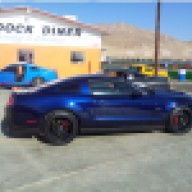
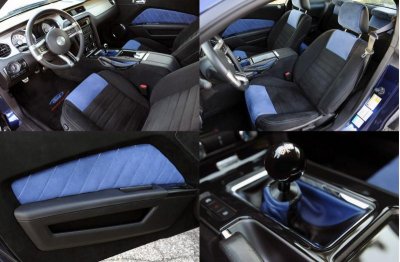
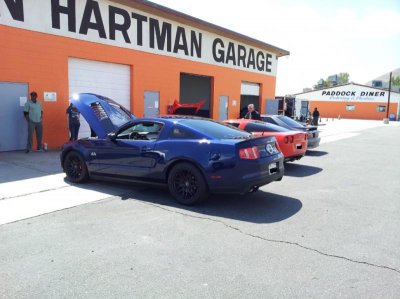
Since we are posting pictures. This illustrates the different place we are coming from. My car is driven on the street as well. I want control without harsh spring rates and excessive NVH that makes my car drive like ass. You don't care about those things. So we may both be right given our application.
 

Attachments

  • Mustang Interior One.jpg
    Mustang Interior One.jpg
    64.2 KB · Views: 21
  • Willow 3.jpg
    Willow 3.jpg
    67.9 KB · Views: 23
  • Willow 6.jpg
    Willow 6.jpg
    65.6 KB · Views: 19

kcbrown

Member
Joined
Jul 24, 2013
Posts
656
Reaction score
5
Let's just say it's not exactly a street car...

NVH isn't even a consideration... Long-tubes, offroad H pipe, resonators, FR500S mufflers, and I use the exhaust to help compensate for blind spots.

Heh. I had a suspicion that might be the case.

Basically, from the discussion I've seen so far, it's beginning to appear that getting a rear S197 3-link setup to behave just as well as a torque arm plus properly set up LCAs may require dealing with a lot more NVH than the torque arm setup, precisely because you otherwise have to contend with bind in the suspension. I'm very interested in knowing how one could go about setting up the 3-link suspension so that it doesn't bind and doesn't increase NVH over stock. My suspicion is that doing so simply isn't possible.

Because I'm interested in primarily using the car on the street, NVH is a major deal for me.

However, because my primary purpose in making suspension modifications is to make driving the car fun, it needn't provide the ultimate performance or anything like that. I suspect, actually, that a setup close to what the stock Boss 302 gets you would work for me just fine (though I'd want to eliminate, or nearly eliminate, the massive brake dive that I'm otherwise likely to get).

Which is to say, for me, the feel of the car is going to be much more important than eking out every last bit of performance. And since so many rave about how the Boss 302 feels, that may be a reasonable target for me to shoot for, at least initially.


Springs are 350# up front, 300# in the rear, and I feel undersprung, to be honest, at least in front. Considering going to 600# or so. Tires are 275/35-18 Hoosiers or 265/645R18 Conti GA wets, square setup on 18x9.5 wheels. 3306lbs, with driver and 1/4 tank of fuel.
I'm surprised you're running with that little spring up front, given the amount you're running in the rear. But I guess the question is: how is it that you're feeling undersprung, and under what conditions? For roll?

In any case, because your car appears to be strictly for track duty, it's not clear to me if the rates you're using would be all that suitable for the street. They're low enough in the front, however, that I can see them being suitable. Not sure about the rear.


FULL DISCLOSURE: I'm going to be doing some testing with a few different parts, primarily spring rates, and LCA relocation brackets, now that my chosen class has been eliminated...
Should be interesting to see what results you can get.
 
Last edited:

Norm Peterson

corner barstool sitter
Joined
Feb 5, 2011
Posts
3,615
Reaction score
326
Location
RIP - You will be missed
First find your center. Second, breath. Third, you are wrong. As hard as you try you cannot substitute your judgment from afar for my personal experience. you attack me and my personal experience in the hopes of denigrating me so people will believe you.
Big hint - it isn't your personal experience that has been called into question. Stop trying to make it sound like that's what this thread is about.


The S197 Mustang's most glaring handling problem is the vertical movement of the chassis in response to bumps and undulations in the road. Many commentators who have reviewed the S197 have noted it. You would have to be dead to not notice it. The addition of the torque arm by itself cured that problem in my car
for me.
That is fairly extraordinary. You are not going to move me off the dime.
Fixed that for you. Just as you keep insisting that none of us has driven your specific car, you cannot know how others would have interpreted the same differences if we had. Keep in mind that some of us have driven cars with a TA rear suspension. As good as Filip's product may be, it doesn't possess any magical property that wouldn't exist in other TA suspensions of generally similar geometry (most of them are pretty similar, Track-link excepted).

I suspect that some folks, while noticing chassis displacements and deviations from "level and planar" (see quote ↓↓↓), are less disturbed by them than others.

As for body roll. Technically you are correct. But as Van says here "The torque arm provides for greater lateral grip in addition to greater forward bite. The simple addition of the torque arm also creates better "anti-squat" geometry and the the car is more level and planar under load and at WOT."


Given the above when I am trail braking and accelerating through a corner, the feeling from inside the cockpit is that there is in fact less body roll. And that would stand to reason given that the torque arm makes the car more "level and planar under load". the car corners better with the torque arm on my car. A lot better. The car feels more level through corners because it is, See above.

Example:Turn One at Willow Springs My car decelerates from 135 to 75-80. No trail braking on this corner though. However, before the torque arm, aggressive braking in that corner resulted in nose dive, rear end lift and my rear end getting squirrely just as I am entering the apex. Torque arm eliminated that problem completely.

Before, if I trail braked into a corner my car nose planted and I plowed through the corner.
How can you possibly compare pitch behavior with a TA and not braking in/into a corner with the pitch behavior in/into the same corner with your previous setup when you absolutely were carrying your braking into the turn? At best it's an apples and oranges situation, at worst it's some level of driver error in the 'before' driving.

Plowing and squirrely? Sounds like tight-loose, which is a handling issue rather than an anti-squat or forward bite matter.


Before, if I trail braked into a corner my car nose planted and I plowed through the corner. Hard to power oversteer your way out of a corner when your ass end is pointing skyward. Now what effect do you think that had on my subjective impression of body roll?
That the reduced pitch motion clearly confused you. Less motion? Sure. But it wasn't from less roll.


With the torque arm, no nose plant, no rear end lift, no squat on acceleration and all in all a flatter feeling through the corner. I am not the only one who thinks this. It is not like I am making this stuff up. We out here accept this as fact although it might be heresy to you.
There is nothing wrong with being unable to distinguish between roll and pitch as being the cause for a flatter feel, and I could have told you months ago that you'd have lots of company. What is wrong is to continue to insist here that roll is reduced even after being told multiple times that it isn't. Particularly after you yourself posted the following ↓↓↓

As for body roll. Technically you are correct.
Technically correct is still correct, and that which is directly or intentionally inconsistent with it is still wrong. The opportunity for you to learn still exists, or you can stay back with the rest (who you are suggesting don't care to know any better).


P.S. I noticed Whiskey can now launch at 3500 rpm when before he could only launch at 2000. Torque Arm.
<sigh> . . . I should have expected as much. Cherry-pick the noted benefit while discrediting the rest because it's "not the complete Cortex system".


Norm
 
Last edited:

SoundGuyDave

This Space For Rent
Joined
Apr 9, 2007
Posts
1,978
Reaction score
29
Basically, from the discussion I've seen so far, it's beginning to appear that getting a rear S197 3-link setup to behave just as well as a torque arm plus properly set up LCAs may require dealing with a lot more NVH than the torque arm setup, precisely because you otherwise have to contend with bind in the suspension. I'm very interested in knowing how one could go about setting up the 3-link suspension so that it doesn't bind and doesn't increase NVH over stock. My suspicion is that doing so simply isn't possible.

Because I'm interested in primarily using the car on the street, NVH is a major deal for me.

One of the biggest contributors to the somewhat "vague" rear "feel" comes from the relatively soft bushings Ford uses, and the main reason they use those soft bushings is for NVH control. Any time you change from those bushings to something stiffer (be it poly, or Heim), you will increase the NVH transmitted to the chassis tub. It's up to you to define what limits you have with increased NVH before it becomes objectionable. Note that by removing the UCA, and adding a torque arm, you are making the same kind of change. The "axle side" of the device is now a solid mount, so you lose all of the insulating characteristics of the rubber bushing on top of the axle housing. On the frame side, you now have a crossmember bolted to the chassis, with a plunge bushing that I believe is considerably harder than the OE UCA bushing. There is your path of transmitted NVH. TANSTAAFL. Now, I'm honestly NOT saying that a torque arm isn't functional, and won't increase the AS% to provide some decrease in the vertical motion under accel (and the anti-lift during braking as well), I'm merely illustrating that the TA setup has every bit as much potential to transmit NVH as a decent aftermarket UCA will. The Panhard bar can be replaced with either a stiffer poly bushing version (Ford Racing, Steeda, BMR, etc.) or with a Heim jointed version (Maximum Motorsports, Freedom Racing, etc.), and from this particular link, the NVH increase will be relatively small compared to the UCA. The real problem is with the lower control arms. The OE arms actually do a decent job, but don't seem to work with mild amounts of relocation to increase the AS%, as the bushing retainers at the end are physically too large (vertical axis) to fit into the relocation brackets without getting too much AS%. Here is where the real trade-off lies. A poly/poly lower control arm isn't the best for handling applications strictly due to bushing deflection in roll. I've used one set of hybrid poly/rod LCAs and destroyed the poly side of arm in very short order on the track. There WAS a bad batch of bushings from that supplier at that time, but they didn't seem interested in working with me to fix the issue, so I went to the MM rod-ended arms and never looked back. The poly/rod arms did a decent job of insulating from NVH, but a full rod/rod arm didn't increase the NVH all that much. This may be a situation where you need to either get some rides in cars equipped with the parts you want, so you can judge the NVH level, or start trial-and-error parts swaps.


However, because my primary purpose in making suspension modifications is to make driving the car fun, it needn't provide the ultimate performance or anything like that. I suspect, actually, that a setup close to what the stock Boss 302 gets you would work for me just fine (though I'd want to eliminate, or nearly eliminate, the massive brake dive that I'm otherwise likely to get).

Which is to say, for me, the feel of the car is going to be much more important than eking out every last bit of performance. And since so many rave about how the Boss 302 feels, that may be a reasonable target for me to shoot for, at least initially.

My only real complaint with the BOSS302 from the factory is the crappy dampers they threw on. I *suspect* that Ford did this knowing that a vast majority of the buyers that are interested in the car's performance potential will wind up replacing the dampers anyway... Koni Sports are a good, solid damper, and you honestly can't go wrong with the higher-end offerings, like those from AST, Moton, Sachs, Penske, et al. The Boss spring rates are a good compromise between street and track, and at that point, I would just focus on the dampers. Get the best you can afford; this will impact the feel of the car more than any other mod you make.


I'm surprised you're running with that little spring up front, given the amount you're running in the rear. But I guess the question is: how is it that you're feeling undersprung, and under what conditions? For roll?

In any case, because your car appears to be strictly for track duty, it's not clear to me if the rates you're using would be all that suitable for the street. They're low enough in the front, however, that I can see them being suitable. Not sure about the rear.

Before I gutted and caged my car, I used to drive it to and from the track, some trips upwards of six hours. If I ran the rebound control on the dampers to full soft, it was tolerable, but just. I would judge 300# in the rear to be at the very upper end of "streetable," and THAT will depend largely on the street! The roads here in the Midwest are just a wee bit different that you might find, in, say, Nevada or California. Our freeze/thaw cycles create frost heaves, as well as potholes that have been known to swallow busses whole...

My feeling of being undersprung in the front is mostly from transitional motion. In short, yes, I'm pitching and rolling too much, and as a result it's taking too long for the car to set. This is more getting the car dialled-in the way I want it to respond than it is flopping around like a dying fish, though... You obviously saw the vid I posted, and the spring/damper combo is NOT letting the car face-plant, and it's a lot flatter through the corners than it was on the BMR/Tokico setup. I just want to experiment with higher rates to see if that will give me the increased responsiveness I'm looking for, in particular during the initial turn-in phase of the corner. In terms of streetability, though, the front is just fine. The dampers make the biggest impact on how the car "feels," particularly on the street. One of the nice things about running coil-over springs is the ease of changing them out (no spring compressor, leave the strut in the car), as well as the (comparatively) low cost and wide variety of rates available. With a little shopping around, you can get pairs of 2.5" springs for as little as $80, which makes "trying out" a different rate pretty easy to swallow.

Bottom line: If NVH is a major factor for you, then you need to take a VERY conservative approach to suspension mods. Try to identify, if possible, the specific issues you want to address, then address those and ONLY those. Personally, I would recommend starting with a GOOD set of dampers and springs, and go from there. Oh, and most of the "rear coil-over" kits you will find are not true coil-overs. They retain the stock spring perch location, and simply add an adjustable perch with a coil-over style spring. If you can, go to a true coilover. Do a bit of research on motion ratios, then take a look at where the springs are on the axle, versus where the dampers are, and you'll see what I'm talking about...

 
Last edited:

Whiskey11

SCCA Autoscrosser #23 STU
Joined
Feb 24, 2012
Posts
1,644
Reaction score
4
Dave is right about the coilovers and the difference a quality set will make over the OEM stuff. I never had the opportunity to run the Koni Yellows as they were out of stock when I went to buy them from Strano. I ended up on Tokico D-Specs which worked out well enough until I got sick of the ride quality issues. I was running Steeda Sports at the time which have a rate of 200/175. There was never a place where the ride wasn't harsh in the range and I suspected (correctly) that it had to do with the higher levels of compression added in when you asked for rebound. After discussing my issues in my build thread here, it became obvious that the D-Specs were holding me back.

I bought coilovers at the start of this year, Ground Control's complete coilover kit (which is NOT off the shelf Koni Yellows with threaded spring perches) and let them pick the rates which ended up being 440/200. The rates they chose worked really well for the OEM 3 link but in making no other changes than the Torque Arm, the car became an absolute tail happy mess at the limit. Anyway, even before the Torque Arm the Ground Control coilover setup rode BETTER than my stock springs on D-Specs, a hell of a lot better than the D-Specs and the Steeda Sport springs and deals with the higher spring rates without being harsh. I daily drive with these spring rates and while the chassis movements are there for stiffly sprung, it isn't harsh or jarring in the slightest provided you avoid the massive potholes.


On the Torque Arm. DaveW (47CP, not a frequent reader here) and I drove my car yesterday and I think I'm finally getting used to the Torque Arm. One small problem though is that I moved the front bar to full stiff to calm down the rear end and ended up with A LOT of push today where none existed Saturday at the T'n'T. The bar is coming back to the middle position and I'll just run Nationals with it like that. For next year I'm thinking slightly stiffer rear springs, as high as 250 lbs/in per DaveW's recommendation. The goal is to be able to run the front bar at full stiff and still get the car to rotate. I think the added front roll stiffness will be beneficial but I need to balance it out with more rear roll stiffness. For now, the car is going to stay as is since it is too close to Nationals to make changes like that. I'm not sure why the car felt balanced Saturday but didn't yesterday? Maybe I'm not driving hard enough and Dave was? I don't know! Neal Tovsen said it was balanced at the T'n'T too? :rant:

Anywho, the saga continues!
 

barbaro

Member
Joined
Jan 23, 2011
Posts
281
Reaction score
0
Big hint - it isn't your personal experience that has been called into question. Stop trying to make it sound like that's what this thread is about.


Fixed that for you. Just as you keep insisting that none of us has driven your specific car, you cannot know how others would have interpreted the same differences if we had. Keep in mind that some of us have driven cars with a TA rear suspension. As good as Filip's product may be, it doesn't possess any magical property that wouldn't exist in other TA suspensions of generally similar geometry (most of them are pretty similar, Track-link excepted).

I suspect that some folks, while noticing chassis displacements and deviations from "level and planar" (see quote ↓↓↓), are less disturbed by them than others.


How can you possibly compare pitch behavior with a TA and not braking in/into a corner with the pitch behavior in/into the same corner with your previous setup when you absolutely were carrying your braking into the turn? At best it's an apples and oranges situation, at worst it's some level of driver error in the 'before' driving.

Plowing and squirrely? Sounds like tight-loose, which is a handling issue rather than an anti-squat or forward bite matter.


That the reduced pitch motion clearly confused you. Less motion? Sure. But it wasn't from less roll.


There is nothing wrong with being unable to distinguish between roll and pitch as being the cause for a flatter feel, and I could have told you months ago that you'd have lots of company. What is wrong is to continue to insist here that roll is reduced even after being told multiple times that it isn't. Particularly after you yourself posted the following ↓↓↓


Technically correct is still correct, and that which is directly or intentionally inconsistent with it is still wrong. The opportunity for you to learn still exists, or you can stay back with the rest (who you are suggesting don't care to know any better).


<sigh> . . . I should have expected as much. Cherry-pick the noted benefit while discrediting the rest because it's "not the complete Cortex system".


Norm

I think in your effort to make variety of points you are missing the big one. If I am so stupid and misled than why are you wasting all this time on me? When I encounter such people I simply ignore them. But I have stuck in some craws apparently. I think you may be to smart for me Norm. It is said that when your IQ is more than 20 points higher than your audience they cease to be able to understand you. You are 40 points above me. Yet in your determination to beat me down you ignore quite a few relevant points

For instance, You demand verbal precision yet you opine ad infinitum about something you have little to no personal experience with. This is called pointing out the splinter in your brother's eye while ignoring the beam in your own.

I am not on here or anywhere regularly pushing products or misleading people. in fact, just the opposite. Having modified three S197s, I have some experience with these cars and have tried what seems like almost every aftermarket product. And you and Sky render, Sound Guy Dave, Sheizozay etc . . . are attacking me personally in order to discredit my experience. You in essence argue that unless I can lay an egg while determining the square of a hypotenuse I am unqualified to tell a bad one or a good one.

I am less impressed with y'all than you are with me. Especially now because you have proven to me that you know less than all the people around me, who are not on the internet constantly opining as if their word is sacred. Thank you Brian Shapiro, Mason Rowland @ B&D racing. Thank you Filip Trojanek at Cortex racing. I accepted their real world experience over all of you. And I have not regretted it. Again. I am comfortable sharing in their judgment. In my world, personal experience is the best teacher, not Sound guy Dave, Norm, Sky Render, Sheisosay.
 

TheViking

Junior Member
Joined
Dec 5, 2011
Posts
42
Reaction score
0
I am less impressed with y'all than you are with me. Especially now because you have proven to me that you know less than all the people around me, who are not on the internet constantly opining as if their word is sacred. Thank you Brian Shapiro, Mason Rowland @ B&D racing. Thank you Filip Trojanek at Cortex racing. I accepted their real world experience over all of you. And I have not regretted it. Again. I am comfortable sharing in their judgment. In my world, personal experience is the best teacher, not Sound guy Dave, Norm, Sky Render, Sheisosay.

So exactly how much time do YOU have on a racetrack or autocross course (and don't lie). And street driving doesn't amount to squat. Nor does listening to vendors peddle their own products.

But I have to agree on your one point, arguing with you is a waste of time and they (me included) should know better:)
 
Joined
Apr 18, 2012
Posts
454
Reaction score
0
Location
Beach Park, IL
If I am so stupid and misled than why are you wasting all this time on me?

So that a new guy doesn't come in here and read your bovine feces, mistake it for truth, and then regurgitate it all over the rest of the interwebs. I can hear it already, "I wanted less roll and better bite so I left everything else stock, bought a torque arm, saw Jesus pulling out of the driveway, and my car is awesome!!" It is a preventative maintenence of sorts. It keeps from having to go through this conversation again. Maybe, if you can grasp this, Norm is trying to help you better understand what is happening with your car. If YOU would get past the personal issues and read what is being written objectively maybe you could understand what you really gained with your suspension parts and would no longer have an opinion, but truth.

I'm sure your a swell guy. You could saved all of this grief if you had just admitted to your gross exaggerations early on and let it be. Instead you took it personally, which at first I understood, but now you never fail to miss an opportunity to defend your "personal opinion" even when the thread bumps with a post that has nothing to do with you.

Like I quoted you earlier, let it go. Sit back and learn something or if you already have it all figured out, please move on from this thread just same.
 

kcbrown

Member
Joined
Jul 24, 2013
Posts
656
Reaction score
5
One of the biggest contributors to the somewhat "vague" rear "feel" comes from the relatively soft bushings Ford uses, and the main reason they use those soft bushings is for NVH control. Any time you change from those bushings to something stiffer (be it poly, or Heim), you will increase the NVH transmitted to the chassis tub. It's up to you to define what limits you have with increased NVH before it becomes objectionable. Note that by removing the UCA, and adding a torque arm, you are making the same kind of change. The "axle side" of the device is now a solid mount, so you lose all of the insulating characteristics of the rubber bushing on top of the axle housing. On the frame side, you now have a crossmember bolted to the chassis, with a plunge bushing that I believe is considerably harder than the OE UCA bushing. There is your path of transmitted NVH. TANSTAAFL.

That's true, but here's the thing: the forces at the torque arm endpoint are much smaller than the ones on the upper control arm endpoints, because they're conveyed through a much longer lever than the ones that are transmitted through the UCA. As such, while NVH does increase somewhat as a result of the torque arm, that increase should be quite a lot less than the increase resulting from a bushing change at the UCA.


Now, I'm honestly NOT saying that a torque arm isn't functional, and won't increase the AS% to provide some decrease in the vertical motion under accel (and the anti-lift during braking as well), I'm merely illustrating that the TA setup has every bit as much potential to transmit NVH as a decent aftermarket UCA will.
On this I must respectfully disagree, due to the vast difference in the geometry involved.

Both the UCA and the torque arm serve to restrain the torque being generated around the longitudinal axis of the axle. The arm through which that torque is being restrained is something like an order of magnitude larger with the torque arm than it is with the UCA. And because it is the change of force at the endpoint, and not the change of torque itself, that appears as NVH, the NVH from the torque arm must be smaller than from the UCA unless the UCA compensates for that through other means, such as the soft bushings one finds on the stock UCA.


The Panhard bar can be replaced with either a stiffer poly bushing version (Ford Racing, Steeda, BMR, etc.) or with a Heim jointed version (Maximum Motorsports, Freedom Racing, etc.), and from this particular link, the NVH increase will be relatively small compared to the UCA.
Agreed. I fully expect to replace my stock Panhard bar with a Whiteline bar due to the type of bushing they're using.


The real problem is with the lower control arms. The OE arms actually do a decent job, but don't seem to work with mild amounts of relocation to increase the AS%, as the bushing retainers at the end are physically too large (vertical axis) to fit into the relocation brackets without getting too much AS%. Here is where the real trade-off lies. A poly/poly lower control arm isn't the best for handling applications strictly due to bushing deflection in roll. I've used one set of hybrid poly/rod LCAs and destroyed the poly side of arm in very short order on the track. There WAS a bad batch of bushings from that supplier at that time, but they didn't seem interested in working with me to fix the issue, so I went to the MM rod-ended arms and never looked back. The poly/rod arms did a decent job of insulating from NVH, but a full rod/rod arm didn't increase the NVH all that much. This may be a situation where you need to either get some rides in cars equipped with the parts you want, so you can judge the NVH level, or start trial-and-error parts swaps.
Yeah, I expect I might have to do a combination of the two.

My biggest concern about going with a rod/rod combination is maintenance. But I may have to accept a higher maintenance load for the feeling of solidity I'd get from that combination.

But the Boss 302 setup uses bushings as well, if I'm not mistaken, though they may be less compliant than the stock GT bushings.


There is one main advantage I can see of going to coilovers in the rear: it makes it possible to locate the springs further towards the edges of the axle, which should result in a better ride quality at a given level of roll resistance. From what I can tell, the coilovers actually relocate the springs to the (further out) damper location, and thus give an advantage in this regard. Is that correct?


My only real complaint with the BOSS302 from the factory is the crappy dampers they threw on. I *suspect* that Ford did this knowing that a vast majority of the buyers that are interested in the car's performance potential will wind up replacing the dampers anyway... Koni Sports are a good, solid damper, and you honestly can't go wrong with the higher-end offerings, like those from AST, Moton, Sachs, Penske, et al. The Boss spring rates are a good compromise between street and track, and at that point, I would just focus on the dampers. Get the best you can afford; this will impact the feel of the car more than any other mod you make.
That's pretty much what I was thinking. I'm presuming that it's fairly straightforward to get the Boss 302 springs for the GT...

If I'm going to go with a truly high-end damper, then I'm going to want to be able to adjust compression and rebound independently. Otherwise, I may as well just get the Koni Sports and call it a day. :)


Bottom line: If NVH is a major factor for you, then you need to take a VERY conservative approach to suspension mods. Try to identify, if possible, the specific issues you want to address, then address those and ONLY those. Personally, I would recommend starting with a GOOD set of dampers and springs, and go from there. Oh, and most of the "rear coil-over" kits you will find are not true coil-overs. They retain the stock spring perch location, and simply add an adjustable perch with a coil-over style spring. If you can, go to a true coilover. Do a bit of research on motion ratios, then take a look at where the springs are on the axle, versus where the dampers are, and you'll see what I'm talking about...

My concern about coilovers is suspension travel. How much of that do you sacrifice? If I went with Boss 302 springs, the amount by which it would lower the car would, I expect, be rather minimal. But I dunno.

I may go with the Boss 302 springs and Koni Sport dampers to start with, and tweak from there if I feel it's necessary. I'll probably go with a torque arm setup if those springs and dampers don't, in my estimation, prove to be sufficient to control dive/squat. My only concern about the torque arm, aside from the modification to the differential cover (something that is apparently being worked out at the moment), is the possibility of axle hop under heavy braking. That potential has me very concerned, and I'm going to want to be able to dial that out somehow if it proves to be an issue. But I'd rather that it be a non-issue as a matter of design.
 

Norm Peterson

corner barstool sitter
Joined
Feb 5, 2011
Posts
3,615
Reaction score
326
Location
RIP - You will be missed
kc - tomorrow's another day and I'll try to add something with respect to NVH.


I think in your effort to make variety of points you are missing the big one. If I am so stupid and misled than why are you wasting all this time on me?
Because I'm an engineer rather than a psychiatrist I can't be bothered to look very far in that direction.

Because if I can get you to figure out on a semi-technical level why Filip's torque arm works so well for you we'll both be better off for it.


in your determination to beat me down you ignore quite a few relevant points
If I'm trying to beat anything down, it's technical errors and misinformation. That in this thread such is coming from you is strictly incidental. Don't take it personally. I'm not.


For instance, You demand verbal precision
The technical side of any topic is what demands precision if you ever expect to convince technically oriented people that you might really be on to something. Taking your word purely on faith isn't going to happen, and certainly not when you keep making errors in assigning cause (TA) to effect (reduced roll). That approach is more appropriate to shilling Tornado inlet air turbulators.


I am not on here or anywhere regularly pushing products or misleading people.
Insisting that a torque arm reduces roll is at best misleading, and you've done that enough times after being advised it was wrong to be developing exactly a reputation of trying to mislead. Chances are that this thread will die before your reputation from it will.


in fact, just the opposite. Having modified three S197s, I have some experience with these cars and have tried what seems like almost every aftermarket product.
Here's a thought . . . if maybe, just maybe, you'd had a little better grasp of the technical side of this stuff you might have saved yourself a number of apparently disappointing iterations. Throwing parts and $ without much thought at a chassis shortcoming is rarely a good path to an optimum solution.


And you and Sky render, Sound Guy Dave, Sheizozay etc . . . are attacking me personally in order to discredit my experience. You in essence argue that unless I can lay an egg while determining the square of a hypotenuse I am unqualified to tell a bad one or a good one.
You don't need to be able to run the numbers yourself, but you do need to realize that the numbers have been used to illustrate different points along the way, and that they hint at expected behavior.


I am less impressed with y'all than you are with me. Especially now because you have proven to me that you know less than all the people around me, who are not on the internet constantly opining as if their word is sacred.
Sorry, but you are in no position to assess proof of knowledge here. Feel free to kid yourself about this if it'll make you feel better, though.


Norm
 

TheViking

Junior Member
Joined
Dec 5, 2011
Posts
42
Reaction score
0
That's pretty much what I was thinking. I'm presuming that it's fairly straightforward to get the Boss 302 springs for the GT...

Yes, the Boss 302 spring are cheap by comparison to most aftermarket springs, assuming there are still available. Although FRPP now offers a Boss 302 specific kit/upgrade as well. From FordPartsGiant site:

Front: CR3Z-5310-B, $21.59 each
Rear: CR3Z-5560-B, $19.94 each

Found this posted on SVT site as well if it helps with determining you setup:
Base Gt: Spring(F) = 21.5 N/mm, Spring (R) = 27.33 N/mm, Sway Bar (F) = 34mm, Sway Bar (R) = 20mm
Brembo Pkg: Spring(F) = 23 N/mm, Spring (R) = 29.2 N/mm, Sway Bar (F) = 35mm, Sway Bar (R) = 22mm
Boss: Spring(F) = 26 N/mm, Spring (R) = 32.5 N/mm, Sway Bar (F) = 35mm, Sway Bar (R) = 25mm
Boss LS: Spring(F) = 24 N/mm, Spring (R) = 33.5 N/mm, Sway Bar (F) = 35mm, Sway Bar (R) = 26mm

If I went with Boss 302 springs, the amount by which it would lower the car would, I expect, be rather minimal. But I dunno.

Yes, it's very minimal. About 1/2" up front and just a few mm in the rear.

FYI, the FRPP "P" springs are a popular swap amongst the Boss 302 crowd as the only lower the car about 1", still progressive for "friendly" street manners but with a heavier spring rate. Even with a 1" drop I felt the loss of traction was significant (stock UCA) until adding in LCA relocation brackets. Now I'm very happy with this setup/feel on the street and really just need to get back on track.
 
Last edited:

Norm Peterson

corner barstool sitter
Joined
Feb 5, 2011
Posts
3,615
Reaction score
326
Location
RIP - You will be missed
That's true, but here's the thing: the forces at the torque arm endpoint are much smaller than the ones on the upper control arm endpoints, because they're conveyed through a much longer lever than the ones that are transmitted through the UCA. As such, while NVH does increase somewhat as a result of the torque arm, that increase should be quite a lot less than the increase resulting from a bushing change at the UCA.
That the TA forces at the chassis side pickup will be less than the UCA forces at its bracket is part of the problem but not all of it. The basic S197 platform would have been designed for NVH performance based on longitudinal-ish forces coming at it from a UCA and would not have had any attention paid to structural response to vertical-ish forces at some unknown TA pickup point. IOW, where the loads are fed into the chassis matters, and I wouldn't expect as much TA force be required for there to be a similar level of NVH to the OE UCA from this consideration. Keep in mind that the TA's vertical loads are fed into the chassis quite close to where the front seats are bolted. But this only addresses the large displacement/low frequency content of NVH.

The torque arm itself isn't much more than a large bracket bolted to the axle, so there isn't a whole lot of vibration damping going on between the diff and the TA. In the job I held until fairly recently, we used 7% critical damping for bolted structural arrangements subjected to dynamic loading. That freely translates as "not much at all", and although it's still better than what you get at the UCA's cast-in ear it's way less than what you'd get through even a polyurethane bushing. I'm only talking about vibration performance here, not suspension bind.

Where you can easily lose and lose significantly in NVH performance with a TA is in the transmission of noise from the diff to the chassis. This is the low displacement/high frequency (noise) part of the NVH spectrum rather than being a transmitted force. So what you need to do is isolate it with bits of material that does not transmit vibration as easily as steel does and tends to damp it out instead.


vibration isolation system discussion said:
It is known that the vibration transmission through the interface between two solid objects is mainly controlled by the ratio of their mechanical impedance. ( http://www.mti.tul.cz/files/mokry/Paper_13.pdf )
What that says in simpler terms is that there are vibration losses that occur at the boundaries between materials having different vibration properties. For this TA vs UCA discussion, it's still the high frequency noise kind of vibration.​

A UCA with its two compliant bushings that gear noise must pass through is naturally going to be better at noise isolation than a TA with its single bushing. I am assuming at least generally similar bushing stiffnesses used in both the UCA and the TA here.​


Norm​
 
Last edited:

kcbrown

Member
Joined
Jul 24, 2013
Posts
656
Reaction score
5
That the TA forces at the chassis side pickup will be less than the UCA forces at its bracket is part of the problem but not all of it. The basic S197 platform would have been designed for NVH performance based on longitudinal-ish forces coming at it from a UCA and would not have had any attention paid to structural response to vertical-ish forces at some unknown TA pickup point. IOW, where the loads are fed into the chassis matters, and I wouldn't expect as much TA force be required for there to be a similar level of NVH to the OE UCA from this consideration.

While that is certainly true, there are a couple of mitigating factors:


  • The Ford engineers used rather soft bushings for the UCA. There is no reason for Ford to have done so except NVH, since the use of such soft bushings otherwise compromises handling. This suggests that even if the ability of the location in question to tolerate NVH is better than most places, that alone isn't good enough for NVH control.
  • The amount of difference between the forces seen at the two locations matters a lot. Remember that the forces in question differ by roughly an order of magnitude. Hence, for NVH to be the same at both locations after factoring that in and when using roughly similar bushing material, the two locations must differ in their ability to tolerate NVH by an order of magnitude. While I certainly agree that there is almost certainly a difference between the two locations in that respect, I'm deeply skeptical that they differ by that much.
  • Because the forces at the chassis side pickup point are being transmitted through a very long arm, and thus a fairly large amount of motion can be allowed at the pickup point while yielding relatively little motion at the axle, the TA can make use of a soft bushing and still have minimal impact on controllability, because the actual amount of motion at the axle will still be tightly constrained. A 1 inch deflection at the end of a 40" torque arm represents about 1.5 degrees of motion around the longitudinal axis of the axle. A 2" soft bushing could be used at the chassis-side pickup point and still result in no more than about 3 degrees of motion at the axle (less, actually, since the bushing does occupy some space even when fully compressed).


And, indeed, the proof should be in the pudding. If you go to spherical endpoints on the UCA, how noisy does it get back there? The impression I get is that it gets rather noisy, and that suggests that, as good as that location might be for NVH, the location itself isn't sufficient to deal with it.


Keep in mind that the TA's vertical loads are fed into the chassis quite close to where the front seats are bolted. But this only addresses the large displacement/low frequency content of NVH.
Right.


The torque arm itself isn't much more than a large bracket bolted to the axle, so there isn't a whole lot of vibration damping going on between the diff and the TA. In the job I held until fairly recently, we used 7% critical damping for bolted structural arrangements subjected to dynamic loading. That freely translates as "not much at all", and although it's still better than what you get at the UCA's cast-in ear it's way less than what you'd get through even a polyurethane bushing. I'm only talking about vibration performance here, not suspension bind.
Oh, I get that. I would expect everything to be transmitted through the TA in that way.


Where you can easily lose and lose significantly in NVH performance with a TA is in the transmission of noise from the diff to the chassis. This is the low displacement/high frequency (noise) part of the NVH spectrum rather than being a transmitted force. So what you need to do is isolate it with bits of material that does not transmit vibration as easily as steel does and tends to damp it out instead.
I would expect that an appropriate choice of bushing would aid greatly in that.


What that says in simpler terms is that there are vibration losses that occur at the boundaries between materials having different vibration properties. For this TA vs UCA discussion, it's still the high frequency noise kind of vibration.​

A UCA with its two compliant bushings that gear noise must pass through is naturally going to be better at noise isolation than a TA with its single bushing. I am assuming at least generally similar bushing stiffnesses used in both the UCA and the TA here.​
But that's the thing. We're not really comparing the stock UCA with the TA. If the stock UCA were sufficient, then we'd just leave it as-is and a change there would provide no significant benefit whatsoever.

Because the geometry is different between the TA and the UCA, you can get away with using very different bushing materials in the TA than in the UCA while achieving similar (if not better) control over the axle. That strongly suggests that NVH can be made better in the TA for a given amount of controllability.

In the end, everything is going to depend on the selection of materials at the chassis-side pickup point as well as the actual design of the interface there. A poorly designed interface will get you a lot of NVH transmission. A well-designed one will get you good isolation. The sheer length of the arm should eliminate most of the concerns about controllability being compromised by the design of the pickup point, and thus allow the designer to concentrate primarily on NVH. Whether the designer of the Cortex arm took advantage of that property is unknown to me.
 
Last edited:

barbaro

Member
Joined
Jan 23, 2011
Posts
281
Reaction score
0
So that a new guy doesn't come in here and read your bovine feces, mistake it for truth, and then regurgitate it all over the rest of the interwebs. I can hear it already, "I wanted less roll and better bite so I left everything else stock, bought a torque arm, saw Jesus pulling out of the driveway, and my car is awesome!!" It is a preventative maintenence of sorts. It keeps from having to go through this conversation again. Maybe, if you can grasp this, Norm is trying to help you better understand what is happening with your car. If YOU would get past the personal issues and read what is being written objectively maybe you could understand what you really gained with your suspension parts and would no longer have an opinion, but truth.

I'm sure your a swell guy. You could saved all of this grief if you had just admitted to your gross exaggerations early on and let it be. Instead you took it personally, which at first I understood, but now you never fail to miss an opportunity to defend your "personal opinion" even when the thread bumps with a post that has nothing to do with you.

Like I quoted you earlier, let it go. Sit back and learn something or if you already have it all figured out, please move on from this thread just same.

First you refer to my opinion scatologically. That is not respectful. By saying that, You infer that I am spreading lies or at the very least that I am a dunce. So when you say to not take things personal it helps if you don't insult me. Just saying. My review was not a gross exaggeration at all. In fact, the more I drive the car the more cemented my views become. As i have said many times, I too was skeptical and resisted getting a torque arm despite everyone who already had one telling me to do it. I would ask them what the difference was. And they responded vaguely always ending up saying that you just have to drive it. That did not inspire any confidence at all so I held off. finally the weight of other people's opinions grew to the point where I had to give it a go.

The addition of the torque arm changed the handling dynamics of the car more than I thought possible. In some ways that are not easy to articulate and other ways that were. The combo of torque arm, torsen, watts link and heim jointed (axle end) rear lower control arms was astounding. But it was the addition of the torque arm and lower control arms that made it so. I have decribed ad infinutum the changed handling characteristics and have had Norm parse every goddamn word along with people like you doing the same thing. I am not so obstinant that i cannot admit that i am wrong or misguided. But when I am right, as far as I am concerned every one of you can go jump in a lake because this thing works very very well. Better than any other single thing you could do to your stock vehicle.

What can Norm teach me that two minutes in my car can't? In addition I don't know what Norm is talking about half the time and the other half he is wrong about what I know to be true. For instance:

How ridiculous is it to try to surmise as Norm is doing, the potential NVH when he has never used the piece. It is a ridiculous exercise in futility. I have driven it. I know better than every single one of you that has not, regardless of your real or imagined credentials. I don't care if you are Neil Armstrong and Mario Andretti rolled into one. No one is going to tell me this doesn't do exactly what I say it does because I am speaking from personal experience. I too initially thought the torque arm would be a big tuning fork transmitting whine and vibration into the cabin. Not so. Front bushing does a good job of dampening that and I have not noticed any change. However it must be pointed out that I dynamatted my floor pan and transmission tunnel. THERE IS NO SUBSTITUTE FOR PERSONAL EXPERIENCE. My experience is useful to the end user. Norm's supposition is not. I have been attacked with Messianic zeal by people who don't have a clue because they have not had the before and after experience of driving my car. Nor do they have my specific personal experience modifying other S197s

I have been misled by supposed experts on forums. I am most interested in cataloging people's personal experiences and I do not dispute them. How can I dispute someone else's personal experience? I might share a personal experience of mine that was contrary. But I would never do to others what you are doing to me, especially when I do not have a contrary personal experience to share. Nevertheless, you have done so with me. And virtually every one of my critics has never driven my set up. So how much is all your opinions worth.? Answer: ZERO

The best thing someone can do for their stock Mustang Gt in order to improve the handling is to purchase a Watts link/torque arm and lower control arms from Cortex. I would even put that over new tires and shocks. I don't care if that advice chaps your hide. It is the truth from someone with experience both building these cars out driving them on the track and the street.

If you look at my pictures from Big Willow I published above you will see a light blue GT500. That car has a Griggs Torque Arm. The driver's name is Colin. Both he and the car are very fast. Is it because of the torque arm? I don't know. But I do know he would probably do jail time before changing it out for some shitty aftermarket clunking UCA.

Everyone that I know who is serious out here in the West has a Griggs or Cortex system including torque arm. Griggs considers their torque arm the centerpiece of their GR40 suspension. Who am I to argue with Bruce Griggs? I am not Bruce Griggs, but if the number one racing suspension manufacturer for our cars considers it integral, maybe I am standing on solid ground. Just saying. I know I am not popular with some of you. I do not care. What is important though is for others to see what I have written and determine for themselves whether I am telling the truth or not. So the reason you all shout me down is the reason I shout back . . . . to benefit the uneducated user of this forum. So keep it coming. BTW I agrre with you. I am a swell guy. I have invited everybody here to drive my car, even the douchebags who insult me. I don't hold a grudge. I am willing even to let a select few drive my car at the track. I think people would be impressed if not amazed at how well it handles for such a softly sprung street car.
 
Last edited:
Joined
Apr 18, 2012
Posts
454
Reaction score
0
Location
Beach Park, IL
Once again, the thread begins to get technical again and you have to take a poop in it.

The best thing someone can do for their stock Mustang Gt in order to improve the handling is to purchase a Watts link/torque arm and lower control arms from Cortex. I would even put that over new tires and shocks.

Statements like this discredit your experience and opinions. It doesn't matter how good your suspension is, it comes down to 4 contact patches at the road when you are trying to drive fast.
 

2013DIBGT

I Hate Wheelhop
Joined
Jun 3, 2013
Posts
333
Reaction score
1
Location
The Ungreat North East
Do we know if the Torque Arm in question is hollow or solid?

It would seem that if the arm was hollow and if one had access to the hollow cavity within the arm there may be options to squash much of the NVH transmitted thru the arm by filling the void with a "dead" material/matter if someone was bothered by it. Granted, this certainly wouldn't help those who care about weight but it seems like a reasonable approach.
 

kcbrown

Member
Joined
Jul 24, 2013
Posts
656
Reaction score
5
Where you can easily lose and lose significantly in NVH performance with a TA is in the transmission of noise from the diff to the chassis. This is the low displacement/high frequency (noise) part of the NVH spectrum rather than being a transmitted force. So what you need to do is isolate it with bits of material that does not transmit vibration as easily as steel does and tends to damp it out instead.

Bringing this back to a technical discussion... :thumb:

One issue with a torque arm that has to be accounted for by the designer of the torque arm is the problem of resonance. The sheer mass of the UCA, combined with its relatively short length (implying a relatively high resonance frequency) and the fact that the bulk of the forces it transmits are along its longitudinal axis, suggests that the UCA is almost certainly going to be immune to this. The torque arm is carrying a range of frequency vibrations from the axle that can cause the arm to vibrate vertically. If the resonant frequency of the arm is within the frequency range of the vibrations that are being transmitted from the axle, then the resulting vibration will be greatly amplified relative to what it would be otherwise.

But dealing with that is a matter of design and proper selection of materials. This is the point at which the issue becomes more complicated than I can reasonably analyze without learning/re-learning a bunch of dynamics, and is probably the point at which experience becomes an easier method of assessment than a pure engineering analysis -- especially since such an analysis can really only be done with detailed information about the physical design of the arm and the materials that comprise it.

It's probably sufficient to note that resonance is a possibility that one should be on the lookout for. If one finds that there are specific RPM or speed ranges within which the car is suddenly a lot noisier and that wasn't the case prior to the installation of the torque arm, it's likely to be a resonance problem.
 
Last edited:

DTL

Member
Joined
Jul 16, 2012
Posts
295
Reaction score
0
Location
SoCal
What can Norm teach me that two minutes in my car can't? In addition I don't know what Norm is talking about half the time . . .

I think I see the problem ^ :idea:

I also run all the Cortex goodies and I'll be the first to admit that, while they're an improvement, they run FAR behind the gains these cars see with proper tires and shocks/struts/springs. Those things should be the first on the list for anyone serious about going fast. I've seen and heard some discussion about some very well thought-out 3rd link arms and brackets that'd absolutely pull my TA off to try.
 

barbaro

Member
Joined
Jan 23, 2011
Posts
281
Reaction score
0
Bringing this back to a technical discussion... :thumb:

One issue with a torque arm that has to be accounted for by the designer of the torque arm is the problem of resonance. The sheer mass of the UCA, combined with its relatively short length (implying a relatively high resonance frequency) and the fact that the bulk of the forces it transmits are along its longitudinal axis, suggests that the UCA is almost certainly going to be immune to this. The torque arm is carrying a range of frequency vibrations from the axle that can cause the arm to vibrate vertically. If the resonant frequency of the arm is within the frequency range of the vibrations that are being transmitted from the axle, then the resulting vibration will be greatly amplified relative to what it would be otherwise.

But dealing with that is a matter of design and proper selection of materials. This is the point at which the issue becomes more complicated than I can reasonably analyze without learning/re-learning a bunch of dynamics, and is probably the point at which experience becomes an easier method of assessment than a pure engineering analysis -- especially since such an analysis can really only be done with detailed information about the physical design of the arm and the materials that comprise it.

It's probably sufficient to note that resonance is a possibility that one should be on the lookout for. If one finds that there are specific RPM or speed ranges within which the car is suddenly a lot noisier and that wasn't the case prior to the installation of the torque arm, it's likely to be a resonance problem.

Aftermarket upper control arms for S197's are notorious for clunking and transferring NVH into the chassis. I have personally experienced this as have others who have written about it. That is why I am not a fan of aftermarket Upper Control Arms. (See Terry Fair Upper Control Arms comments on his thread) there may be some good ones but I have tried both Steed and UPC and they both harshened my ride and transmitted noise and vibration into the cabin. Whether you define any part of that as resonance or not I don't know.

Two and only two people that I have encountered, and they are both on this forum have noticed a slight gear whine as a result of the Torque Arm. Some have complained about Griggs Torque Arms transferring NVH but it is a very minimal in the Cortex unit. The Griggs has different design. I do know that Filip changed the bushing over a year ago to ameliorate this very problem.

The issue of resonance as you define it has arisen for me with the use of a one piece drive shaft on a previous car, but not with the Cortex Torque Arm.
 

barbaro

Member
Joined
Jan 23, 2011
Posts
281
Reaction score
0
I think I see the problem ^ :idea:

I also run all the Cortex goodies and I'll be the first to admit that, while they're an improvement, they run FAR behind the gains these cars see with proper tires and shocks/struts/springs. Those things should be the first on the list for anyone serious about going fast. I've seen and heard some discussion about some very well thought-out 3rd link arms and brackets that'd absolutely pull my TA off to try.

They were and are on the top of my list as well but that is an easy decision to make and I have experimented with several different combinations of Springs shocks and tires. I have never debated changing out the Cortex stuff to experiment with something else. Tell me about the the third link you would pull a torque arm off for? I would be interested to hear about that. Do you have any experience with the third link you are talking about. have you driven it?
 

Support us!

Support Us - Become A Supporting Member Today!

Click Here For Details

Back
Top