Watts Link vrs Panhard Bar "aka..Old Reliable"

Dubstep Shep

WUB WUB VROOM VROOM
Joined
Jun 22, 2013
Posts
3,382
Reaction score
0
Location
Houston, TX
You do realize that diff mounted Watts linkages are almost all unsprung weight right? The WL watts weighs 29lbs, so does the Fays2, there is no way you can tell me that the WL is less unsprung weight.

As for PHB vs Watts linkage, in my eyes, for autocross and cart tracks and tracks with a lot of transitions then the watts link is the way to go, for more power courses or on a stiffly sprung car than a PHB is workable. I still think a Watts is hands down better all around though.

The panhandler bar is basically just a bar that runs from the frame on one side to a mount on the axle on the other side.

The watts link is basically just two bars that run from each side of the frame to a mounting bar that rotates on the diff cover. They're not quite unsprung weight, but they aren't sprung weight either. They move with both.


The comparison I was making was the smaller watts links like whiteline and Griggs that use a proprietary diff cover to the larger ones like steeda that use a ridiculous amount of material added to the axle and frame
Steeda
ImageUploadedByTapatalk1376579064.038721.jpg

Griggs(also has the TA on there)
ImageUploadedByTapatalk1376579204.271487.jpg

In theory the only additional mass a watts link would have is the mounts on the diff cover and the rotating mount for the bars. However they don't have the side mount for the PHB so you can shave that sucker off.

Does a watts link have more mass than a PHB? Generally I would say yes.

Does a watts link have more unsprung mass? Maybe by a small margin, but likely yes.

Does the brand of watts link and the design affect the overall mass and the unsprung mass? This one is a definite yes. Griggs is likely lighter better than something like steeda's. that's the only comparison I was making.

Benefits vs. costs is all it is.
 

Whiskey11

SCCA Autoscrosser #23 STU
Joined
Feb 24, 2012
Posts
1,644
Reaction score
4
The panhandler bar is basically just a bar that runs from the frame on one side to a mount on the axle on the other side.

The watts link is basically just two bars that run from each side of the frame to a mounting bar that rotates on the diff cover. They're not quite unsprung weight, but they aren't sprung weight either. They move with both.


The comparison I was making was the smaller watts links like whiteline and Griggs that use a proprietary diff cover to the larger ones like steeda that use a ridiculous amount of material added to the axle and frame
Steeda
View attachment 44101

Griggs(also has the TA on there)
View attachment 44102

In theory the only additional mass a watts link would have is the mounts on the diff cover and the rotating mount for the bars. However they don't have the side mount for the PHB so you can shave that sucker off.

Does a watts link have more mass than a PHB? Generally I would say yes.

Does a watts link have more unsprung mass? Maybe by a small margin, but likely yes.

Does the brand of watts link and the design affect the overall mass and the unsprung mass? This one is a definite yes. Griggs is likely lighter better than something like steeda's. that's the only comparison I was making.

Benefits vs. costs is all it is.

The whole diff cover, prop, bolts and roughly half the weight of the arms is all unsprung weight on a diff mounted watts. The Steeda unit is lighter than the Fays2 unit and I can almost guarantee it will have less unsprung weight than the Griggs unit which is primarily unsprung weight.

A PHB is less than both are.
 

Sky Render

Stig's Retarded Cousin
Joined
Feb 24, 2011
Posts
9,463
Reaction score
358
Location
NW of Baltimore, MD
Again with the unsprung weight argument. We're talking a single-digit difference in pounds on a stick axle that weighs two orders of magnitude more than that.

My point is that it doesn't really matter that much from an unsprung weight standpoint. Personally, I think the diff-mounted unit is a more elegantly-engineered design. But my opinion on this doesn't really matter; I don't even run a Watts link on my car.
 

Dubstep Shep

WUB WUB VROOM VROOM
Joined
Jun 22, 2013
Posts
3,382
Reaction score
0
Location
Houston, TX
The whole diff cover, prop, bolts and roughly half the weight of the arms is all unsprung weight on a diff mounted watts. The Steeda unit is lighter than the Fays2 unit and I can almost guarantee it will have less unsprung weight than the Griggs unit which is primarily unsprung weight.

A PHB is less than both are.

Wait, what?

Did you see the Steeda unit and how much it adds to the rear axle?

And the diff mounted units don't add a whole lot of weight. Half the arms, the bolts and mounts on the axle side, and then the difference between the diff cover and the stock cover, which probably isn't much.

The steeda unit is like a whole additional frame system on the axle, that's a lot of unsprung weight!
 
Joined
Apr 18, 2012
Posts
454
Reaction score
0
Location
Beach Park, IL
Anything bolted to the chassis is SPRUNG weight.

Anthing that is bolted to the axle housing only (like a diff cover) is UNSPRUNG weight.

A link that attaches to the chassis and the axle housing (Lower control arm, Panhard bar, or both watts bars) typically splits its weight evenly between sprung and unsprung weight.
 

Whiskey11

SCCA Autoscrosser #23 STU
Joined
Feb 24, 2012
Posts
1,644
Reaction score
4
Wait, what?

Did you see the Steeda unit and how much it adds to the rear axle?

And the diff mounted units don't add a whole lot of weight. Half the arms, the bolts and mounts on the axle side, and then the difference between the diff cover and the stock cover, which probably isn't much.

The steeda unit is like a whole additional frame system on the axle, that's a lot of unsprung weight!

The frame on the Steeda unit attaches to the chassis, not the axle. The only parts of the Steeda and Fays2 units that attach to the axles are the clamps for the axle which are a fraction of the weight of a diff mounted watts is. On the Steeda/Fays2 the only unsprung weight are the axle clamps (less than 5lbs each) and the arms, that is it.
 

Norm Peterson

corner barstool sitter
Joined
Feb 5, 2011
Posts
3,615
Reaction score
326
Location
RIP - You will be missed
The panhard bar tends to bend under raised lateral loads, as evidenced by multiple failures in the Miller Cup Series FR500s which have to retain the OEM unit by the rules.
That does not make a PHB a bad choice simply because it's a PHB and not a Watts . . . only that the OE dimensioning is not adequate for that level of use (whatever that entails - I'm sure that peak cornering g's aren't the only loads that occur). A quarter inch larger OD and a gauge or two heavier wall would probably solve most of those issues.

That's not a matter of inherent bending, by the way. I'm looking at buckling. The S197 PHB looks pretty straight to me, and it's a tube (unlike the open-section channel that GM used in their F-body cars). I just looked at both PHBs.


The Watts Link makes the roll center fixed as it does not move up and down with ride height changes due to braking, acceleration and road undulation. This creates more consistent tire loading, which yields more predictable behavior.

The consistent roll center height definitely improve transitional response and build confidence in the driver. A Watts Link is ideal for any sort of performance driving involving lateral loads, especially if the car needs to make rapid left right transitions. The more esses, the more a Watts link is favored.
That's one approach - fix the geo roll center and let the sprung mass kind of float around relative to it. Wheel loads due to lateral load through the geo RC remain constant with respect to ride height, but the lateral load transfer resisted by the front and rear suspensions "floats" slightly (think front and rear roll moments, since both get affected). Axle roll steer varies only by virtue of however much the LCA inclination varies.

The other approach (chassis-mounted main pivot) fixes the rear roll moment and lets the rear RC height and the wheel loads due to the lateral load transfer carried through it do the floating. Axle roll steer now directly depends on ride height as well as the LCA inclination that is also changed.

So just like Dave already mentioned in comparing a Watts link against a PHB, the stiffer you make the rear suspension, the smaller the differences between these two Watts link designs become.


Norm
 
Last edited:

SoundGuyDave

This Space For Rent
Joined
Apr 9, 2007
Posts
1,978
Reaction score
29
Here's my take on things...

First, there are two major differences between a Watts link and a Panhard bar, in terms of function... A) The Watts allows considerably less lateral axle motion during roll conditions, and B) Allows for adjustment of roll center, which a stock-based Panhard does not.

Whether or not A) has any actual measurable effect on the net handling of the car seems to be application-specific. In an autocross setting, where you can have slaloms necessitating rapid transitions back and forth, there may be some merit to having a completely symmetrical handling dynamic. In a road-race scenario, where those types of transitions are rare to the point of nonexistence, I personally believe that any assymetric handling simply gets lost in the "noise" of corner to corner variables. Little things, like corner camber, surface grip coefficient, minor surface variation (frost heaves, seam sealer, bumps), use of berms, etc. Remember that it's rare to have two corners within a time span of three-to-four seconds, so the difference between a left and a right is somewhat buried, compared to an autocross run. Where tire clearance is concerned, if you're running 345mm rubber on 12" wheels, then yes the reduction in lateral displacement is critical, and becomes an overriding concern.

With respect to B), you could argue that frame-mounted Watts links (Fays 2, Steeda) actually have at least the same amount of roll-center migration as a Panhard bar, while the diff-mounted Watts links (Griggs, Cortex) have essentially zero. Looking at it from that standpoint alone, the diff-mounted Watts is certainly the preferred unit.

I think, however, that the weight argument still comes into play. As Sky Render has mentioned, the relative ratio of unsprung mass being added to the axle assembly is small, however it is still measurable, and the NET weight of the entire assembly is NOT negligible, compared to a simple aftermarket Panhard bar. In the big scheme of weight loss, cost seems to increase in a logarithmic progression as the weight comes off. Assuming that you have lightened the car as much as is "simply" possible, the cost transitions from the neighborhood of $1/lb to $10/lb. During the period of parts swaps to reduce weight, it changes from $10/lb to $100/lb. After you get down to using composites, altered structural work, etc., you're into the $1000/lb range. The widely published numbers for Watts links seem to fall into the neighborhood of 28lbs, vs. a 5lb aluminum-tube, rod-end Panhard. To make up the weight you've added (sprung/unsprung argument aside), that means that the REAL cost of that addition is somewhere in the $2000+ neighborhood. Granted, the weight is in the best possible place, low and to the rear, but it's still there, and needs to be accelerated, decelerated, and somehow convinced to wander around a corner. That same $2000+ buys a WHOLE lot of rear damper, which I submit may well have a greater impact on how the rear end behaves. The difference between a Koni Sport shock and a Moton with individual compression, low-, and high-speed rebound adjustability is night and day. That can't be said for the difference between a Watts link of any design and a Panhard bar, at least in my experience.

In the end, and the main reason that I'm still sticking with a Panhard bar, the benefits (roll center adjustment, lateral location control) simply don't justify the drawbacks (weight, cost, complexity) in a road-racing context. Possibly yes, in an autocross format, but that's not something that I do.
 

Dubstep Shep

WUB WUB VROOM VROOM
Joined
Jun 22, 2013
Posts
3,382
Reaction score
0
Location
Houston, TX
The frame on the Steeda unit attaches to the chassis, not the axle. The only parts of the Steeda and Fays2 units that attach to the axles are the clamps for the axle which are a fraction of the weight of a diff mounted watts is. On the Steeda/Fays2 the only unsprung weight are the axle clamps (less than 5lbs each) and the arms, that is it.

Exactly.

With the Steeda you're retaining the mass from the stock diff cover and adding the weight from the axle mounts.

With the Griggs you're only gaining the difference in mass between the two covers, which I would imagine isn't much. When I install mine here in a few weeks (if it ever ships) I'll be sure to measure them.
 

SoundGuyDave

This Space For Rent
Joined
Apr 9, 2007
Posts
1,978
Reaction score
29
Exactly.

With the Steeda you're retaining the mass from the stock diff cover and adding the weight from the axle mounts.

With the Griggs you're only gaining the difference in mass between the two covers, which I would imagine isn't much. When I install mine here in a few weeks (if it ever ships) I'll be sure to measure them.

Not quite... With the Griggs (and Cortex) setup, you gain the difference in mass between the stock and fabricated diff covers, plus the mass of the football, the football support hardware and bearings, the prop bolt and spacers, and half the weight of the arms (approximately). The sprung weight comes from half the arms, and the brace bar that replaces the PHB brace. Higher unsprung weight and lower sprung weight in comparison to the Steeda/Fays2.
 

Sam Strano

Senior Member
Joined
Oct 23, 2009
Posts
918
Reaction score
6
This is a classic argument. I've run both, a lot. I've tested both, a lot. I can tell you that a Watts link will always be *my* choice on a solid axle car. I've had both Camaro's and Mustangs, all with PHB's and all with Watts links at various times. I will never have a solid axle car with a PHB on it again (should I have one again).

The difference is noticeable, and tangible. It's simply geometry. If you only consider the amount of mass in the body of the car that moves up and down with a Watts link but also left and right + up and down with a PHB that should be enough evidence for anyone. That mass shifting around, side to side and laterally both doesn't make for the most consistent chassis. And I can tell you without doubt my cars put power down better in right handers with a Watts (I prefer Fays 2, but sell Steeda and Whitelines as well) vs. a PHB because the right rear wheel isn't unloaded as much as it is with a PHB. And if you pick one with roll center adjustment that can be moved, you have a very powerful tool for tuning balance that you don't have with a PHB setup unless you modify the body and axle both to allow lowering it.

As for the design and the arguments about sprung vs unsprung weight. I prefer the frame mounted versions. I don't much like relying on the diff cover to locate the lateral load of the car. There are currently legality issues with those types in certain autocross classes (that might not matter though). The cost of a Fays 2 is much more reasonable than either a Steeda or a Whiteline (and it's very proven too). I've used 3 Fays2's on my own cars since 2006 (1 Camaro, 2 Mustangs). And those units are all still running around on cars, two of them were in fact 2nd and 3rd @ Solo Nationals last year...

The weight. A Fays 2 is 29 pounds, a Whiteline is 29 pounds. The Fays2 frame alone is about 10, the propeller and arms add to that. The axle clamps do add some unsprung weight, but it's not more than a Whiteline, or Griggs, or Cortex does with their heavier covers and all the associated hardware. Stock PHB and brace weigh about 10 pounds on their own. Are you adding unsprung weight? You are but it's much less than many think, and it's pretty much the same on any of the units.

Again, I sell 3 different links and two different styles. You prefer another different than what I use, ok. I just know what works, and I know that I saw a big increase in speed on one particular car going from a PHB to a Watts when compared to another car that did not change setup between the two years (the Watts being the only change made over the winter, both 5+ time National Championship winners who have also run against each other a lot).

There is a point where you have to use common sense. I know that many think the Watts can't matter that much. I used to think that, I was a skeptic when I got it for my Camaro. And in fact the first two weeks I wasn't impressed. But that was because the car drove so differently than it had, and I was too stubborn to do anything but complain. When I finally opened my eyes and tweaked the setup (slightly not that much) to suit the Watts link, the car was amazingly better in both transition and on less than smooth surfaces, and better balanced turning left, with better power down turning right.

FWIW.
 

jayel579

Member
Joined
Oct 15, 2010
Posts
401
Reaction score
0
Location
North Jersey
I'm still sticking with a Panhard bar, the benefits (roll center adjustment, lateral location control) simply don't justify the drawbacks (weight, cost, complexity) in a road-racing context. Possibly yes, in an autocross format, but that's not something that I do.

+1, my sentiments exactly as I move away from autocross and more to track events.
 

Dubstep Shep

WUB WUB VROOM VROOM
Joined
Jun 22, 2013
Posts
3,382
Reaction score
0
Location
Houston, TX
Not quite... With the Griggs (and Cortex) setup, you gain the difference in mass between the stock and fabricated diff covers, plus the mass of the football, the football support hardware and bearings, the prop bolt and spacers, and half the weight of the arms (approximately). The sprung weight comes from half the arms, and the brace bar that replaces the PHB brace. Higher unsprung weight and lower sprung weight in comparison to the Steeda/Fays2.

I'll be sure to measure the difference in the components I put on vs the ones I take off. Only problem will be I'm doing a TA at the same time, so my Watts linkage is going to weigh more than one without the TA would.
 

Sam Strano

Senior Member
Joined
Oct 23, 2009
Posts
918
Reaction score
6
If you are putting a torque arm on, then you really shouldn't (and aren't) worried about an increase in unsprung weight.
 

Dubstep Shep

WUB WUB VROOM VROOM
Joined
Jun 22, 2013
Posts
3,382
Reaction score
0
Location
Houston, TX
If you are putting a torque arm on, then you really shouldn't (and aren't) worried about an increase in unsprung weight.

Depends on how you look at it.

You're statement is like saying keeping a straight axle is like not being worried about unsprung weight. Yea, an IRS generally has less unsprung weight, but at what other costs?

For me, the torque arm is far superior to a UCA, especially in conjunction with what I have now and planned in the future.

More or less unsprung weight isn't a huge concern for me now, but I would like to minimize it where possible. I'm just not going to compromise my overall setup to save a few pounds of it. Not at this stage.

But in the end, my use of a TA doesn't change my original statement.
 

Vorshlag-Fair

Official Site Vendor
Joined
Nov 12, 2010
Posts
1,592
Reaction score
116
Location
Dallas, TX
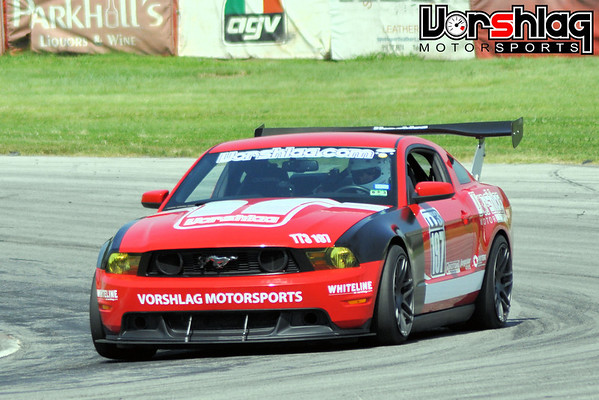
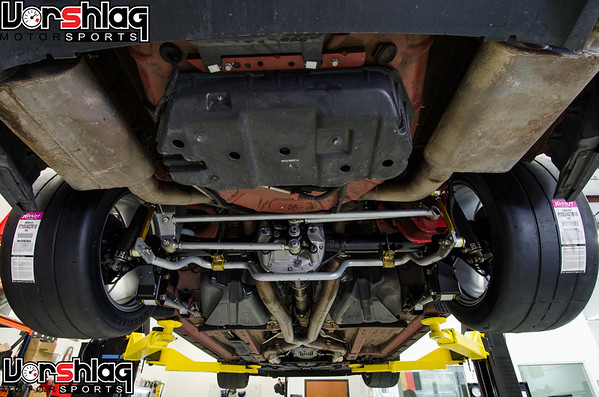
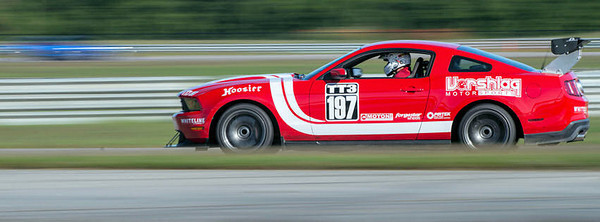
While we rarely see eye to eye on almost anything, I will agree with Sam on this one - after driving many solid axle cars with PHBs and Watts, in autocross and road course conditions, I will only race my own cars with Watts Links. If I thought I could shave 0.1 sec a lap on my Time Trial S197 by adding a PHB I would do it... but I know better. We added a Watts and dropped time. No, we didn't do a scientific test on this one part, other than noticed a trend of "going faster" at the 30+ events we race this car in per year AFTER adding a Watts. The difference in feel was also unmistakable.

_DSC_8552-M.jpg


There are both scientific reasons as well as intangible feel differences between a Watts a PHB that are real and quantifiable. You won't see real solid axle race cars built with PHBs unless the rules require it (or individual racer's budgets or "mindsets" preclude them).

_DSC0375-M.jpg


The GT-1 car above is owned, built and raced by a buddy of mine. 2200 pounds, 750+ hp SB.2, 14" wide slicks, lots of aero. Does it or any other tube framed solid axle RWD car have a PHB? Of course not. It has a WATTS LINK... and one that is mounted to the differential pumpkin, UNDERNEATH the car, for the lowest possible rear roll center. It isn't bolted to the axle tubes or utilizing a Panhard Bar. That's just not how its done on Real Race Cars (TM).


Click above to see the axle movement on an S197 with a edit: BMR panhard

The amount of lateral axle movement on an S197 Mustang with the OEM or even an aftermarket PHB is ridiculous. Watch this "wheel cam" video above that we shot about a week ago on a 2012 GT. This was in a somewhat large autocross (3rd gear) using the (edit) BMR panhard and 285 street tires. Just watch how much the axle moves side to side under lateral loading and vertical movement... inches. This is from the PHB flexing, the bushings deflecting, and the natural "arc" that a PHB moves through as the axle goes up and down (a Watts Link doesn't move in an arc, but rather stays laterally fixed with vertical axle movement)

_DSC4136-M.jpg


Of course an aftermarket PHB is going to be slightly stiffer than the OEM stamped steel piece, and would likely have poly instead of rubber mount bushings, but it still has a magically moving Roll Center that changes with axle movement, and still moves the axle in an arc - two things a Watts Link just doesn't do.

DSC_1989%20copy-M.jpg


My TT3 Mustang is still a dual purpose street/track car, and I even autocross it, too. For that reason I use (and sell) the Whiteline Watts Link kit, which mounts to the differential through a massively strong (8 pound!) cast aluminum rear differential cover. This cover is worth the extra unsprung weight is adds, in my opinion, as it holds more fluid, sheds heat a little better than a stamped steel piece, includes bearing preload studs, and has provisions for a diff cooler. It isn't legal for two SCCA autocross class until 2014 (or 2015?), when it is again after a rules change we asked for goes into effect. For 99.99% of you out there, that temporary rules restriction is absolutely meaningless.

There are several fine examples of aftermarket Watts Links kits for the S197, and they each have their Pros and Cons. The Cortex, Griggs and Fays2 have metal/spherical bushings, which are great on a race car. These bushings, however, have a finite lifespan and once they wear they begin clang and bang around. For a race car, that's nothing new - you just replace these periodically. Many people use these kits on street driven cars and just deal with the noise and/or replace these parts annually (they sell rebuild kits). I've driven many cars equipped with spherical bearing Watts Links and can't stand it, but for a race car I get it.

_DSC4512-M.jpg


For a dual purpose car I feel that the elastomer bushings in the WL Watts is a better way to go, as they don't make noise and after a year of HARD use we haven't seen any additional deflection or wear. And we push the car HARD with 12" wide wheels, lots of aero loading, and have plenty of wins and track records using the WL product.


Another pro/con issue we hear talked about is Unsprung Weight differences between Watts Link designs. I feel this one is a bit overplayed, so I will explain. The difference in unsprung weight between a PHB or one version of a Watts vs another is around 8 to 12 pounds. If anyone is a cheerleader for reducing weight, it is us. We have a long history of weighing anything and everything on an automobile, and publishing that information, so people can accurately know what parts add or reduce weight. In some cases the aftermarket/race part weighs more than the OEM part it is replacing, because the race part needs to be stronger or configured differently.

Now I will agree that lowering the unsprung mass on a car is usually a good thing, and racers will go to certain lengths to chase tens of pounds of unsprung weight. One of the best places to do this is replacing the boat anchor OEM wheels or cheap Chinese knockoffs with wider yet lighter wheels. Losing wheel and tire weight helps both because it is unsprung weight AND rotating inertia.

_DSF8979-M.jpg


When you factor in the weight of an iron Ford 8.8" solid axle in the S197 these small differences becomes a bit less meaningful. These 8.8" axle assemblies weigh about 175 pounds. This is a rather large number, a big hunk of unsprung mass. Now add in the weight of your wheels and tires on the rear axle. A good, strong and wide wheel and tire will approach 50 pounds per corner. So that's another 100 pounds of unsprung mass. So will you notice an 8-10 pound difference off of the axle locating device when you have nearly 275 pounds of unsprung mass on your Mustang? Mmmm.... probably not.


I'm not making up these numbers. I have shared the weights of the OEM PHB and Whiteline Watts many times, and will do so here again. The images above are of each part in the Whiteline Watts Link kit for the S197. Some of that weight is sprung, some is unsprung, and some items are half and half (the locating arms). Here's the real numbers:

Sprung Weight:
Watts Tower Mount + Hardware = 4.50 lbs
Watts Tower Reinforcement Bar = 4.20 lbs
Lateral Locating Bars (1/2 sprung) = 3.04 lbs
Total sprung weight = 11.74 lbs

Unsprung Weight:
Differential Cover = 8.12 lbs
Propeller and Bolts = 3.60 lbs
Propeller Bracket = 2.72 lbs
Lateral Locating Bars (1/2 sprung) = 3.04 lbs
Total unsprung weight = 17.48 lbs

Total Whiteline S197 Watts Link kit = 29.22 lbs

In the end, arguing for a difference in unsprung weight of 8 to 12 pounds on a rear axle assembly that weighs around 275 lbs is... kind of chasing rainbows, in my opinion. None of the Watts Link kits are significantly lighter than one another (all about 25-29 lbs), and all will weigh slightly more than a PHB set-up. These are 3600 pound cars, so let's not forget the magnitude of mass on the cars we're talking about here, too.

You have to make a decision if the benefits of adding unsprung weight outweighs the negative effects of that change. In this case we feel the small amount of added unsprung weight from the WL Watts far outweighs the downsides.

Anyway, that's my 2 cents. Your Mileage May Vary. Don't eat any wooden nickels.

Thanks,

 
Last edited:

csamsh

Senior Member
Joined
Apr 9, 2012
Posts
1,598
Reaction score
3
Location
OKC
Hey Terry, just fyi- my car has BMR panhard stuff on it. They're pretty stout looking/feeling pieces compared to stock, and they have poly bushings....and it still moved that much.
 

2013DIBGT

I Hate Wheelhop
Joined
Jun 3, 2013
Posts
333
Reaction score
1
Location
The Ungreat North East
Wow, looks like its been busy in here.

After reading thru this thread and taking everyone's input into consideration I can certainly see some of the benefits of the Panhard bar over the Watts Link that are hard to ignore, especially for a street driven vehicle.

Panhard Bar Positives:

1. Set it and forget it (in simplistic terms)
2. Very Low NVH
3. Light Weight
4. Given a properly stiff aftermarket unit (maximum motorsports..etc) it can provide a respectable percentage of the benefits found in the Watts Link assuming the car isn't driven balls out at all times (ie..street driving).
5. Cheap price

Watts Link Positives:

1. A more predictable/same "feel" when cornering in both Right & Left hand turns.
2. Quicker settling of the rear end when hitting bumps mid corner. Far Less skipping out in one direction or the other
3. No horizontal motion of the rear pumpkin on uneven road surfaces or hard cornering

In terms of Negatives between the two units:

Panhard Negatives:

1. Allows for more wandering/rear end steering
2. Feels different depending on which direction you are cornering in. One way is more planted then the other (..ie somewhat unpredictable)

Watts Link Negatives:

1. Far more complex to setup
2. High likelihood of increased NVH depending on design and components used. Some brands more than others
3. Higher maintenance
4. Higher Cost

So it appears each device has its purpose depending on the drivers goals and priorities. After reading thru this thread I am still in favor of the Watts Link over the Panhard because it seems to fix the two things I dislike the most about the way my car handles now in factory trim. Those fixes are:

1. A more predictable/same "feel" when cornering in both Right & Left hand turns.
2. Quicker settling of the rear end when hitting bumps mid corner. Far Less skipping out in one direction or the other

As far as which Watts Link I will choose for my own vehicle. Well I'm heavily leaning towards the Cortex unit but I could still be swayed towards the Fays2 if the wind blows in just the right direction. One benefit of the Fays2 from what I see is that it may be more streetable in the long run while still allowing for the use of the Cortex Torque Arm which is something I have been eyeballing very hard.

I can say this for certain though, I won't be purchasing a Whiteline Watts link. I really wanted to like it, honestly, mainly because it would most likely have the least amount of NVH for a street driven vehicle. BUT, the lack of resolution (even to this day) of taking 10min to update their published install documentation with the correct torque specs is just plain piss poor. I would rather do the install blind then have bad documentation with bad torque specs because in that scenario most would errr on the side of caution verses snapping a bolt using the published specs. No thank you, I'll deal with the increased NVH of the other models!

Thanks for everyone's input on this topic, its been very helpful
 

barbaro

Member
Joined
Jan 23, 2011
Posts
281
Reaction score
0
The Cortex Watts link, Differential cover included weighs 19.9 pounds.
 

Support us!

Support Us - Become A Supporting Member Today!

Click Here For Details

Back
Top