Should I get a tune?

Kev555

Member
Joined
Dec 12, 2021
Posts
374
Reaction score
170
Location
Ireland
Are the SCT tuners not locked to the vehicle they have already been used on? I have read SCT will unlock them for a fee? I seen one or two second hand on E-bay Laurence but I veered away from them due to the potential cost of unlocking them.
 

StockishS197

Member
Joined
Dec 24, 2024
Posts
434
Reaction score
378
Location
Houston
Are the SCT tuners not locked to the vehicle they have already been used on? I have read SCT will unlock them for a fee? I seen one or two second hand on E-bay Laurence but I veered away from them due to the potential cost of unlocking them.
if you unmarry before selling, it won’t be locked. Most have 5 unlocks (different vehicles) before you have to buy more from SCT.
 

Kev555

Member
Joined
Dec 12, 2021
Posts
374
Reaction score
170
Location
Ireland
if you unmarry before selling, it won’t be locked. Most have 5 unlocks (different vehicles) before you have to buy more from SCT.
Good to know Stockish, thanks. Can it be married to 2 different vehicles at the same time?
 

Dino Dino Bambino

I have a red car
Joined
Aug 11, 2014
Posts
4,509
Reaction score
2,601
Location
Cyprus
Thanks Dino for confirming I cant have a second Mustang :Big Laugh:
You can have as many Mustangs as you like Kev but your SCT tuner can only have a monogamous relationship with any one of them. ;)
Therefore you could marry your SCT tuner to the first Mustang, tune it, divorce the SCT tuner from that one, marry it to the second Mustang, tune the second, divorce it from the second, and so on. However after five divorces the SCT tuner is locked out permanently so can never match Elizabeth Taylor's number of marriages. :lol:
It's a good idea to back up your tune files (as well as the original stock version) for each car onto another drive to ensure they aren't accidentally lost.
 
Last edited:

Kev555

Member
Joined
Dec 12, 2021
Posts
374
Reaction score
170
Location
Ireland
A second Mustang would definitely mean divorce :Big Laugh: Thanks for the backup files advice
 

Laurence Dunn

Junior Member
Joined
Sep 26, 2022
Posts
35
Reaction score
4
Location
Southend-on-Sea, England UK
So I got a 2nd hand SCT3015 unmarried. Plugged it in and it kept downloading the existing stock tune, but there did not seem to be any strategy tunes on the device for me. And then my fuel gauge went to full and stayed there even though its only half full... This does not look good. I did manage to turn off my downstream O2 sensors which had triggered the CEL for the last year. See video You notice towards the end of the clip a weird buzzing noise happens on the instrument cluster.... any idea if that is normal?
 
Last edited:

Blue03Cobra

Member
Joined
Nov 6, 2024
Posts
297
Reaction score
464
Location
Baton Rouge, La.
So I got a 2nd hand SCT3015 unmarried. Plugged it in and it kept downloading the existing stock tune, but there did not seem to be any strategy tunes on the device for me. And then my fuel gauge went to full and stayed there even though its only half full... This does not look good. I did manage to turn off my downstream O2 sensors which had triggered the CEL for the last year. See video You notice towards the end of the clip a weird buzzing noise happens on the instrument cluster.... any idea if that is normal?
I use an SCT BDX on my 2008 GT and an SCT X4 on my 2018 F150 3.5EB and while there's alot of clicking and chiming, while it goes through the motions (I remember much more of that on the F150 vs. Mustang), but not sure I would describe it as "buzzing noises" coming from the dash...
 

StockishS197

Member
Joined
Dec 24, 2024
Posts
434
Reaction score
378
Location
Houston
So I got a 2nd hand SCT3015 unmarried. Plugged it in and it kept downloading the existing stock tune, but there did not seem to be any strategy tunes on the device for me. And then my fuel gauge went to full and stayed there even though its only half full... This does not look good. I did manage to turn off my downstream O2 sensors which had triggered the CEL for the last year. See video You notice towards the end of the clip a weird buzzing noise happens on the instrument cluster.... any idea if that is normal?
The dashed ODO signifies it’s still in the write procedure.

What SCT file did you write into the car? If you used a canned strategy that wasn’t for your PCM code, it could be causing the issue.

Can you flash it back to stock?
 

Laurence Dunn

Junior Member
Joined
Sep 26, 2022
Posts
35
Reaction score
4
Location
Southend-on-Sea, England UK
I did not get that far, it just seemed to open ECU, then download existing tune and that was it, got a buzzing noise, the ODO then went back to normal, (except the fuel gauge which went to way past full) then it said complete and finished. No other options. I could not access the canned tunes to upload, so the unit must be faulty.
 

GlassTop09

Senior Member
Joined
May 24, 2019
Posts
1,361
Reaction score
834
Location
Farmington, NM
I have a question to the people who can tune:
What is the difference between a 91 and 93 octane tune, when our 4.6 was designed for 87?
Ok I'll bite....................also for others who are interested..........

According to Greg Banish..............

Most all modern OEM vehicle production engines, since the OBDII emissions stds were released after 1996, are designed to be octane limited..........due to the fact that higher static compression engines are more efficient--both power wise, MPG-wise & emissions-wise than lower ones. This is why the advent of more sophisticated PCM's using knock sensors systems, better cyl head port & chamber designs--includes pistons as well, better IM & exhaust systems design to take full advantage of higher compression ratios.

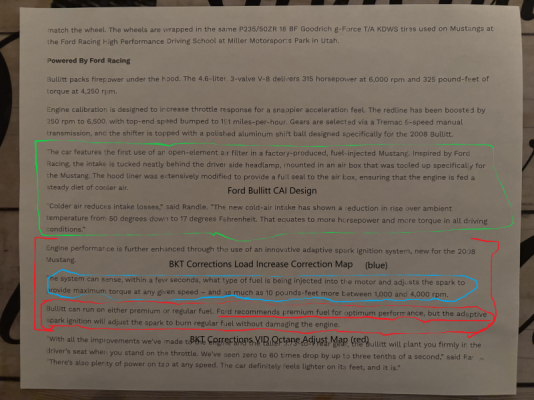
Thus, modern engines are tuned to operate using a specific fuel octane rated fuel. As for this Ford Modular 4.6L 3V engine, it's 9.8:1 static compression design allows for effective fuel octane usage between 87 oct to 93 oct. This is set in the base calibration from the factory for 2 reasons: 1. to determine when the Octane Function flag is enabled to use fuel octane 91 to 93 (this enables the Spanish Oaks PCM to use the BKT Corrections\VID Octane Adjust map--HPTuners lingo--in base calibration so the engine can be set up to use higher octane fuel but can still run off lower octane fuel if desired--think 08-09 Bullitt--but is also present in all 05-10 Spanish Oaks base calibrations......just disabled due to these are set to use 87 oct fuel only in the calibration......not the engine's design) & 2. to determine the specific KHz frequency range based on the cyl bore dia size that corresponds to a fuel's specific AKI index, or octane rating. The knock sensor algorithm used in our 05-10 Spanish Oaks PCMs uses the earliest version of the now common 2-wire, non-resonant knock sensor design that is tuned to resonate within a specific frequency band--like a tuning fork, usually between 10KHz-12KHz, unlike the earlier resonate knock sensor designs that would constantly resonate w\ the frequency band changing as engine load & RPM changes, to be more discriminate (or accurate if preferred.....) during cyl knock detection window (Ford knock detection systems use the PIP spout CKP rising signal for ignition timing to know when the knock detection window starts & ends for every cyl after it is fired---usually @ 10* BTDC start thru 40* ATDC end, thus a typical 50* knock detection window......helps system to be even more discriminate when detecting cyl knock. Expected operating cyl pressure & temps will mostly determine the fuel octane rating to use (knock frequency changes\scales due to cyl pressure & temp.....), based on how the OEM's go about setting an engine's operational MBT (maximum best torque) curve for the intended usage.

OEMs do not go off of dynos specifically to determine an engine's MBT.........they specifically use AVL plots (cyl pressure vs cyl volume against crank angle\piston position relative to TDC......) to effectively determine an engine's MBT.........which will be within a specific crank angle\piston position range that will be able to most effectively extract the most work out of the highest cyl pressure\expansion from the mass fraction burn rate of a fuel plotted against crank angle\piston position to reach the expected target of what is called CA50.......the point at which 50% of the total air\fuel volume in cyl has been burned......usually between 7*-9* ATDC......to then hit the expected max best torque where the cyl pressure is at its highest\expansion greatest within the optimum CA range between 12*-15* ATDC for the most work to get extracted into the crankshaft's rotation (or velocity if preferred......).

It is this aspect that makes continuously variable cam timing (VCT) the game changer that it is..........IF folks actually use it to REFERENCE the crank angle\piston position (the only variable that is a constant.......) during a power stroke cycle using a cam's .006" adv dur EVO event into this optimum window, THEN set ignition timing RELATIVE to it to achieve true MBT as it WILL be dependent on the fuel's octane rating as well as other operating conditions as to where it will end up being. This is 1 of the areas where good knock sensor systems can be of efficient use......is why Ford Modular engines expressly operate USING them & is why they can make the power they can put out using smaller displacements thus also being very fuel efficient & emissions friendly at the same time........if TUNED properly based off the engine's CA50 target crank angle window.

Most aftermarket dyno tuning is empirical in nature using either knock sensors or charted TQ\HP outputs w\o any input of crank angle\piston position relative.......thus is essentially akin to "throwing mud against the wall" until a number is settled on as being "MBT" or "knock limited" to represent max best TQ thus HP, so if 1 is tuning an engine equipped w\ any form of continuous VCT & the CA50 hasn't been referenced relative when setting spark timing, what 1 sees on a dyno sheet as max TQ\HP may not actually BE max TQ\HP........most of the time this will be LESS, not MORE......regardless of the fuel octane rating used.

Thus, by using this CA50 method, the OEMs usually choose\determine the engine's rated flywheel HP\TQ out to post, using the desired fuel octane rated fuel they choose to use, not necessarily by the actual engine's design as most are intentionally over designed on purpose.........allows them to choose what the power output will be using fewer engines thus saving them huge amounts of overhead costs.

This Ford Modular family is a classic case of this............especially the Coyote engine.

Hope this helps.

Greg Banish MBT using Mass Fraction Fuel Burn Rate.JPG

08 Ford Bullitt Mustang Specs Article Writeup Adaptive Spark Feature.JPG.png
 

GriffX

Senior Member
Joined
Sep 28, 2017
Posts
1,512
Reaction score
1,035
Location
Rural Germany
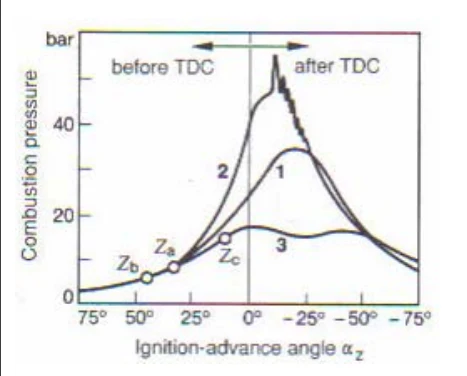
I try to conclude: If I change the ignition timing to lower values, I get a higher cylinder pressure but also shift the pressure maximum closer to TDC and do not have a benefit of it. But, if I can close the intake valve later and therefore have a higher cylinder filling, I also have a higher pressure at the optimum MBT angle. So if a motor with fixed valve timing is designed to 87, I do not really benefit from using 91.

1779902567155.png
2: early ignition with knocking 1: optimal timing 3: late timing
 
Last edited:

Laurence Dunn

Junior Member
Joined
Sep 26, 2022
Posts
35
Reaction score
4
Location
Southend-on-Sea, England UK
I did not get that far, it just seemed to open ECU, then download existing tune and that was it, got a buzzing noise, the ODO then went back to normal, (except the fuel gauge which went to way past full) then it said complete and finished. No other options. I could not access the canned tunes to upload, so the unit must be faulty.
Well the fuel gauge gradually returned to normal, and for some reason me turning off the downstream O2 sensors CEL seemed to make it run better. I have no idea why. The tuner is showing they are back on? But no CEL (yet). Anyway I'm booking it in for a professional tune up by Mustang experts.
 

GlassTop09

Senior Member
Joined
May 24, 2019
Posts
1,361
Reaction score
834
Location
Farmington, NM
I try to conclude: If I change the ignition timing to lower values, I get a higher cylinder pressure but also shift the pressure maximum closer to TDC and do not have a benefit of it. But, if I can close the intake valve later and therefore have a higher cylinder filling, I also have a higher pressure at the optimum MBT angle. So if a motor with fixed valve timing is designed to 87, I do not really benefit from using 91.

View attachment 116355
2: early ignition with knocking 1: optimal timing 3: late timing
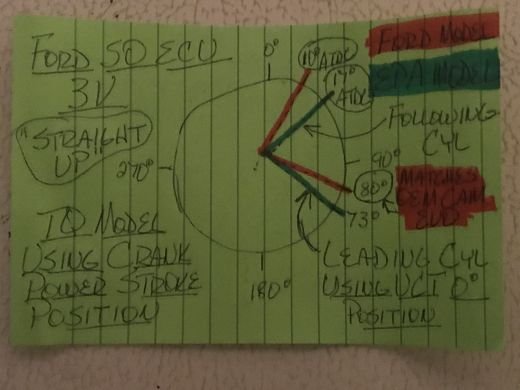
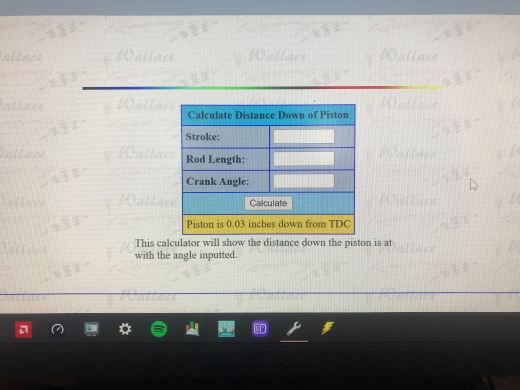
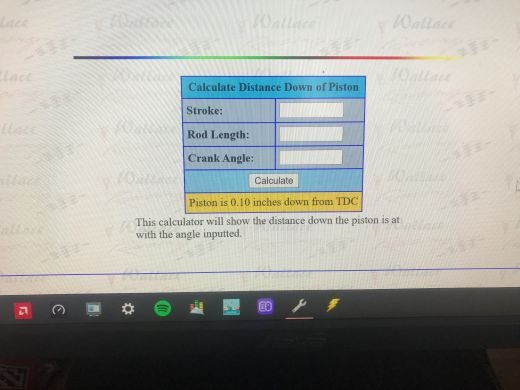
Just to conclude as well..................I've done actual testing according to Greg's writeup (the picture) some 2 1\2 yrs ago w\ the results that I noted that followed his statements (Ford's cam profiles, both the OEM & the Hot Rods, are ground using this 10* ATDC power stroke reference at their optimum position.......ie, OEM @ VCT 0*, Hot Rods @ VCT 17* retard........) to the tee. You'll note all this testing was done when I had my Lunati VooDoo #21270700 cams installed running off my '08 OEM IM w\ Steeda CMDP's installed (the green picture....), thus before the swap out back to the OEM CMCV's prior Hot Rod cam install to test CMCV's using the same Lunati VooDoo #21270700 cams for apples-to-apples comparisons of CMCV's vs CMDP's.......also to note, cam designers like Billy Godbold also know of this as well & are designing around this concept for the cams to move max airflow (setting cam IVO, EVC & IVC events.....overlap for max scavenging & intake runner velocities w\ optimum IVC to trap as much as possible....) around this max power stroke reference position thru peak TQ to redline for most Ford Modular 3V street performance or street\strip applications using VCT.

Makes more TQ using less spark timing...............optimizing the mass fraction fuel's burn rate to create max cyl pressure in less time AND reduces pumping losses caused by excessively advanced lead ignition timing trying to make up for slower mass fraction fuel burn rates to achieve max cyl pressures--the main reason for needing to use more advanced ignition lead timing......just as Greg Banish has written in his 1st book published back in 2007, "Engine Management Advanced Tuning".

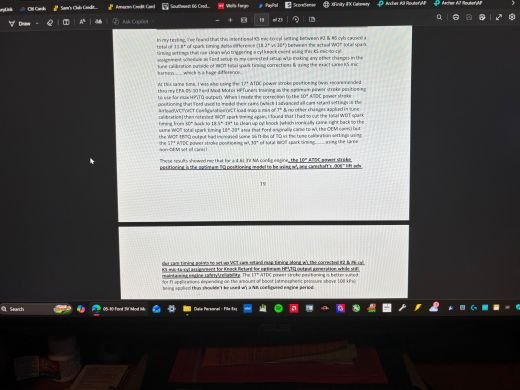
The 2nd picture is from a .pdf writeup I started putting together some 2 1\2 yrs ago of all the things I've tested\reworked in calibration that not only of other tuners have done incorrectly\ defeated by disabling, but also Ford themselves that didn't line up w\ the calibration's actual code line processing routines as written by Ford programmers causing some calibration features that would've improved engine performance to not get used.....ie, not broken code but "broken code", meaning intentional neutering of this platform when it came out back in the day across all 05-10 MY's S197 Spanish Oaks calibrations.

After approx 4 months of working thru the calibration quirks I found\rectified & then typing all this stuff up after verification\validation thru datalog data at that time, I finally gave up on finishing this .pdf & continued on doing my thing w\ the tuning.............probably part of the reason why I'm going thru what I'm experiencing w\ both of my lower legs.........too many long extended late night\morning sitting intervals in front of my laptop & main desktop computer then reflashing\datalogging over time finally catching up w\ me.

Enjoy.........

Cross Plane Crankshaft TQ Modeling Position at VCT 0 Degrees Straight Up.JPG

GLASST~1.JPG

Wallace Racing Piston Travel Calc from 10 Degrees ATDC.JPG

Wallace Racing Piston Travel Calc from 17 Degrees ATDC.JPG
 

Laurence Dunn

Junior Member
Joined
Sep 26, 2022
Posts
35
Reaction score
4
Location
Southend-on-Sea, England UK
Well the fuel gauge gradually returned to normal, and for some reason me turning off the downstream O2 sensors CEL seemed to make it run better. I have no idea why. The tuner is showing they are back on? But no CEL (yet). Anyway I'm booking it in for a professional tune up by Mustang experts.
A change of mind due to tuner guys being too busy.

I had another go with the tuner myself. By reuploading the stock tune from the SCT3015 4 times in a row, my car is suddenly started running so much better.

Once I got it on a decent bit of road I tried some WOT. This upload has transformed the performance of the car and it feels totally different. Throttle response amazing. Could this have blown some cobwebs out of the ECU maybe? I have no idea what I'm doing here. Any ideas?
 

Support us!

Support Us - Become A Supporting Member Today!

Click Here For Details

Back
Top